“Beauty is eternity gazing at itself in a mirror.
But you are eternity and you are the mirror.”
― The Prophet
“Beauty is eternity gazing at itself in a mirror.
But you are eternity and you are the mirror.”
― The Prophet
“The sky is the limit for the extraordinary, the universe is not even the limit for the divine.” “The world is young, the sky is old, the cosmos are ancient, but the universe timeless.” “He who owns the sky owns the stars.” “Your mind is your world, your heart is your sky, your soul is your universe.” ― Matshona Dhliwayo
new year greetings! May Almighty bless us to have twenty-20 to be a year to be meaningfully purposeful, thoughtfully worthwhile and consequentially pithy. Your heart is your sky. Cherish every moment as you unlock your destiny & unlatch the divine scheme of things.
After recently seeing a South Indian flick revolving around the story of an army man and his valiant death in the service of the nation, I’ve been thinking of Major Sandeep Unnikrishnan (15 March 1977 – 28 November 2008). He was an officer in the Indian Army serving in the elite Special Action Group of the National Security Guards. He was martyred in action during the November 2008 Mumbai attacks. He was consequently awarded the Ashoka Chakra, India’s highest peacetime gallantry award, on 26 January 2009. He was the only son of retired ISRO officer K. Unnikrishnan and Dhanalakshmi Unnikrishnan.
It’s been almost 10 years since his passing and I was looking at the narrations and thoughts of his proud mother. She gets a new T-shirt for her son on the day of his birthday. Recently actor Tovino Thomas visited their home after she expressed an interest to meet him after he starred in an army movie. She gifted him one of those T-shirts and cooked for him appam and stew, her son’s favorite dish. Probably because I was in the mood after watching the flick, but I’m deeply moved and ardently melted by these gestures and the strength of their family.
Ajay Sukumaran writes on Outlook India
Over these 10 years, Major Sandeep Unnikrishnan’s parents have grown used to spending a large part of their time travelling to events or meeting people. A few months ago, they were in Kerala to speak at a school, despite Dhanalakshmi’s nagging backache. “I will go and speak as long as my health permits,” she says. She has so much to share with people about her son. “After he has gone, we have only him to talk about.”
Upstairs in their two-storey home is a gallery, a labour of love for their son. “He would keep his things very carefully. So we were wondering what to do with them. And that’s how we created this,” she says. There’s an astonishing collection of personal articles and memories, painstakingly put together four years ago. A harmonica, a nursery-class gift from his father which Sandeep treasured; the first cup he won in a school sports tournament and several other accolades that followed; his clothes and shoes, all neatly pressed and polished, in a glass wardrobe; the Ashok Chakra medal and citation; the bag with a change of clothes that he carried into Operation Black Tornado and his entire kit; the dirt from the spot he fell, at the Taj Mahal Palace Hotel, which the family visits every anniversary (a sofa from the room is now at the NSG’s headquarters in Manesar); the Indian flag his body was wreathed in.
On another side of the room, a glimpse of the personal side of a man dedicated to his profession—His 1999-model music system, an old point-and-shoot camera, his small collection of movies, among them Akira Kurosawa’s Seven Samurai. He had told mom to keep the CDs safe, and so she did. There are other mementos: the towel she wrapped her four-month-old baby in when the family moved to Bangalore in 1977; a T-shirt the one-year-old had worn. It is still work in progress, she says. There are so many more articles to add.
Every year on Sandeep’s birthday on March 15, his best friend from school brings a bouquet which his mother keeps alongside his photo until the next birthday. His military colleagues stay in touch and schoolmates, many abroad now, drop in with their kids. “Frankly, if you ask me, why was he so popular? I would say he deserved it,” says Unnikrishnan, who is in his mid-seventies. “Sandeep is living in many minds.” The family lives by the ideals that Sandeep set for himself. “We have learnt a lot from him,” says Unnikrishnan. “I always make sure I dress well,” his wife adds. “That’s how Sandeep liked it.”
Sandeep’s Ashok Chakra, the country’s highest peacetime gallantry award was received her mother and the citation in it reads:
“Major Sandeep Unnikrishnan led the commando operation launched on 27 November 2008 to flush out terrorists from Hotel Taj Mahal, Mumbai in which he rescued fourteen hostages. During the operation, his team came under intense hostile fire, in which one of his team members got grievously injured. Major Sandeep pinned down the terrorists with accurate fire and rescued the injured commando to safety. In the process, he was shot in his right arm. Despite his injuries, he continued to fight the terrorists till his last breath. Major Sandeep Unnikrishnan displayed most conspicuous bravery besides camaraderie and leadership of the highest order and made the supreme sacrifice for the nation.”
Occasionally some technology comes in and just blows your mind! This is one of them. We commonly hear about engineering software slowly growing themselves into tablet and mobile platforms to leverage their potential to changing needs with AI and machine learning engulfing every field you name. Being someone who works with engineering design, I truly believe the app by Shapr3D has truly taken into the next level with their ease of building 3D illustrations. I would like to take a demo sometime in the future.
I hope the future of engineering simulation engines taking a similar course in the future is not too far away. Probably I foresee those heavy engineering-grade GPUs in separate cloud servers and the mobile device being a “console” to leverage the huge cloud power. Google has done it with Stadia for gaming.
We have spoken about fragility in the same thematic context before. I happened to read about the concept of Mono no aware frequently referred to in Japanese culture.
“Mono no aware, literally “the pathos of things”, and also translated as “an empathy toward things”, or “a sensitivity to ephemera”, is a Japanese term for the awareness of impermanence, or transience of things, and both a transient gentle sadness (or wistfulness) at their passing as well as a longer, deeper gentle sadness about this state being the reality of life. “Mono-no aware: the ephemeral nature of beauty – the quietly elated, bittersweet feeling of having been witness to the dazzling circus of life – knowing that none of it can last. It’s basically about being both saddened and appreciative of transience – and also about the relationship between life and death.”
Often this concept is referred with an allegory of Japanese Cherry Blossom season in Japan which is known for its perhaps more “visible” transience. The below petals are from my office garden. The same plant in different stems conveys the unavoidable transience of life. While one of the petals is on a bloom, the other one slowly withers away.
Taylor Bond, in her wonderful article, puts it very elegantly:
“What comes most easily to mind is the beauty of the cherry blossom; the flower blooms intensely, yet only for a short period of time each year. As the flowers die and the petals fall, cherry blossoms line the streets like a layer of soft, pink snow, and are most beautiful when captured between the precipice of life and death. That is precisely the unique appeal of the cherry blossoms; their aesthetic focuses on the unavoidable transience of the material world that exists. According to this view, the fragility and inherent brevity of an instance of awe, such as the blooming of the cherry blossoms, only aids in heightening the event’s stunning, albeit melancholic nature. Because it only lasts for such a short period, it is undoubtedly appreciated more. Understanding and accepting that innate uncertainty of life helps us evade the overwhelming feeling of morbidity associated with impermanence, instead highlighting our ability to enjoy life by appreciating its fleeting moments. The unavoidable nature of finite existence is contrasted with the never-ending stream of change, as life continues to occur despite the continuous passing of objects and experience. The realization of impermanence is therefore bittersweet, tinged with mourning, and yet also capable of recognizing the beauty of change in itself.’
Similar thematic allegories are also narrated in scriptures.
“And cite for them the parable of the present life: it is like water that We send down from the sky; the plants of the earth absorb it; but then it becomes debris, scattered by the wind. God has absolute power over everything.” (Q’ 18:45)
Just recollected one of my old write up from 2013. Professionally, I’m a mechanical design engineer working on the design of engineering products used in offshore and infrastructure applications. There are some subtle marvels in this world that sometimes humble ourselves and leave us spellbound in a sense of awe. This is one of them. Take a read.
“It is good to love many things, for therein lies the true strength, and whosoever loves much performs much, and can accomplish much, and what is done in love is well done.”
―
“The frame through which I viewed the world changed too, over time. Greater than scene, I came to see, is situation. Greater than situation is implication. Greater than all of these is a single, entire human being, who will never be confined in any frame.”
― Eudora Welty, On Writing
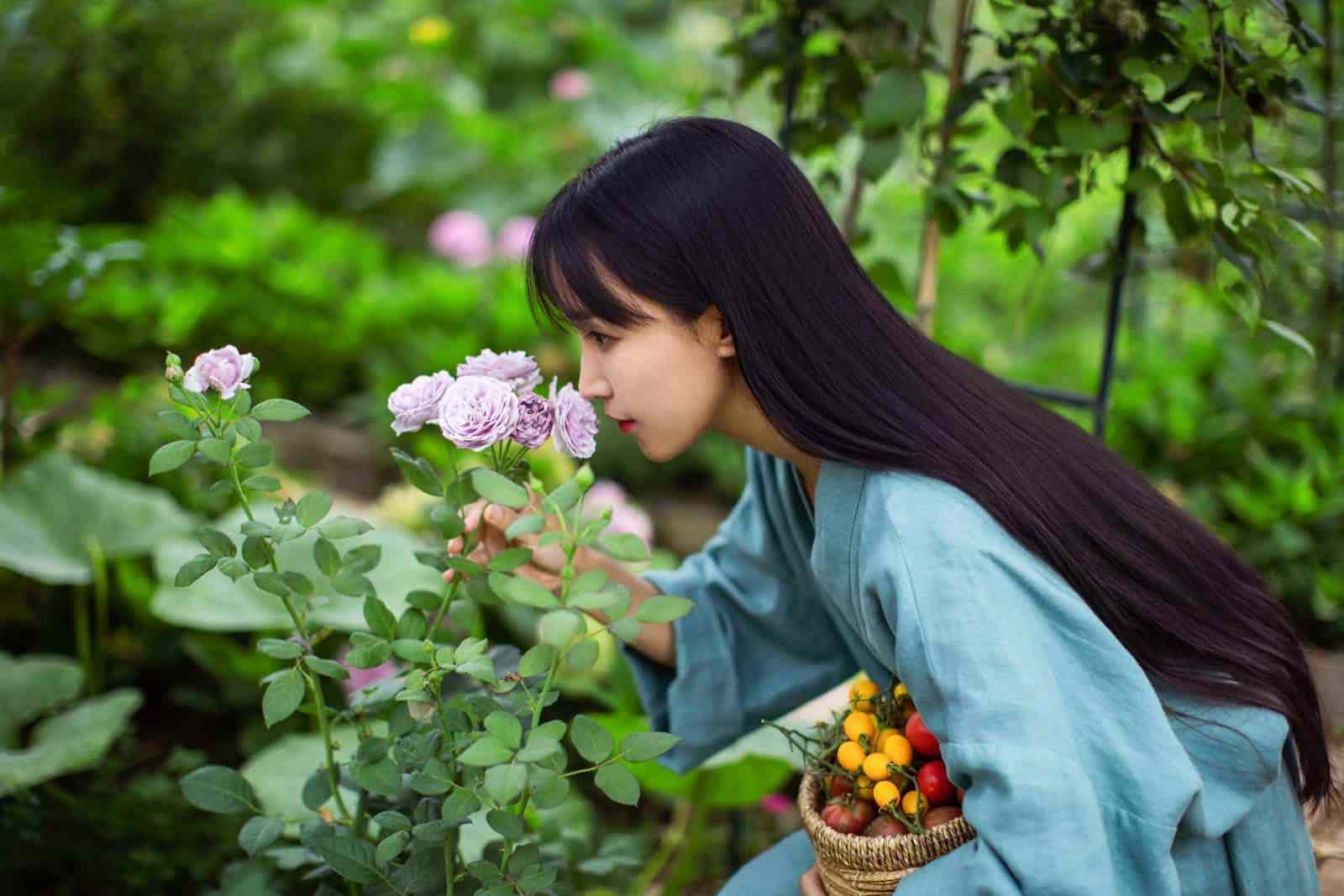
Ralph Waldo Emerson once wrote that the earth laughs in flowers.
“The breath of wind that moved them was still chilly on this day in May; the flowers gently resisted, curling up with a kind of trembling grace and turning their pale stamens towards the ground. The sun shone through them, revealing a pattern of interlacing, delicate blue veins, visible through the opaque petals; this added something alive to the flower’s fragility, to its ethereal quality, something almost human, in the way that human can mean frailty and endurance both at the same time. The wind could ruffle these ravishing creations but it couldn’t destroy them, or even crush them; they swayed there, dreamily; they seemed ready to fall but held fast to their slim strong branches-…”
― Irène Némirovsky
Notice the beautiful reddish pigment and the loft petals spread from it. Notice the aesthetically aligned petal stems decored with sub stems with yellow mini studs on them. Gazing at these details and pondering about them Photographs below are taken from a remote garden in Havelock Islands.
“Nobody sees a flower – really – it is so small it takes time – we haven’t time – and to see takes time, like to have a friend takes time.”
―
“Just as a flower as itself displays an embroidery full of art and with the tongue of its being recites the Creator’s names, so the garden of the globe resembles a flower and performs an extremely orderly, universal duty of glorification”
― Said Nursi, “The Twenty-Ninth Word”, Treatise of Light.
Today let’s add a chapter to our moving images archive. Hope you’ve read Story de’ aquatics, where we talked about, amateurish aquascaping. In the signature style of the Border of a Mind, we’re gazing at those beautiful little moments of aqua fauna embellishing the tank with their grace.
“A layout that is crafted with overly great finesse is tiring to look at, and it is also difficult to maintain over a long period of time…It is important to provide an unpretentious, casual atmosphere of water and greenery. The very atmosphere creates harmony between the surrounding space and the aquarium.“
– Takashi Amano