small comforts

In our bustling world, we often bypass the profound effect of small comforts. These understated joys, though seemingly minor, are vital to our mental and emotional health. Recognizing the need for a pause is an act of self-care, and it’s crucial in navigating the demands of daily life. Small comforts take various forms, each offering a unique sense of tranquility. It could be as simple as taking a deep breath, allowing the mind and body to reset. It might be the gentle stretch of muscles, releasing the day’s tension, or the comforting embrace of a hot cup of tea, each sip a reminder to slow down. The therapeutic feeling of water in a hot shower, or the serene experience of a walk in nature, can also be incredibly rejuvenating. There’s immense comfort in a loved one’s hug, the grounding effect of a short meditation, or the coziness of delving into a good book. But, it’s essential to practice moderation. These comforts should be refreshments, not crutches. Overindulgence can lead to a dependency that overshadows the very essence of these pleasures. Balancing comfort-seeking with embracing life’s challenges is key. It’s not about shunning discomfort entirely, as facing and growing through life’s tougher moments is equally important. Moreover, indulging in these small comforts should be guilt-free. Enjoyment is lessened when marred by guilt or distractions. Fully immerse yourself in these moments, allowing them to restore and rejuvenate you. Ultimately, these small comforts are more than just simple pleasures; they are essential tools for maintaining our wellbeing in a fast-paced world. They remind us to appreciate the present and find joy in the little things. Let’s cherish these moments, recognizing their role in enriching and balancing our lives.

quiet liberation

Have you ever found yourself caught in a tangle of your own thoughts and emotions, feeling like a sailor amidst a stormy sea? You’re not alone. In this whirlwind of life, mastering the art of letting go is akin to discovering a hidden compass, guiding you towards a life of calm and purpose. It’s not a novel concept, but its depth and impact are often underestimated.

Picture this: a serene lake, its surface smooth as glass. This is the tranquil mind we all yearn for. But what happens when pebbles of anxiety, stones of frustration, or even boulders of self-doubt disrupt this tranquility? The ripples distort our reflection, our true selves. Letting go, then, becomes the art of not tossing these pebbles in the first place.

Think about the last time someone’s actions really got under your skin. Was it truly them, or was it your narrative about how they should act? Or consider those moments when you’re harsh on yourself. Aren’t we often our own toughest critics, crafting stories of inadequacy? It’s these narratives, these tightly held beliefs, that often hold us back from peace and purposeful action.

Now, imagine if you could let go of these stories. Imagine facing a challenge and seeing it not as a mountain blocking your path, but as a part of the landscape of your life. This shift in perspective doesn’t mean ignoring reality or shirking responsibility. Rather, it’s about releasing the grip of preconceived notions that cloud our judgment and wellbeing.

How do we embark on this practice of letting go? First, acknowledge your feelings without judgment. If frustration bubbles up, sit with it. Feel its texture, its weight. It’s not about suppressing or fixing it, but understanding it. Then, gently question the narrative behind this emotion. Is this story serving you, or is it time to let it float away like a cloud in the sky?

As you practice, you might find moments of pure, unfiltered experience. The world, unclouded by your perceptions, can reveal wonders you never noticed. The chirping of birds, the rustling of leaves, or even the laughter of a loved one can take on a new significance.

Wouldn’t it be liberating to approach tasks without the weight of preconceived notions? To engage in conversations without the baggage of past frustrations? This is the freedom that comes with letting go.

In this journey, remember that letting go isn’t a destination but a continuous process. It’s a path we walk every day, a skill we refine with each step. And as we walk this path, we might just find that the world opens up in ways we never imagined.

So, are you ready to embrace the art of letting go and discover the peace and focus that lie within?

the art of action

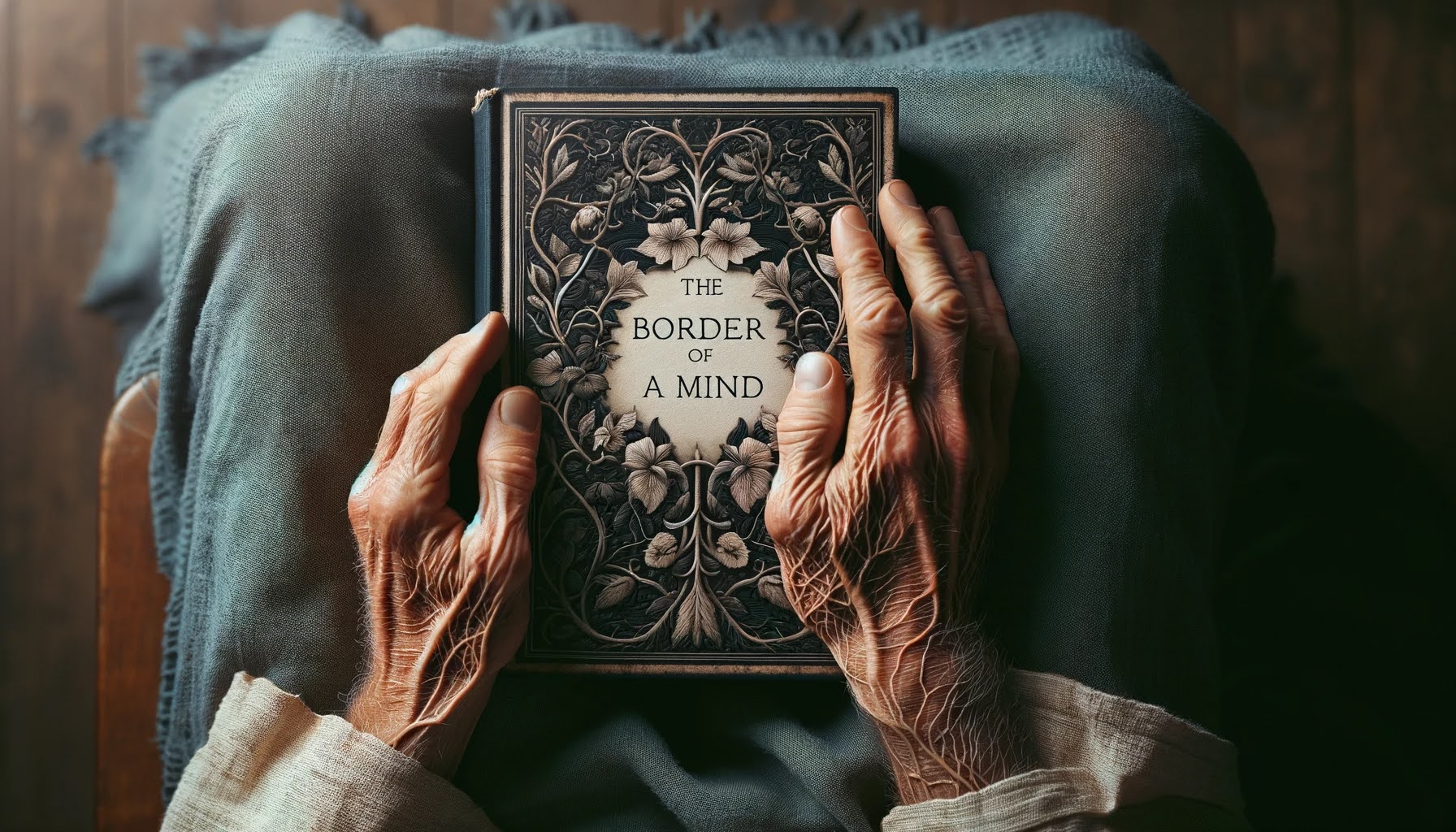
Capturing the electrifying journey of ideas from concept to consciousness, this illustration vividly portrays ‘The Border of a Mind’ as a conduit of inspiration, where thoughts are rewired and dreams are powered into reality.

Ah, it’s you again with me, gather ’round and let me spin you a tale of our everyday odyssey, from the land of longing to the realm of doing. It’s a curious journey, isn’t it? How we often find ourselves perched on the edge of desire, gazing longingly at the vast expanse of action yet unable to take that leap. Picture this: you’re standing at the river’s edge, toes curling in the damp earth, staring across the water. That’s our lives, isn’t it? Brimming with dreams and to-dos, but oh, that river of uncertainty! It swirls and eddies, whispering tales of doubt and fear. “What if I’m not ready?” we ask the wind. “What if I tumble and fall?” Take, for instance, that task you’ve been dodging, much like a cat sidesteps a puddle. It’s a beast, shrouded in a fog of uncertainty. Every time you near it, the fog thickens, and you retreat. But ah, when you finally wrestle it to the ground, it turns out to be a kitten, not a tiger. And you laugh, wondering why you danced this strange tango of delay. Or consider that project, a seed planted in the fertile soil of your mind, craving sunlight but shaded by excuses. “It’s not the right time,” you whisper to the seed, as days turn to weeks. It’s a tango with the unknown, a delicate jump outside your comfort zone. And then, there’s the coach, the guiding star you yearn to reach out to. But hesitation wraps around you like a cloak. Questions buzz like bees in your head, “Am I good enough? Will I blossom or wither?” Such indecision, my dear, is a thief in the night, stealing your dreams while you slumber in doubt. Now, let’s talk about what anchors us in this harbor of hesitation. It’s the trio of trepidation: uncertainty, the unknown, and their shadowy companion, fear. These specters haunt our steps, whispering tales of what might (or might not) be. But, here’s the twist in the tale: stepping into the unknown, that’s where the magic happens. It’s like diving into a river, not knowing how deep it is, but finding out you can swim – and oh, how you can swim! So, how do we leap into this river of action? It’s simple, yet as profound as the stars:

  1. Intention. Set your sails. Decide to respond with action rather than sitting with stagnation.
  2. Embrace the storm. Feel that fear, that uncertainty. It’s part of you, but it doesn’t define you. Can you hold it, understand it, love it?
  3. Ask your heart. What do you truly desire? Is this the song you want to sing, the story you want to tell?
  4. Take a step, however small. Remember, even the longest journey begins with a single step.
  5. Find the joy. How can this action be your festival, your fireworks, your flight?

The more we practice this art of action, the more adept we become. Action clears the cobwebs, opens the windows, lets the sunlight in.

a unique influence

let’s have a heart-to-heart, shall we? Picture this: you’re yearning to leave your mark on the world, to stir things up a bit. But here’s the catch – can you really make waves if you’re just riding the same current as everyone else?

Think about it. If we’re all just carbon copies of one another, marching to the same beat, where’s the room for something new, something different? Innovation and change aren’t born from sameness. They come from daring to be different, from daring to stand out.

It’s like this – imagine you want to nudge the world in a new direction. To do that, you’ve got to show them something they haven’t seen before. It’s not just about being unique for the sake of it. It’s about being uniquely you in a way that inspires others. Whether it’s your friends, your family, or just the people you bump into every day, if you’re just echoing their thoughts and actions, how can you expect to be the catalyst for change?

Now, being different isn’t always a walk in the park. Let’s be real, it can be tough. You’ll run into folks who don’t get it, who might even push back because what you offer challenges their norm. But remember, we’re all a quirky bunch. Each of us has our own little quirks and idiosyncrasies, and that’s what makes life interesting, right?

Sometimes, being different will win you admirers, other times, not so much. And that’s okay. The world isn’t one-size-fits-all. We’re all navigating it in our own unique way. So, the real question is, how do you want to make your mark? How do you want to shake things up in your corner of the world?

personal everests

You know, bravery doesn’t always look like scaling Mount Everest or reshaping the globe. More often, it’s about facing those ordinary days – those unremarkable Tuesdays and those seemingly endless months. It’s about pushing yourself forward when every part of you yearns to just sink back into the comfort of the past.

Let me tell you, I’ve been there. Those days when getting out of bed felt like my personal Everest. I realized that changing the world sometimes means changing your own world, bit by bit, at your own pace, as you mend your heart and soul.

Bravery isn’t just about loud battles and visible scars. Often, it’s a quiet struggle, a soft, persistent glow inside you that flickers even on your darkest days, reminding you of your strength, your growth, and the hope that’s always there, waiting.

I want you to think about this: What’s your personal Everest? What quiet battle are you fighting? Remember, every step forward is a victory, no matter how small. Each day you choose to move forward, you’re showing incredible courage.

So, here’s my challenge to you: Embrace your inner strength, no matter how soft or quiet it feels. Let it be your guide through the tough days. And most importantly, never forget that even in the quietest moments, your bravery is making waves. You are growing, you are strong, and above all, you are not alone. There’s hope, always. Let’s climb our mountains together, one small step at a time.

boy and the ox

I had shared an artwork on the concept of being Pliable. This is something similar to it and on the same theme and you may relate.

Isn’t It strange how the grass is all that remains standing after the storm?” Marveled the ox. “Sometimes soft can be strong”, replied the boy.

This artwork serves as a metaphorical journey to the edges of thought, where softness and strength coexist in harmony.

Meraki: Artistic Soul

Meraki” (v.) to do something with soul, creativity, or love; to leave a piece and essence of yourself in your work.

Meraki, a word that resonates with the ethos of a true artisan, embodies the act of pouring love, creativity, and soul into one’s endeavors, leaving a lasting legacy through one’s work. | The Border of a Mind Studios

In the realm of creation and artistry, there’s a concept that transcends mere functionality—it’s called “Meraki.” This term, with its roots in Greek language, encapsulates the act of infusing one’s soul, creativity, and love into their work, leaving a fragment of their essence in everything they do.

Consider the tale of a Sculptor, analogous to the narrative of ‘The Carpenter’. Where a carpenter assembles structures, a sculptor shapes raw materials into expressions of their innermost feelings and thoughts, transforming stone or clay into timeless wonders.

It’s simple to fall into the trap of routine, to perform tasks robotically, whether at work, at home, or in one’s pursuits. The path of least resistance often leads to mediocrity.

Remember, mediocrity fades into obscurity. Mechanical actions fail to leave a mark. Merely existing in a role doesn’t carve pathways to excellence.

Reflect on Michelangelo’s words, who labored tirelessly to achieve his celebrated skill, reminding us that mastery isn’t a product of chance but of persistent, dedicated effort.

Attaining greatness, sculpting a magnum opus, demands more than hard work—it’s fueled by the passion that kindles this relentless drive.

On my conversations with numerous experts across various fields that I have come across, and each time, when questioned about their capacity for harder work, the unanimous answer was a resounding “Yes.” Yet, the pivotal inquiry remains: Why don’t they?

The answer lies in commitment. To elevate one’s efforts, one must deepen their emotional investment. Greater care breeds more substantial action, leading to profound development and creation.

Recall a moment from Steve Jobs’ youth. Observing his father meticulously crafting both visible and hidden parts of a fence, Jobs learned a valuable lesson about integrity and commitment in craftsmanship, understanding that true artistry is recognized by its creator, irrespective of external validation.

In a world where many settle for the basic, those who adopt the role of a true artisan, a sculptor of their fate, stand out. Their dedication to their craft draws admiration and demand.

The journey to becoming an artisan isn’t swift or straightforward. It’s a path strewn with trials, failures, and lessons. It demands persistence, resilience, and a relentless pursuit of excellence. Embracing your work as an art form, pouring your heart and soul into it, will eventually lead to mastery, enriching the world in the process.

Meraki, a word that resonates with the ethos of a true artisan, embodies the act of pouring love, creativity, and soul into one’s endeavors, leaving a lasting legacy through one’s work.

Channel your passion and soul into your pursuits.

Imprint your essence into your creations.

Craft masterpieces that are the very embodiment of your love, effort, and artistic spirit.

Harvesting Self Contentment

Don’t let your food get cold watching someone else’s plate.

In the banquet of life, where abundance spills from the cornucopia of opportunities, there lies a subtle but profound wisdom: to savor your own. The phrase “Don’t let your food get cold watching someone else’s plate” is a metaphorical morsel to chew on, reminding us of the perils of comparison and the distraction of envy.

It beckons us to focus on our own plate, our own journey. Each of us is served a different portion, spiced with unique challenges and garnished with personal triumphs. To gaze longingly at another’s feast is to let our own pleasures go unappreciated, our own blessings unnoticed.

Embrace your plate, for it is yours alone – full of the flavors you have chosen, the ingredients you have gathered, and the meals you have prepared. Let not the glint of silver from your neighbor’s setting cause you to miss the warmth of your own. For it is in the appreciation of our own sustenance that we find true contentment, and it is by tending to our own harvest that we grow.

So, as you sit down to the table of life, take a moment to inhale the aroma of your own endeavors, taste the richness of your own toil, and bask in the warmth of your own creations. Your plate is as full as you make it – don’t let it go cold.

Contours of Understanding

“Everything we hear is an opinion, not a fact. Everything we see is a perspective, not the truth.

Marcus Aurelius
The Border of a Mind (dot) com

In the intricate interplay of interpretation and existence, we navigate the delicate balance between what is uttered and its deeper significance, what is observed and its true essence. Our conversations and observations, akin to echoes in a silent hall, are colored by the shades of individual belief and experience. Each word spoken is a stroke of opinion, creating a portrait that may diverge from the actual hues of fact. Our vision, too, is not a clear lens to the world, but something that shapes the world according to its own design, often adjusting or leaving out details to fulfill its vision.

We often pirouette between what is said and what is meant, what is seen and what is understood. Our conversations and observations, like whispers in the wind, are tinted with the hues of personal belief and experience. Each word spoken is a brushstroke of opinion, painting a picture that may not mirror the true colors of reality. Our eyes, too, are not mere windows to the world, but artists that sketch the world as they see fit, often adding or omitting details to complete their masterpiece.

Consider a mother watching her child play, seeing not just the actions but a tableau of potential and dreams. Or ponder a scientist peering through a microscope, where each discovery is shaded by years of knowledge and expectation. These are not just acts of seeing or hearing, but intricate ballets of interpretation and meaning.

Our journey through life is punctuated by these moments of misinterpretation and clarification. Memories, like old photographs, fade and warp with time, leaving us with an impression, not an exact replication, of events. This distortion is not a flaw, but a feature of our human experience, urging us to question, to wonder, and to seek deeper understanding beyond our immediate perceptions.

As we wade through the river of our experiences, we should hold our truths lightly, knowing they are but reflections in the water, susceptible to the ripples of new insights and perspectives. In embracing the uncertainty and fluidity of our perceptions, we open ourselves to a world richer and more varied than we could have imagined.

age’s quiet wisdom

In the soft light of dawn, as the world awakens from its slumber, so too does the human soul stir with a poignant realization. Each morning, as we confront the mirror, it reflects not just our physical form but a deeper, more profound truth. The act of cleansing our face, the routine of brushing our teeth, these are not mere habits; they are silent sermons on the fragility of our human existence.

Behold, the thin veil of skin that encases us, how delicate and vulnerable it is! This body of ours, a marvel of creation, is yet so susceptible to the wear and tear of time. Our need for sustenance, our battle against sleeplessness, hunger, and thirst – these are not mere physiological demands. They are, in essence, subtle reminders of our inherent weakness, signs from the Divine that our earthly existence is but temporary.

As we age, each wrinkle that etches itself onto our face is like a gentle whisper from the Almighty, reminding us of the fleeting nature of worldly life. The whitening of hair, the aging of hands – these are not mere signs of physical decline but are profound symbols of the inexorable passage of time, a time that draws us closer to our return from this temporal world.

But amidst this temporal decay, there lies an immutable truth – the soul does not age. While our bodies are bound to the relentless march of time, our souls remain untouched, timeless in their essence. The beauty and vigor of youth may fade, but the radiance of the soul only intensifies with the wisdom and experience that comes with age.

In this transient world, where outward appearances often hold sway, aging serves as a potent reminder of the impermanence of physical beauty. It invites us to look beyond the superficial, to recognize the enduring beauty of the soul that outlasts the decaying shell of the body.

Thus, as we greet each day, let us embrace our vulnerabilities, not as signs of weakness but as divine messages guiding us towards a deeper understanding of our true purpose. Let us cherish the aging process, not as a decline but as a journey towards spiritual maturity, a journey that brings us closer to the divine.