
“Think the tree that bears nutrition:
though the fruits are picked,
the plant maintains fruition.
So give all the love you have.
Do not hold any in reserve.
What is given is not lost; it shall return.”
― Kamand Kojouri
Author: Ajmal

“Truth forever on the scaffold”
“Truth forever on the scaffold, wrong forever on the throne, Yet that scaffold sways the future, and, behind the dim unknown, Standeth God within the shadow, keeping watch above his own.”. These are the lines from an 1844 poem by James Russell Lowell. This briefly touches through ours innate nature full of contradictions that we talked about recently. The basic theme is that no matter how dark it gets, the end is for piety and truth and for the people of consciousness. That’s today’s night to ruminate over. God bless : )
Original photograph by MHP. Edited by yours truly.

Student honors parents in fruit fields where they worked.
Very moving and couldn’t be happier to share this beautiful story : )
Dedicated to all selfless parents around the world.

ഏതോ മഴയിൽ
This has a charm. No wonder it’s ringing on the ears.
Containing Multitudes
This post is inspired by a quote I heard in some interview on Youtube. I’m not able to clearly recollect the video or else I could link it here. It’s a very interesting thing to ruminate over. It’s about multitudes in ourselves.
Do I contradict myself?
Very well then I contradict myself;
(I am large, I contain multitudes.)
“Song of Myself – Leaves of Grass” (1892-92) | The Walt Whitman
If we think about it, that’s a truly profound talk. We are different versions of ourselves in different arenas of our lives. There’s a version of yourself that talks to a better half and there’s a version of yourself interacting with a colleague and it’s the same you who can chat with a 5-year-old and it’s again the same you who can play with a pet dog. In fact all of the people whom we meet in our lives, be it anywhere has a different version of “you”. A person may be outgoing and talkative at home whereas he may be reserved and and introvert at school or work. Likewise, we have different point of views which may not necessarily mesh or intertwine together. Every human is a universe unto themselves. The same goes true with a book or a piece of art. It’s basically about being embracive about the innate nature of being self-contradictory instead of being embarrassed by it.
Quoting from a very interesting article on the same,
And yet, in the privacy of our interior lives, the reality of the self seems inescapable — sometimes maddeningly so. For each of us, the entire enormity of life unfolds within the tiny locus of consciousness we experience as our very own self. So where is the line between the inevitability of the self as a focal point of experience and its mutation into an imprisoning ego-shell which, in the words of the great Zen teacher D.T. Suzuki, “is the hardest thing to outgrow”?
By large, containing multitudes and having these contradictions within ourselves would be perhaps the most moving part of the human experience and existence. Have a beautiful day.
Pondering on Birds
In front of my apartment, birds occasionally come and sit on the terrace window and chirp and spend time on that terrace. And there you go! that’s the birth of another episode of the ponder series. I have always felt that birds always instill a feeling of freedom and a sense of liberation, maybe because of the sight of the way they fly or could be a perception of a kind of deliverance they naturally effuse. But have we thought about the engineering behind their navigation and direction sense?. It’s truly a breathtaking sequence to ponder upon and I would like you to walk you through some interesting tidbits which probably you might have not previously thought about.
(A photograph that I took from Buyukuda Island in Istanbul. It’s also called Princess Islands.)
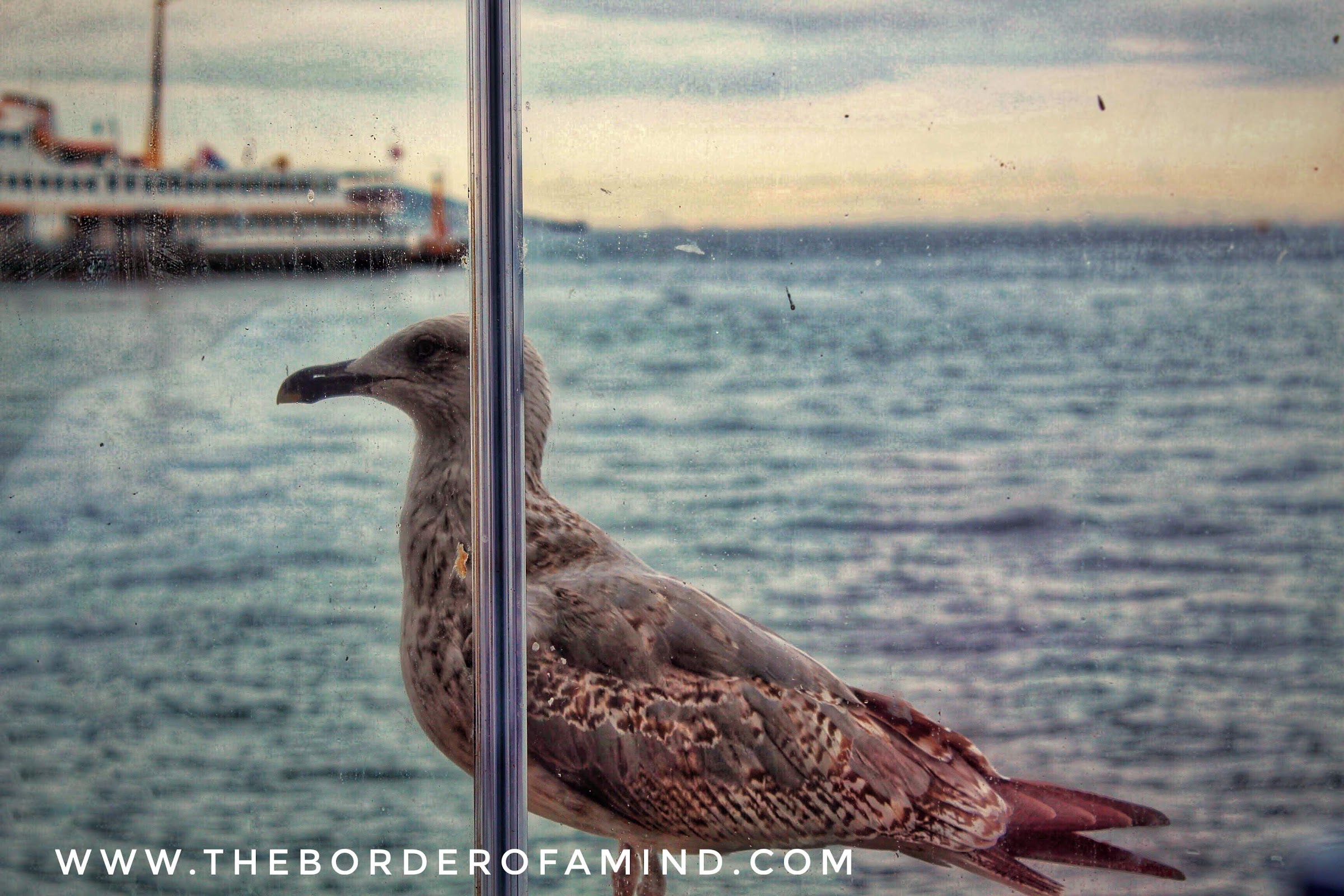
Right from college, I’ve been fascinated with biomimetics. My bachelor’s degree academic seminar that I presented at university was on this topic. Now, almost a decade from college, albeit my professional life is on an entirely different field, I’m still very inquisitive on this topic. I regularly try to read and keep up with the latest trends in this field. I’m intending to write more about the case studies I had done myself in this domain. By definition,
Biomimetics or biomimicry is the imitation of the models, systems, and elements of nature for the purpose of solving complex human problems.
Biomimetic engineering methodologies basically study patterns or entities in nature and try to derive engineering applications in order to solve real-world problems and assist people. So, I came to read about bird navigation along these lines and I was actually blown away by how they worked. Most of the migratory bird species, who normally fly these long-distance flights have some sort of “body clocks” in them. They wonderfully assembly at a particular place and usually flock together. There are many amazing aspects such as how they save fat in their bodies during these long journeys. For instance, a hummingbird flying a 3000 km distance between Alaska and Hawaii would have to beat its wings 2.5 million times and as we know, the bird weighs only a few grams. The bird faces a danger of rising temperatures but if we look at it, their metabolic activities are designed in such a way that the body temperatures of birds rises to around 62 degree Celsius. The metabolic activity of hummingbirds is around 100 times that of elephants.
Birds also have special gliding and flight techniques to cater to these long journeys. They sometimes fly in a “V” shaped formation, which aeronautical engineers estimate to achieve a saving of 23% in the flock. (Aeronautical engineer Dietrich Hummel’s study)
Among other factors, another major one is the perception of direction which is mandatory for such long distance flights. Modern research has shown that the earth’s magnetic field is also used by the birds. The direction is determined by sensing the change in the earth’s magnetic field. Findings show that even a 2% difference can be assessed by birds. National Geographic has a good piece on this topic if you’d like to delve in more.
Another photograph that I took during a cruise at Princess Islands, Istanbul.
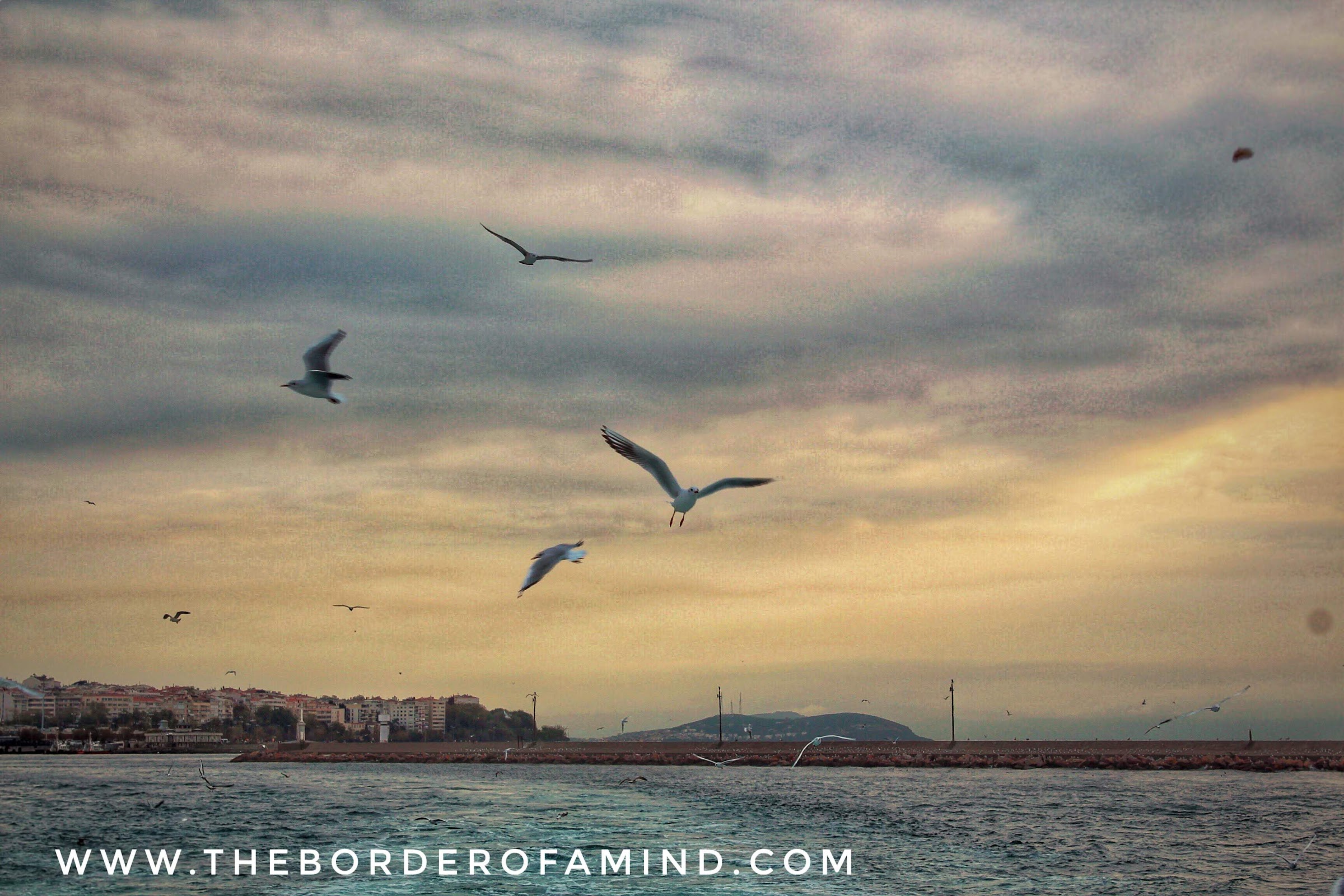
To summarize it, a lot of factors help birds with their navigation not limited to, the sun, sense of timing, location of the stars, ultraviolet rays, polarised light, sounds of very low frequency, sounds such as of waves and thunder coming from very far away, the magnetic field of the earth, gravity, meteorological assessment, favourable winds, characteristics of the ground below etc.
I’m not getting into the technicalities too much, but as we can see even something we seemingly deem as trivial such as the flight of birds is in fact on a divine plan and arrangement if we really think deep about it.
Read more about the ponder series by The Border of a Mind Studios here. Hope you find this interesting and worth reading. Other Writings from the ponder series:
..
Waves to Home
“The waves that take you away are the same ones that carry you home.”
Instagram page.

Skeuomorphism
Let’s speak of skeuomorphism today. Interaction design foundation puts the definition lucid if you aren’t familiar with this concept before.
Skeuomorphism is a term most often used in graphical user interface design to describe interface objects that mimic their real-world counterparts in how they appear and/or how the user can interact with them. A well-known example is the recycle bin icon used for discarding files. Skeuomorphism makes interface objects familiar to users by using concepts they recognize.
Skeuomorphism is related to what ecological psychologist James Gibson termed “affordances.” Affordances refer to action possibilities of objects or other features of the environment. The most commonly cited examples of affordances include door handles and push buttons; their physical designs inform users that they can be rotated or pushed. Skeuomorphism represents affordances in digital user interfaces. It fits with our natural interpretation of objects—but in a digital world.
Skeuomorphism’s use in making interfaces more familiar and thus easier to use stems from the early days of computing and mobile computing. For instance, early versions of Apple’s mobile operating system, iOS, used skeuomorphism heavily across its user interface (e.g., buttons resembling glossy ‘real’ buttons, photos with white borders looking like physical photographs, etc.). Skeuomorphism in iOS was widely regarded as part of the reason it was so intuitive to use by people who had never used a touch-based smartphone before.
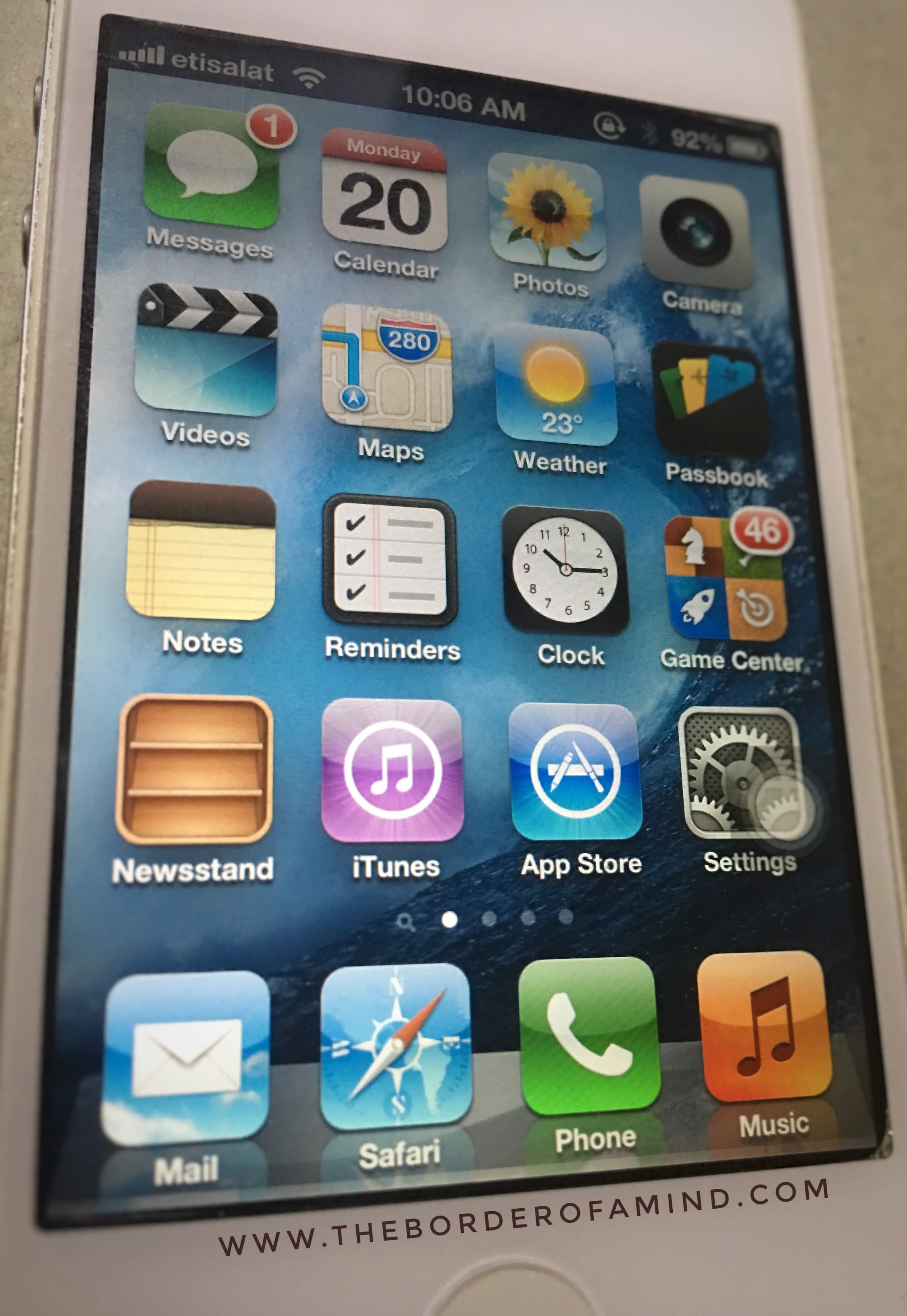
I use an old iPhone 4 running iOS6 on dual boot as a second phone for nostalgic reasons with skeuomorphic design in all its glory!
I truly believe Skeuomorphism should come back to modern web and mobile app interfaces. Simply put, this design methodology uses objects in software interfaces (buttons, graphics, etc) that closely resembles their real-world counterpart. You’d easily recollect the “trash can” icon, which is probably the easiest skeuomorphic object recognizable in modern interfaces. From the 1980s, it was predominantly used by Apple across their product interfaces and Steve Jobs was an ardent fan of it. From around 2007, this design method was on a downhill and was replaced by the flat designs that became trendy in tech. Approaching 2020, I really wish Skeuomorphism would renew itself on a modern context across all platforms for the better. There are some hopeful developments.
‘Fog of Uncertainty’
‘Opportunity is often delivered in a fog of uncertainty’ – V.Hugo

“Sensemaking”
‘Sensemaking: The Power of the Humanities in the Age of the Algorithm‘ is an incisive book written by Christian Madsbjerg. I stumbled across this book during a spun-out wait at a bookstore near an airport boarding gate. The power of the Humanities in the Age of the Algorithm – Well, that caption was intellectually pretty much beefy enough for me to be riveted by the overall theme of it. I had thought about this status quo before, wherein we’re living a world where “technology dripped” people and organizational machinery slowly chip away the humanities aspects of even trivial matters. Industries and businesses heavily tend to rely on extracted data and algorithms without contemplating on the cultural nuances and the socio cultural engagement with their clients that often used to lay the foundations of such connections. While we thrive in a world of increased automation, machine learning, artificial intelligence, the importance of profound human connections and the liberal arts aspect of such engagements are often relegated to a frivolous domain. The book is straightly addressed to a worldwide audience and this can be perceived by anyone at any corner of the world. Businesses or individuals trying to develop a global engagement at a particular place with any product or service have to spend time understanding the culture of the people there to understand their preferences and the factors influencing their decision making. The author recommends to use liberal arts, philosophy and cultural understanding as tools in developing that understanding and not to dominantly rely on clusters of data without their contextual underpinnings. We find that the author narrates through different thinking approaches like “deductive” (top down reasoning) and “inductive” (Bottom down reasoning). The book walks us through some of the consultancy experiences that the author had with automobile companies such as “Ford“, wherein for example, a deeper understanding of the cultural preferences and nuances of customers helped them to resurrect their once failing Lincoln brand. This is one example. The author provides several compelling examples from different industries and contexts to propound his case. It’s a good insightful read if you’re interested in this sort of a theme. I’m adding some quotes from the book, which I felt was interesting.
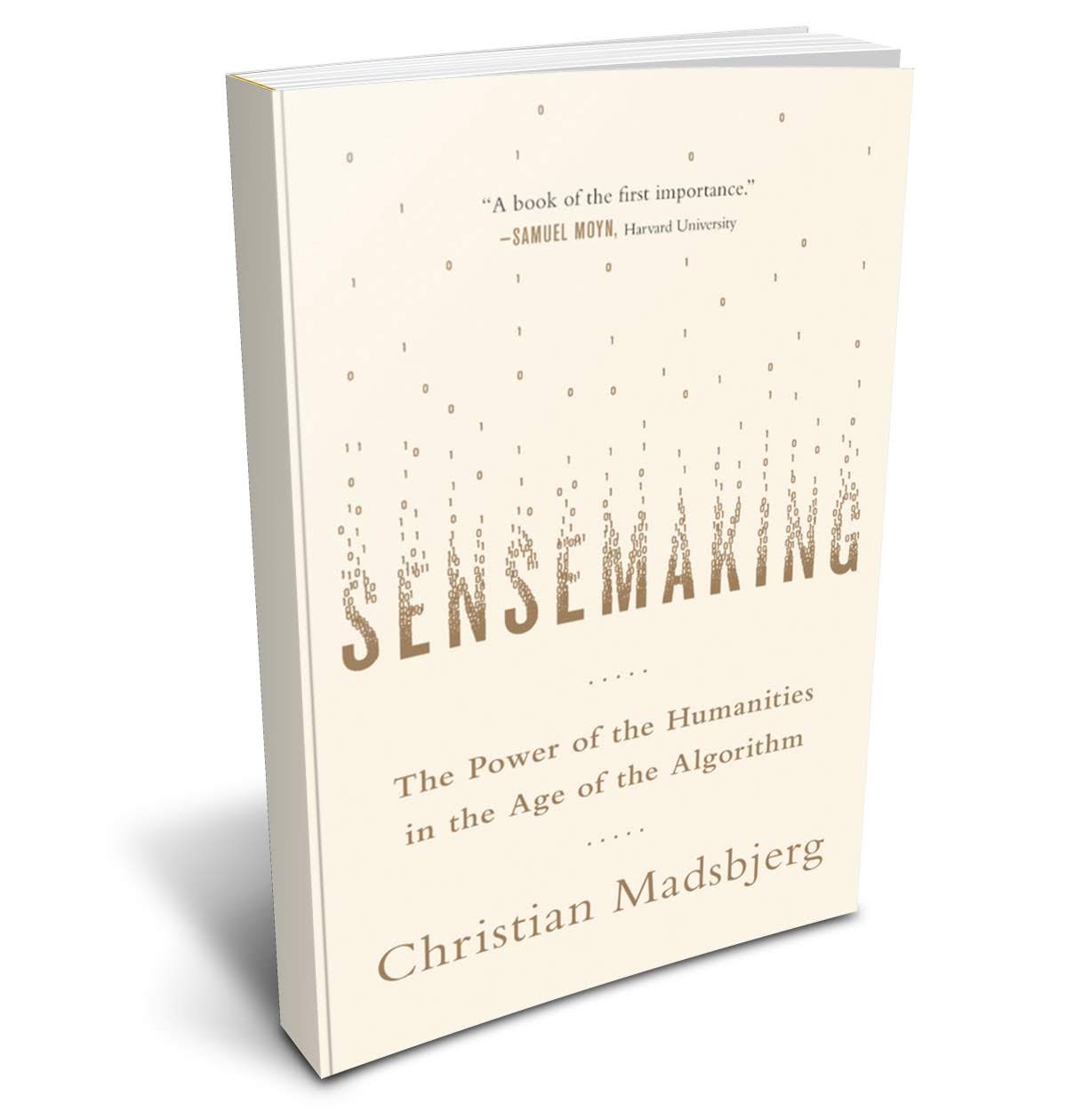
“Over time, as management has become increasingly professionalized, you can sense a kind of nihilism or loss of meaning in the executive layers. This nihilism is strongest in large corporate cultures where management is seen as a profession in and of itself, with no strong connection to what the company actually makes or does.”…
“Without this texture of experience, the data shoved before these executives’ eyes loses any truth. Context and color are absent; all that remains are abstract representations of the world rather than the world itself.”
Quoted from “Sensemaking: The Power of the Humanities in the Age of the Algorithm” by Christian Madsbjerg.