From a winter sky in the UAE with scattered clouds sprouting gradually after an enchanting daybreak. Thin rays of orange creep up around the office premises and that leaves me in awe of this enrapturing spectacle on the horizon.
“ We’re not moments, Megan, you and me. We’re events. You say you might not be the same person you were a year ago? Well, who is? I’m sure not. We change, like swirling clouds around a rising sun.”
My vehement fascination with petals and the art in their arrangements transcends to tree trunks and stems as well and this is what we have pulled off : )
This is a mobile photograph taken from Al Ain Oasis. Down the memory lane, my 2019 year started on top of a mountain in the UAE. Instead of chasing fireworks, we pursued mountain trails in 2019. In place of the rabble and gaggle of a fireworks crowd, we tried to embrace the assuasive and soothing equanimity in the mountains.
“You are most beautiful in your purest form. You are a manifestation of God himself. Open your eyes and let the light flow right through to your core. All it takes is for you to notice a flicker of leaves, a momentary glance from a loved one, or for a wave to hit your toes and freeze you in that timeless place where you know with every cell in your body that God, indeed is real.”
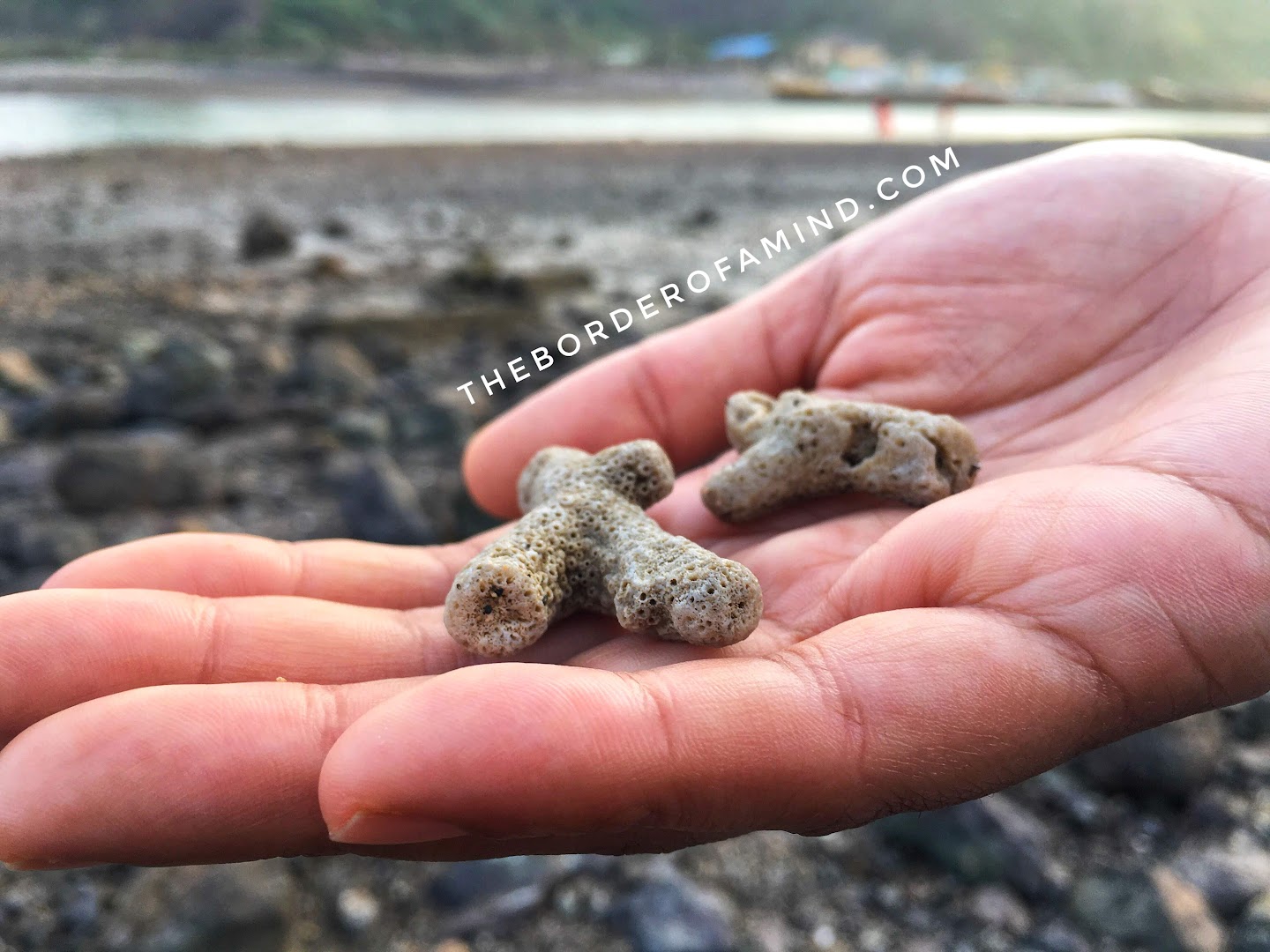
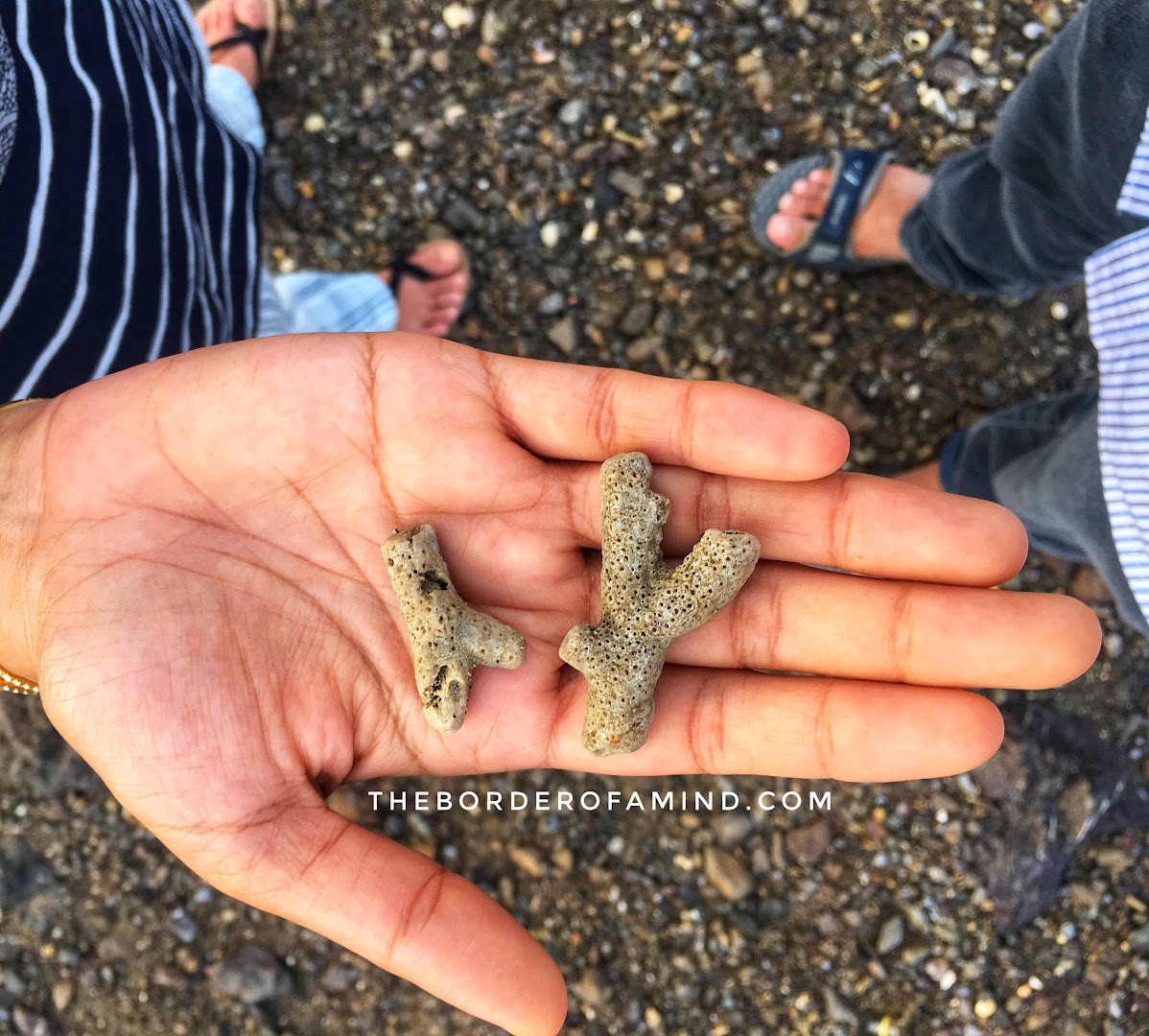
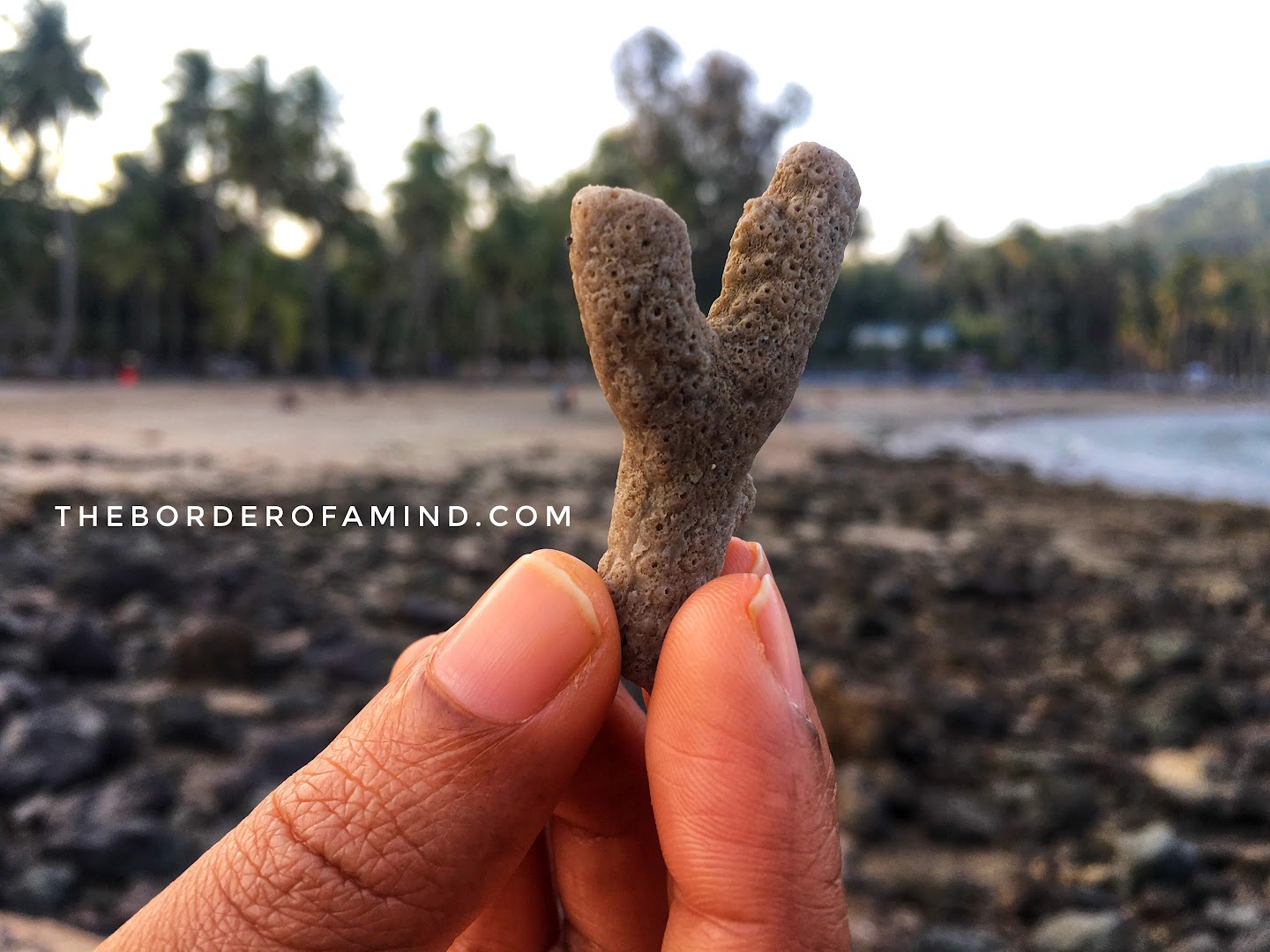
These are some pebbles that I randomly glanced at Corbin’s Cove beach in Port Blair during a visit with Netta in 2018. It’s a beautiful palm-fringed beach with pleasant blue sea water and lush green coconut palms. They’re enriched with colorful corals and artful rockfaces at the peripheries. I have some vague recollections of an old post that I read on medium portal which spoke about the art of seeing beauty in the everyday. Pebbles purvey such thoughts on appreciating such beauties around us. The detailing and subtleties of these pebbles graciously nudge of themes in a philosophical context. As Emilie Cady puts it, ” Men stumble over pebbles, never over mountains“.
“A rock, a large piece of rock weathers off a cliff and dives deep into a pool of gushing water. Back washed, It journeys roughly and knocks of other rocks, smashing through the waves as it loses itself in scattered pieces except for its core. That core travels far and wide, it coarsely gets ground by gravel pieces smaller than itself and bullied by boulders all of which it bears up as it withstands the pressure of a distant journey off the shore. At some point, it gets dry and it encounters mud, it gets smeared dirty but the mud doesn’t stick, the rain washes of the mud and it rolls off into the sand. It dances in the sand and dives into the bottom of the waves.
Rising like a phoenix through the ashes, it emerges polished, looking more beautiful than it did when it got edged of the cliff. It rises a pebble, smooth and sleek. Coveted by rocks starting their dive.
To be a pebble you have to run the turbulent tidal race.”
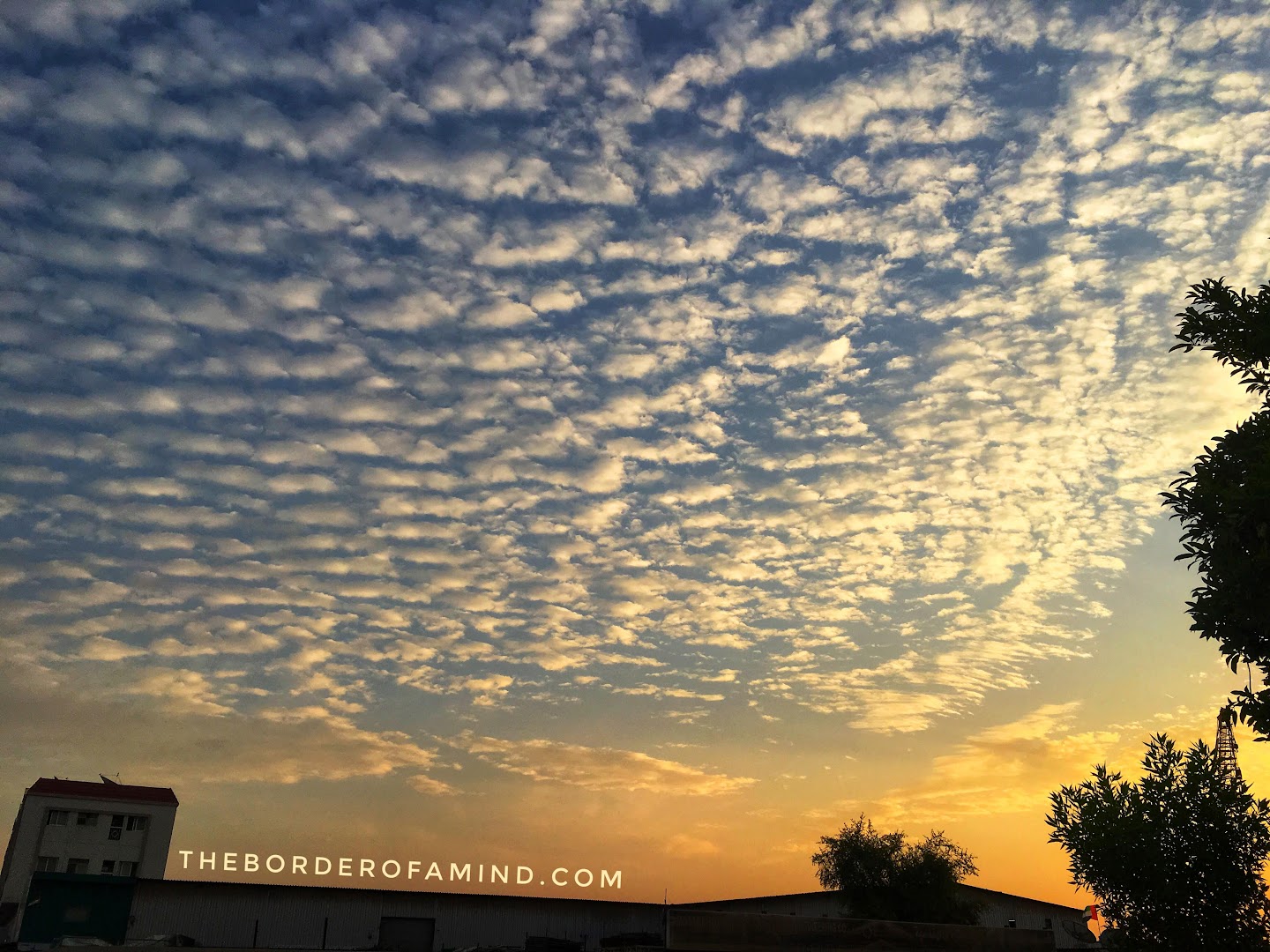
Bank of clouds at the entrance of my office building inching across the sky. Bright radiant blue skies weaved with a tapestry of clouds. We find these “windows” in architectural themes. In these kinds of photographic narratives, the top portions are often composed in a way to give a perception of a window. Notice the subtle contrast in colors between the walls and the dark blue skies.
“Rest is not idleness, and to lie sometimes on the grass under trees on a summer’s day, listening to the murmur of the water, or watching the clouds float across the sky, is by no means a waste of time.”
― John Lubbock, The Use Of Life
Just recollected one of my old write up from 2013. Professionally, I’m a mechanical design engineer working on the design of engineering products used in offshore and infrastructure applications. There are some subtle marvels in this world that sometimes humble ourselves and leave us spellbound in a sense of awe. This is one of them. Take a read.
Ralph Waldo Emerson once wrote that the earth laughs in flowers.
“The breath of wind that moved them was still chilly on this day in May; the flowers gently resisted, curling up with a kind of trembling grace and turning their pale stamens towards the ground. The sun shone through them, revealing a pattern of interlacing, delicate blue veins, visible through the opaque petals; this added something alive to the flower’s fragility, to its ethereal quality, something almost human, in the way that human can mean frailty and endurance both at the same time. The wind could ruffle these ravishing creations but it couldn’t destroy them, or even crush them; they swayed there, dreamily; they seemed ready to fall but held fast to their slim strong branches-…”
― Irène Némirovsky
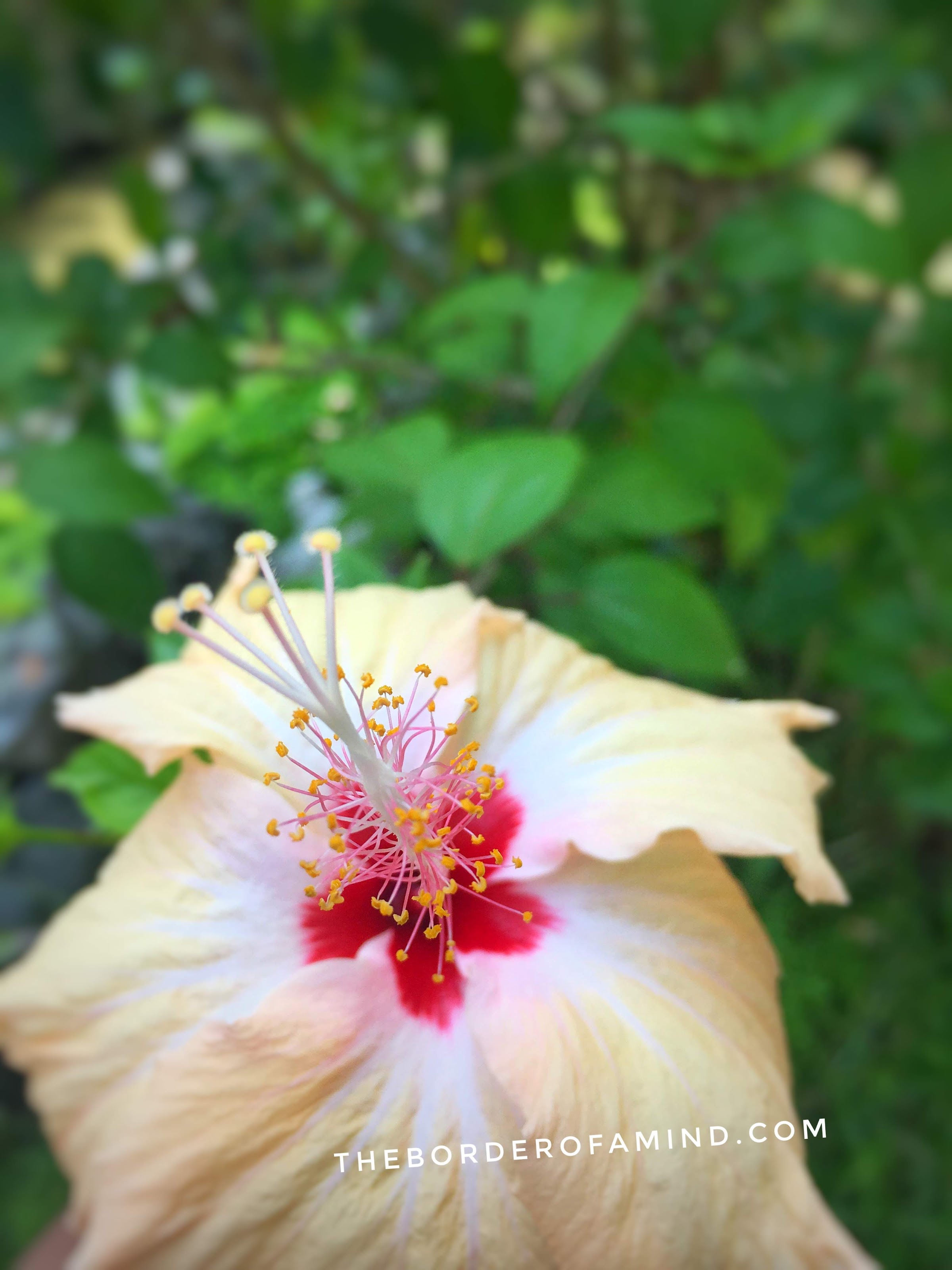
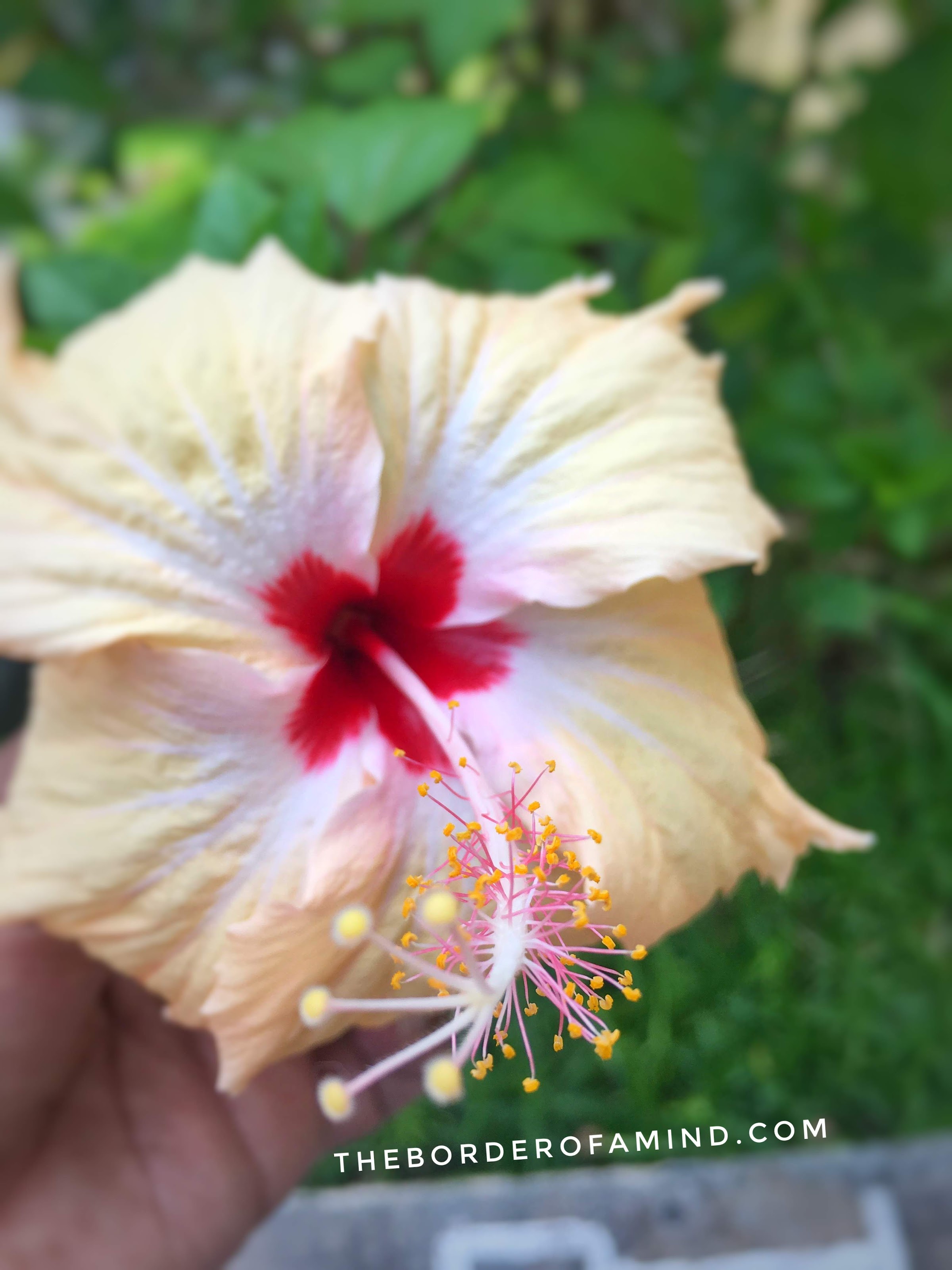
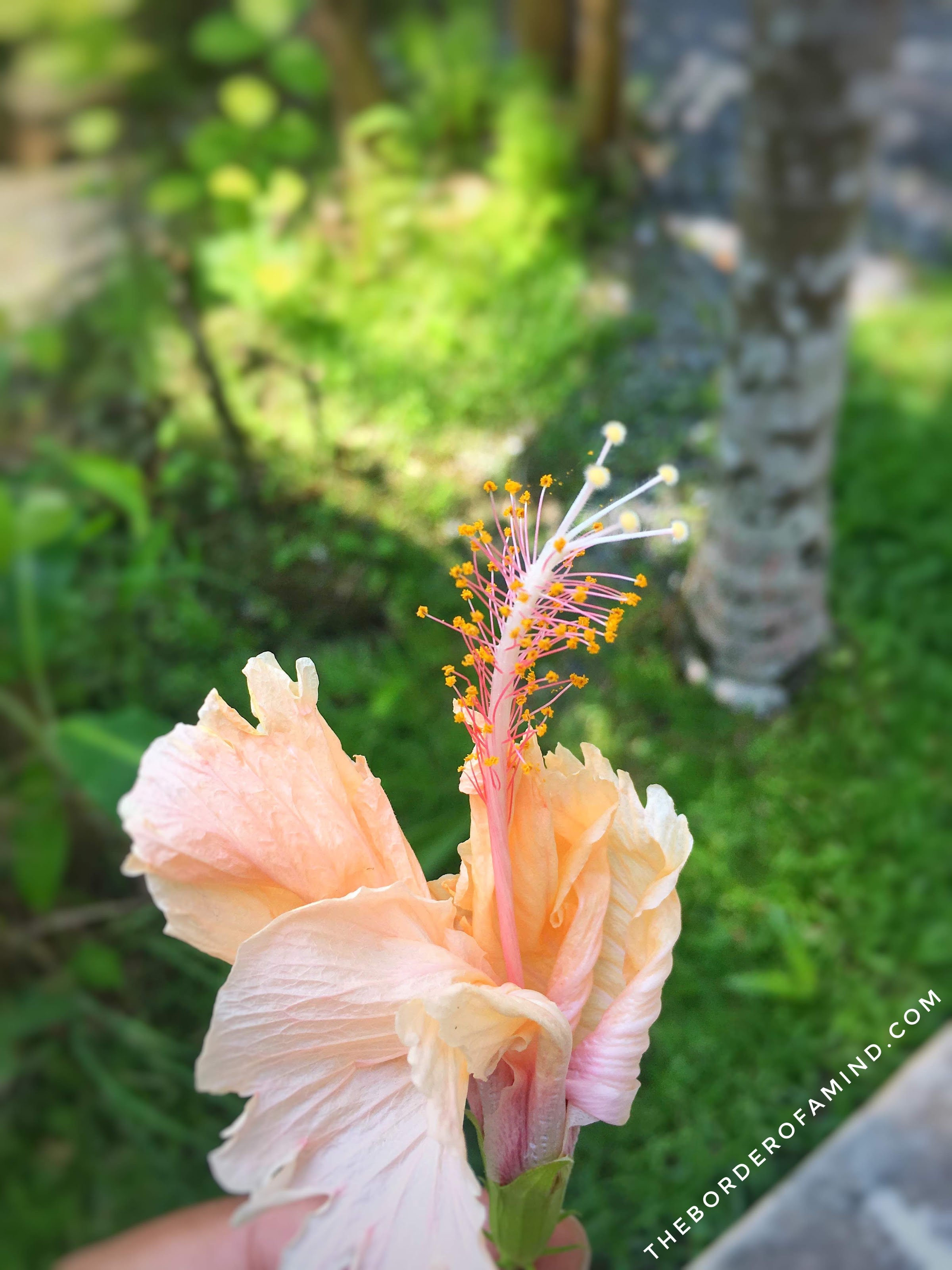
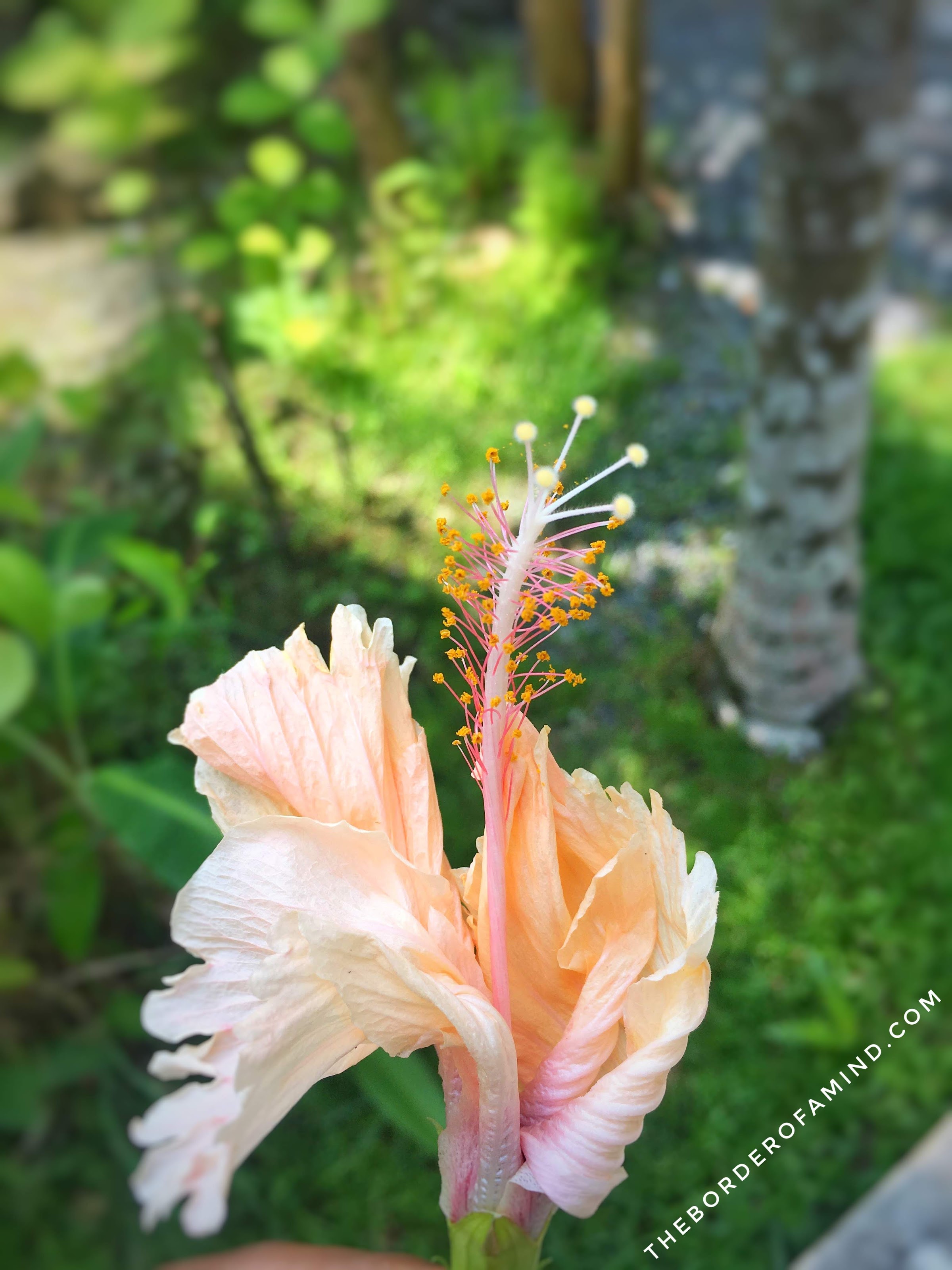
Notice the beautiful reddish pigment and the loft petals spread from it. Notice the aesthetically aligned petal stems decored with sub stems with yellow mini studs on them. Gazing at these details and pondering about them Photographs below are taken from a remote garden in Havelock Islands.
“Nobody sees a flower – really – it is so small it takes time – we haven’t time – and to see takes time, like to have a friend takes time.”
― Georgia O’Keeffe
“Just as a flower as itself displays an embroidery full of art and with the tongue of its being recites the Creator’s names, so the garden of the globe resembles a flower and performs an extremely orderly, universal duty of glorification”
― Said Nursi, “The Twenty-Ninth Word”, Treatise of Light.
Roman Payne famously told that sunrise is the most precious gold to be found on earth. It’s a luxury that every one of us can peek at regardless of where we are or who we are. Sunrise lighting is a miraculous golden lamp that can be used to paint anything to ecstasy. If we place mountains also in this frame, what you get is pure visual bliss. We had this short stop on the way to Wadi Al Helo from the Sharjah mainland in the UAE. Travelling and riding just before sunrise through the mountain footways would uncloak some of the best visual memories and awesomeness you’ve ever had.
“Life. This morning the sun made me adore it. It had, behind the dripping pine trees, the oriental brightness, orange and crimson, of a living being, a rose and an apple, in the physical and ideal fusion of a true and daily paradise.”
― Juan Ramón Jiménez, Time and Space: A Poetic Autobiography
“HEARTWORK ” Each day is born with a sunrise and ends in a sunset, the same way we open our eyes to see the light, and close them to hear the dark. You have no control over how your story begins or ends. But by now, you should know that all things have an ending. Every spark returns to darkness. Every sound returns to silence. And every flower returns to sleep with the earth. The journey of the sun and the moon is predictable. But yours, is your ultimate ART.”
― Suzy Kassem
“With a bound, the sun of a molten fiery red cam above the horizon, and immediately thousands of little birds sang out for joy, and a soft chorus of mysterious, glad murmurs came forth from the earth; the low whispering wind left its hiding-place among the clefts and hollows of the hills, and wandered among the rustling herbs and trees, waking the flower-buds to the life of another day.”
― Elizabeth Gaskell, Ruth
Before I start, let’s see this beautiful video “Nature by Numbers” by Cristóbal Vila. I first saw this almost 9 years back and it helped discover a lot of amazing knowledge treasures which I didn’t know before. This number is used by architects and designers extensively, but what we are discussing here is something else. It’s about realizing and pondering on how the entire universe is crafted specifically in a specific metric. Have a look at the video and I shall elaborate further with detailed illustrations. I was pretty pumped up when I first came to know about this and would like to take this write up as an opportunity to share this information with you. Probably this would be the first write up for which I spent the longest time preparing content and illustrations for the only reason that I’m super excited to share this all of you. Now, let’s read.
This piece would be an addition to the Ponder Series that we have been writing extensively over the past several months. When we think about the world around us and also when we look within, it might seem usual and ordinary. But ponder series, as you might know, is all about thinking deeply and delving into the details by going beyond the ordinary perceptions. “Golden Ratio” is such a concept that’ll blow our minds off. I first read about this interesting ratio pervading the universe when I was in college. I shall elucidate it here, preferably with some visual illustrations. If you have not heard about this before, I’m sure this will definitely throw you into some wonder. Read it very carefully. It’s exciting information!
Many of us would be familiar with the Fibonacci series of numbers which were discovered by the Italian mathematician Leonardo Fibonacci in 1202 B.C.
It’s a series as below:
0, 1, 1, 2, 3, 5, 8, 13, 21, 34, 55, 89, 144, 233, 377, 610, 987, 1597, 2584, …
In this series, if you add two numbers in the series, you’ll get the next number in the series. For example, 0+1=1, the third number in the series. And 1+1=2, the fourth number in the series, 1+2=3, the fifth number in the series and so on.
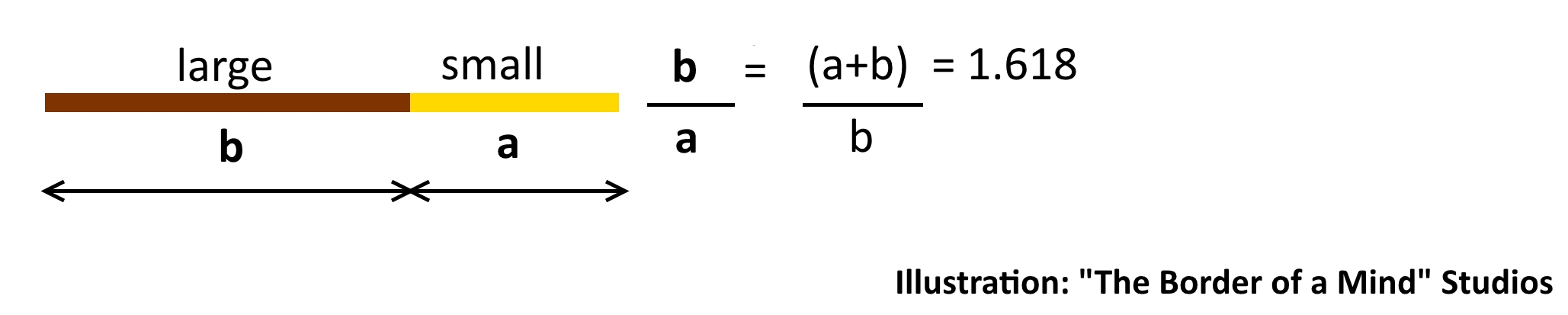
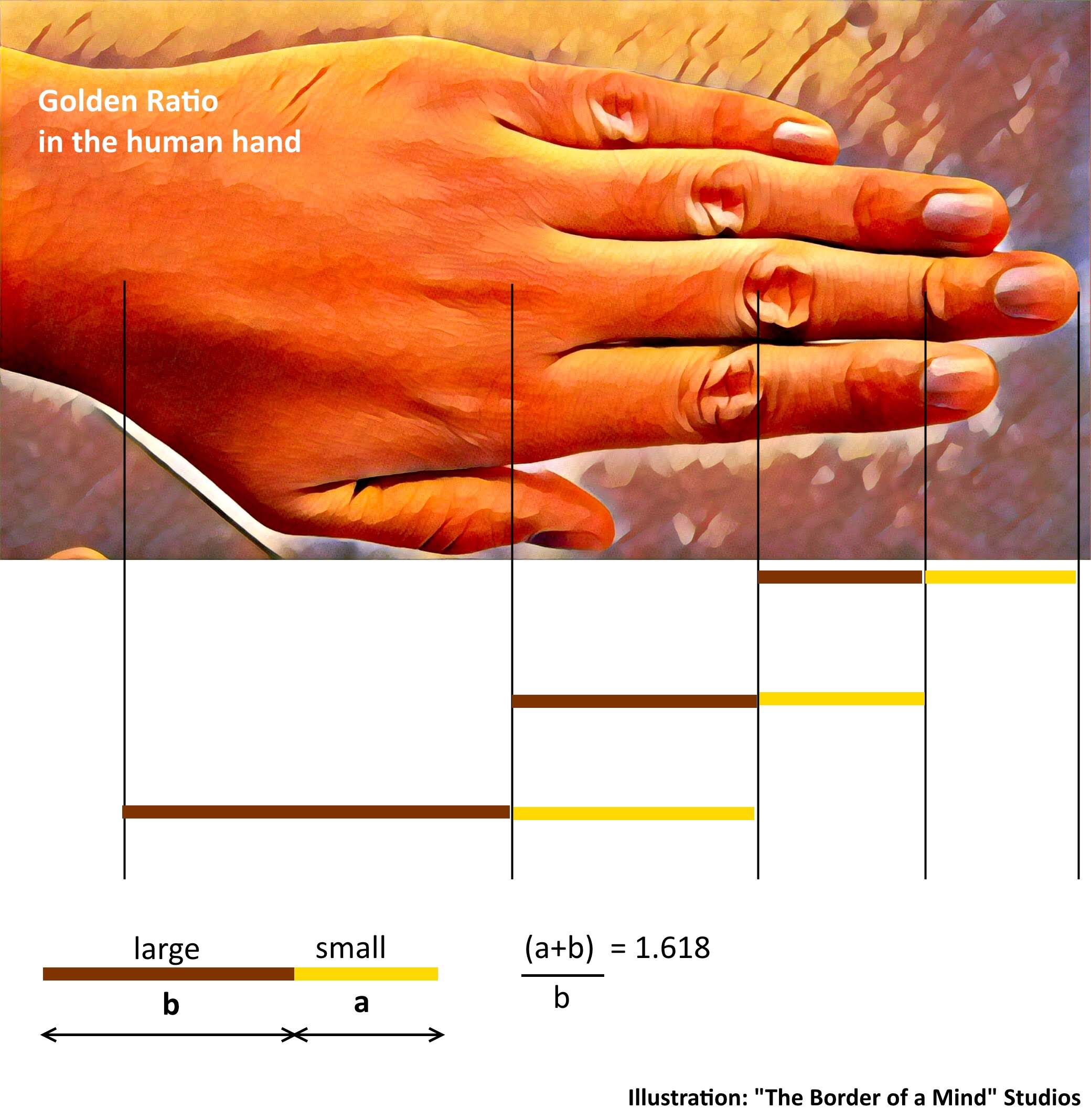
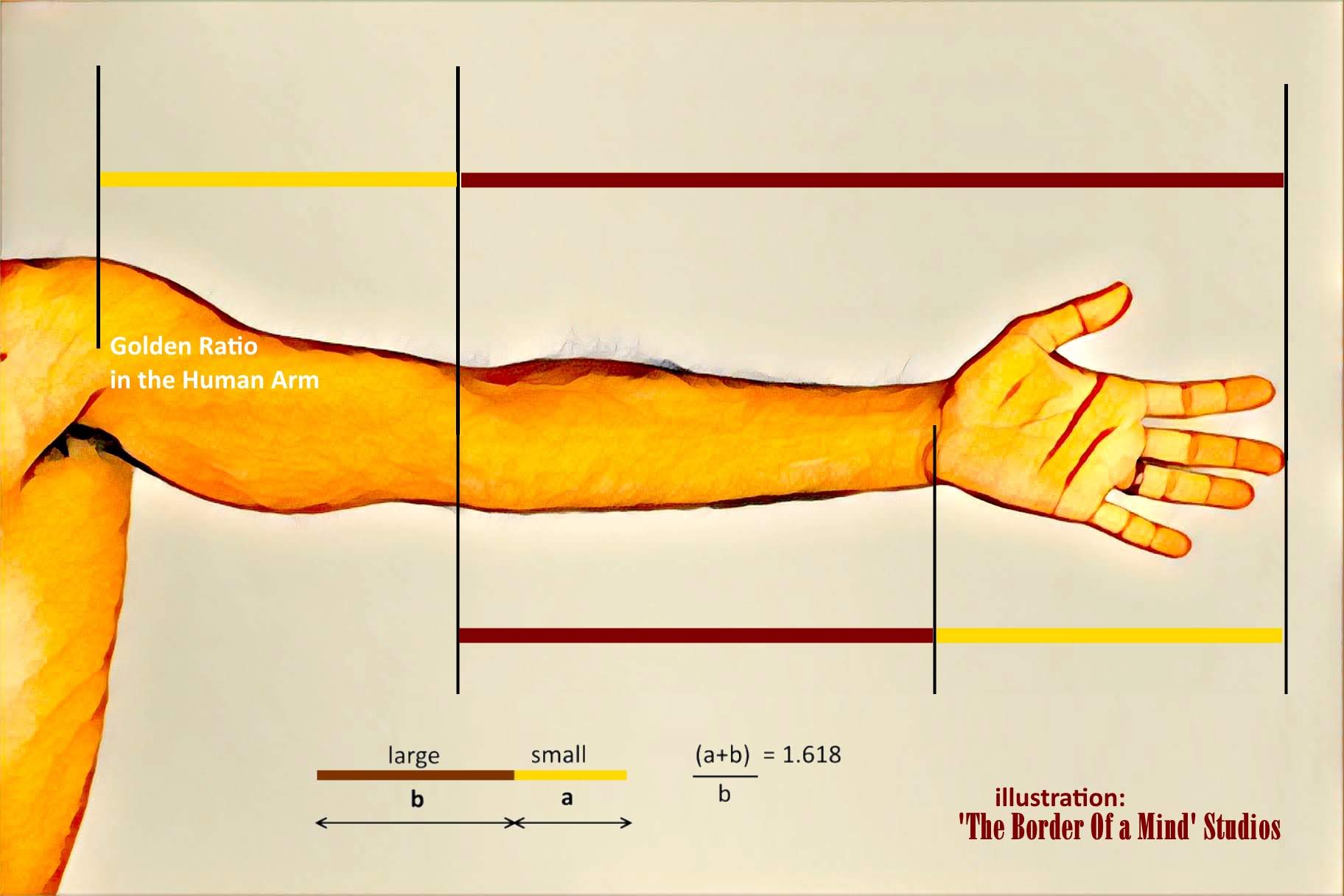
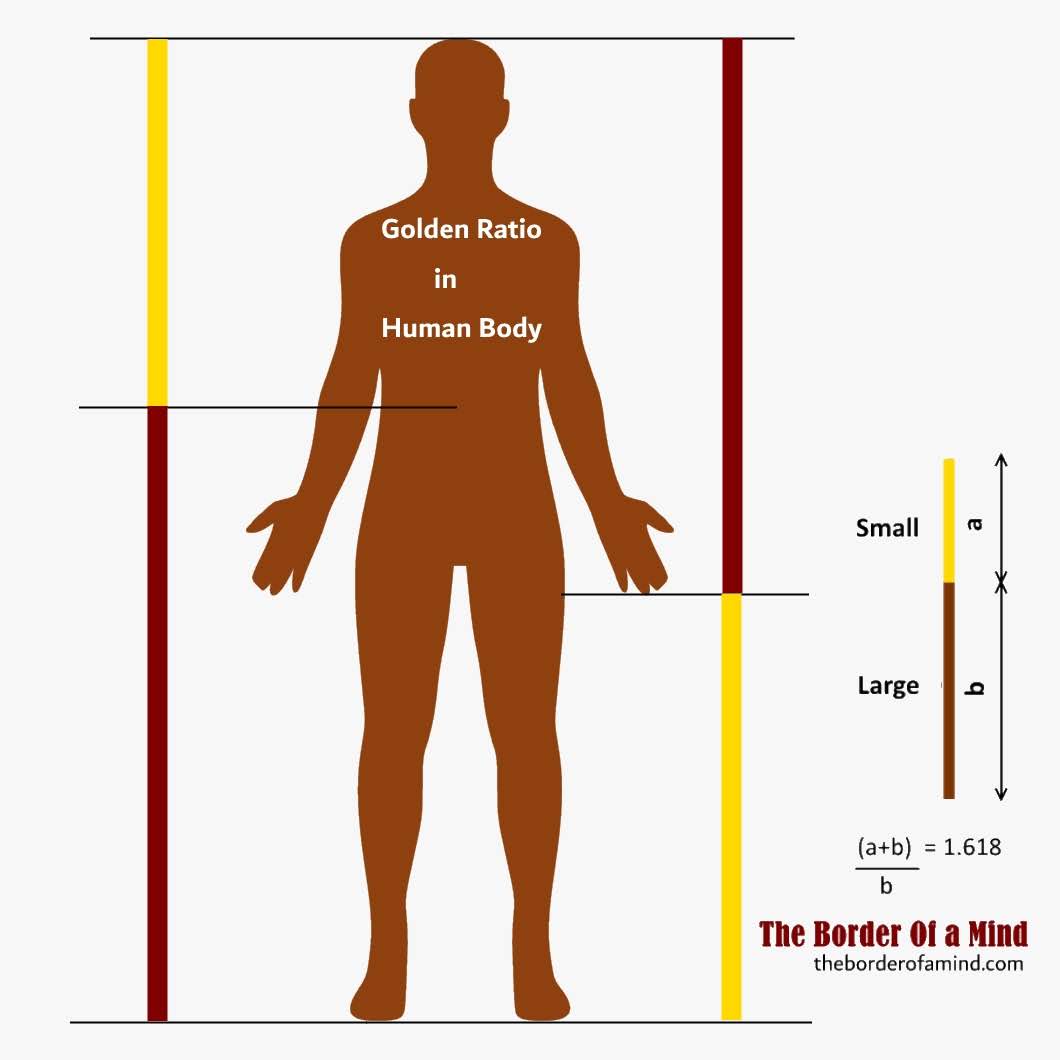
We might have seen this series in our maths classes and wondered what is special about them. They have an amazing property. If we divide any number in this sequence by the number before it, we would get numbers very close to each other. After the 13th number in this series, the ratio is constant and we get 1.618. This is called “Golden Ratio”
Now, this golden ratio number of 1.618 is pervading everywhere. If you didn’t know this before, get prepared to be blown away.
Human Body
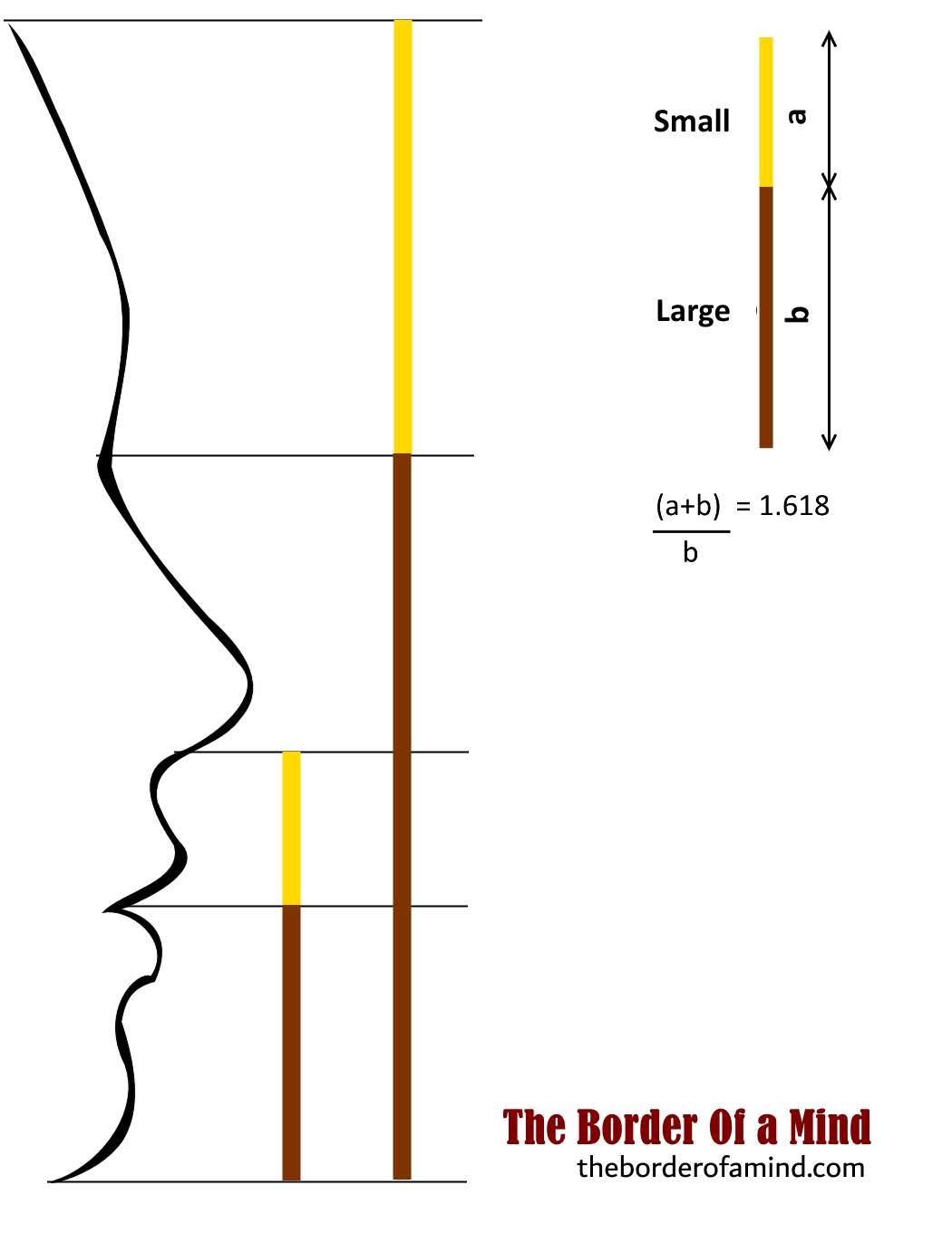
Did we ever think that our body measurements were just random? Boy! we are wrong! The proportions and geometrical ratios are carefully crafted in this specific ratio. For a better visual perspective, I’m sharing a few illustrations below so that you can take a look! These values are universally true for every human body. Isn’t that a jaw-dropping realization if you didn’t know this before?
Now, that’s far from over. Let’s go a little deeper. The same ratio is true for the below: – Length of face/width of the face, – Distance between the lips and where the eyebrows meet / length of the nose, – Length of face/distance between the tip of the jaw and where the eyebrows meet, – Length of mouth/width of the nose, – Width of nose/distance between nostrils, – Distance between pupils/distance between eyebrows.
Even the placement of teeth, as well as the ratio of individual teeth sizes, are on this same ratio.
In a research study carried out in 1987, it was discovered that this magic ratio is also in the structure of the lungs as well. The bronchi network in the lung is asymmetric. The windpipe gets divided into the left and the right bronchi networks. The one on the right is short and the one on the left is long. The geometrical proportion of the shorter one to the longer one of this bronchi is 1.618. Isn’t that amazing? Recent studies have shown that the internal structures of the ears are also proportioned in the same ratio. The more we explore and delve in, the more breathtaking it turns out to be.
This number has garnered significant interest in great minds like Pythagaurus, Leonardo Da Vinci and the famous astronomer Kepler. Leonardo Da Vinci has used it in the painting Monalisa.
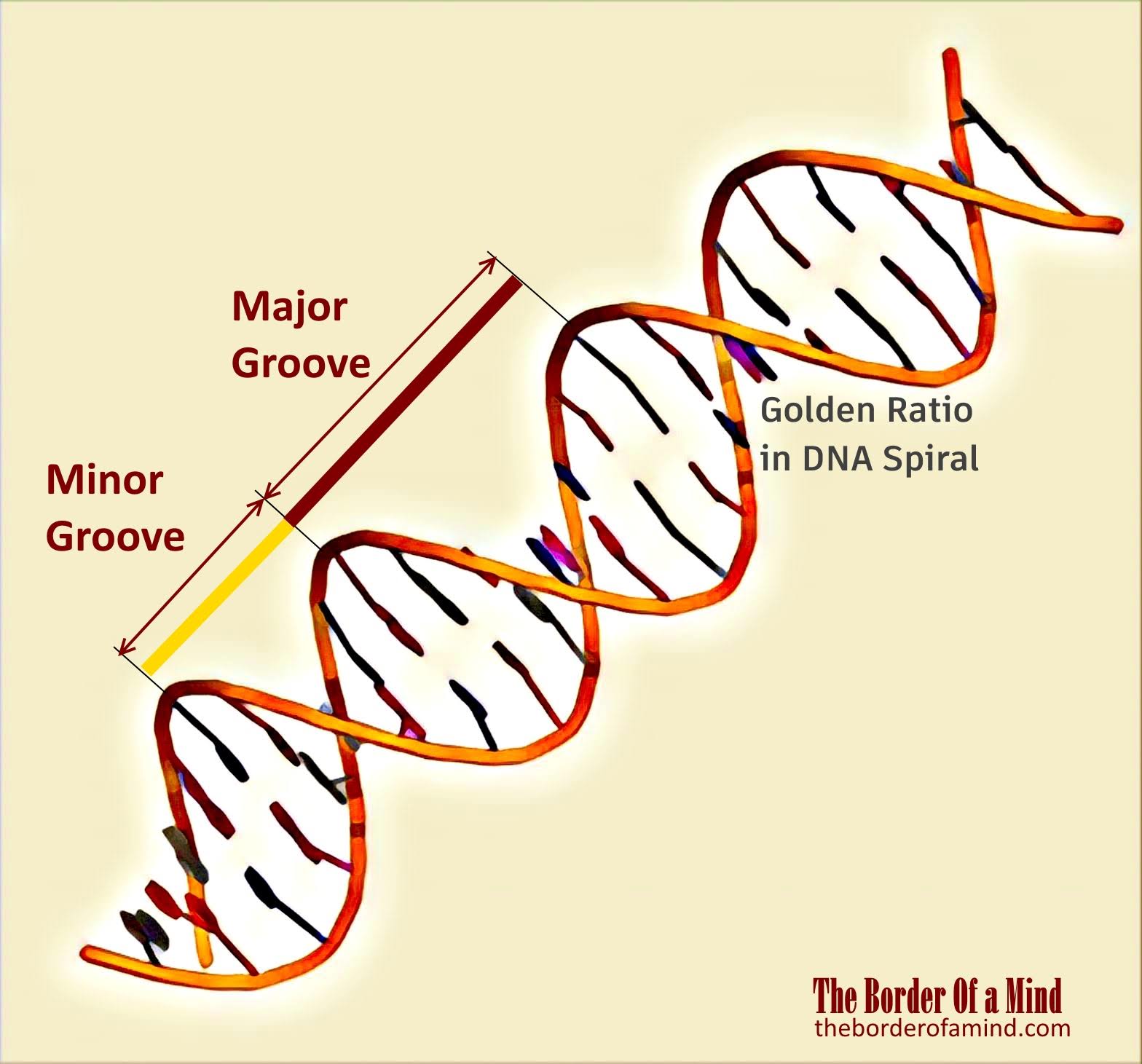
Golden Ratio in DNA Helix DNA has two grooves in its spiral. Major to minor groove proportion measures as the golden ratio 1.618.
Golden Spiral
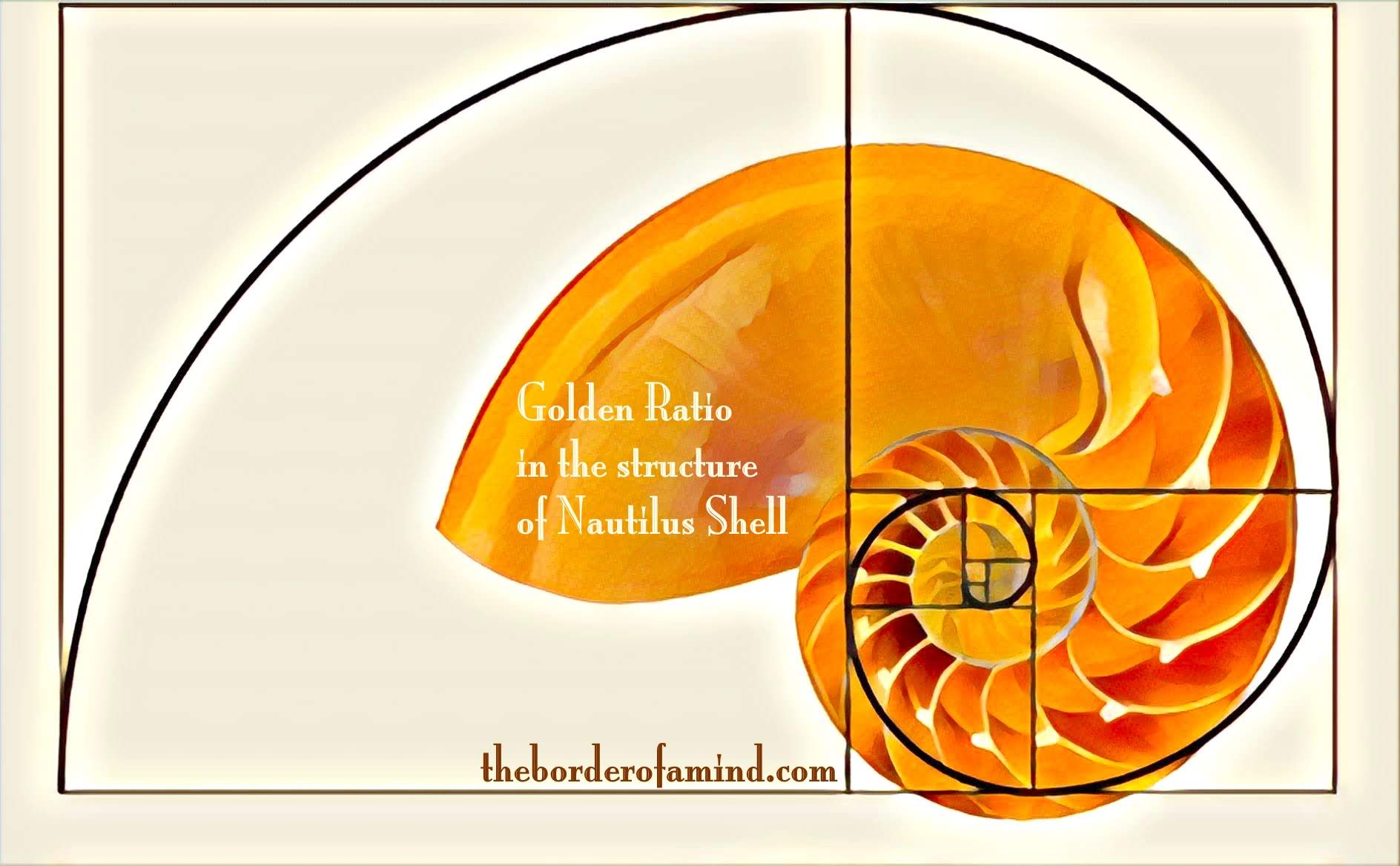
In geometry, a golden spiral is a logarithmic spiral whose growth factor is φ, the golden ratio. That is, a golden spiral gets wider (or further from its origin) by a factor of φ for every quarter turn it makes. See the below link for a reference.
Image By Jahobr – CC0, Link
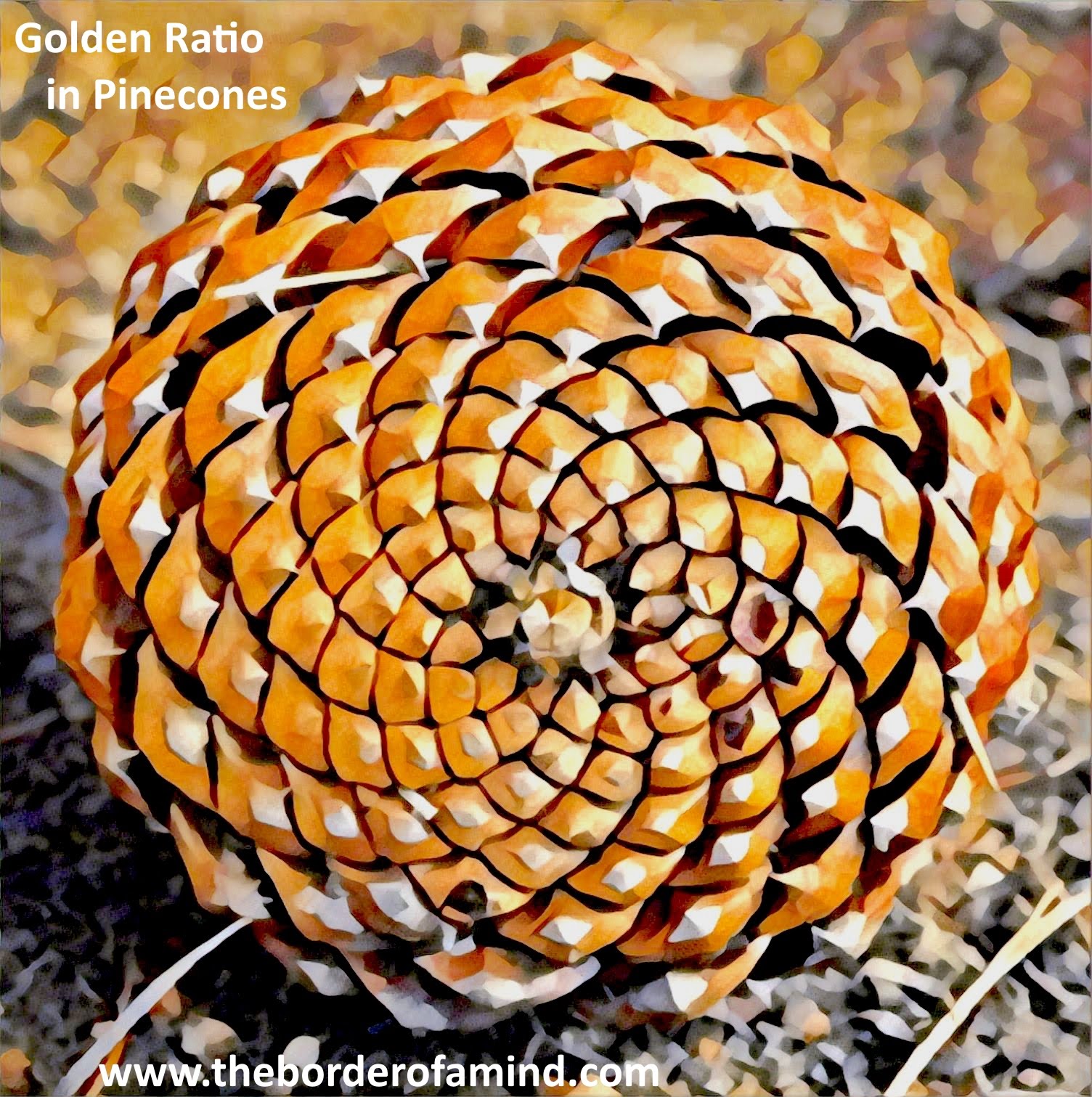
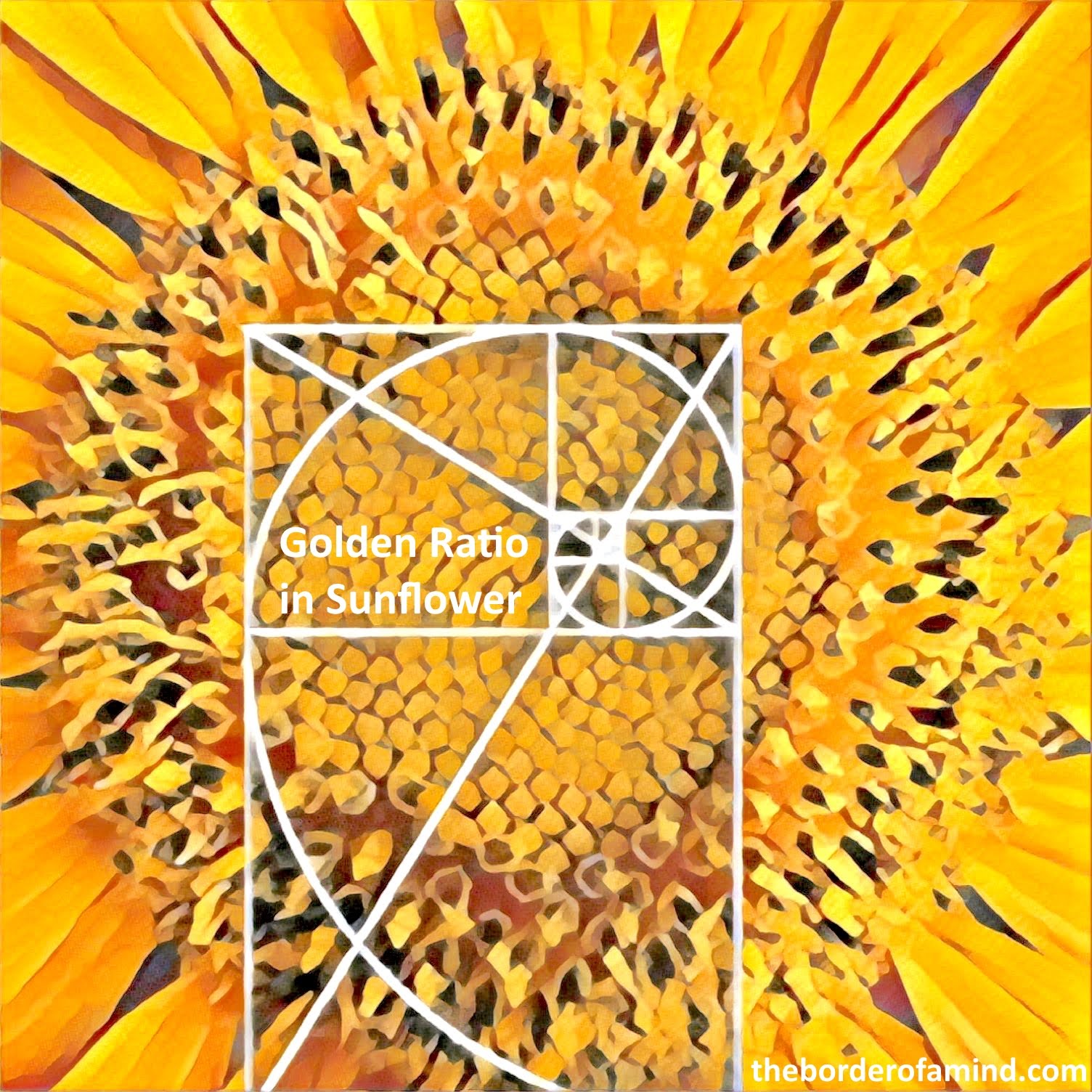
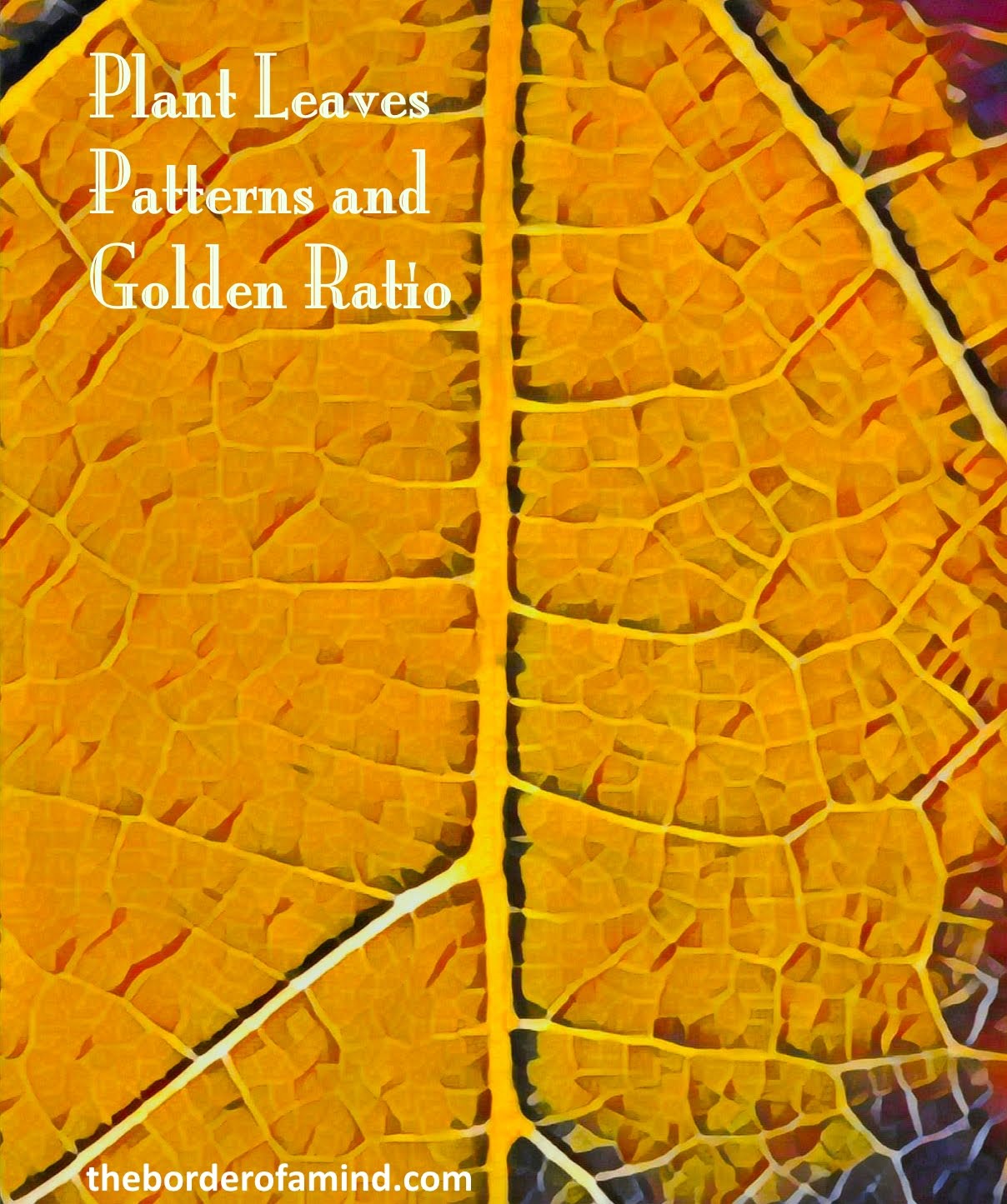
The golden spiral can be found in pinecones, sunflowers, pineapples, and a lot of other plants. Another amazing detail is that the petals of plants commonly grow in Fibonacci numbers.
In sunflower, we can notice two families of spiral patterns: one winding clockwise and the other counterclockwise. The quantity of spirals in each family are always two consecutive Fibonacci numbers. This effect is the result of closely packing points separated by 137.5 degrees in tight spirals. This implies that the a golden-ratio based phyllotaxis allows not only for optimal sun exposure but also for maximal packing in horizontal space. (Reference)
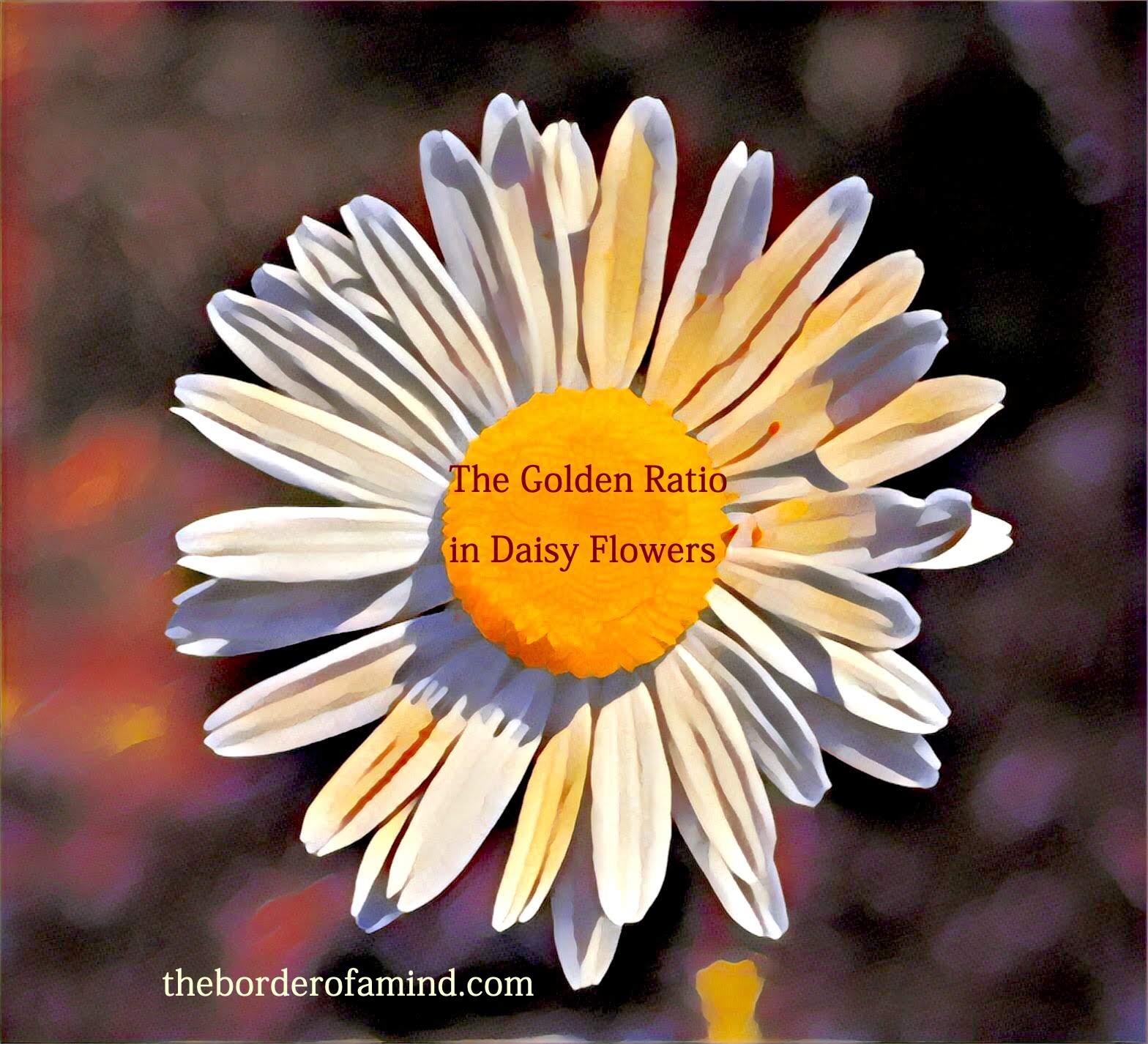
For field daisies, the count of petals is usually either thirteen, twenty-one, or thirty-four petals, all consecutive Fibonacci numbers. Bet you didn’t know about this before! 🙂
And it’s not over yet. We have more!
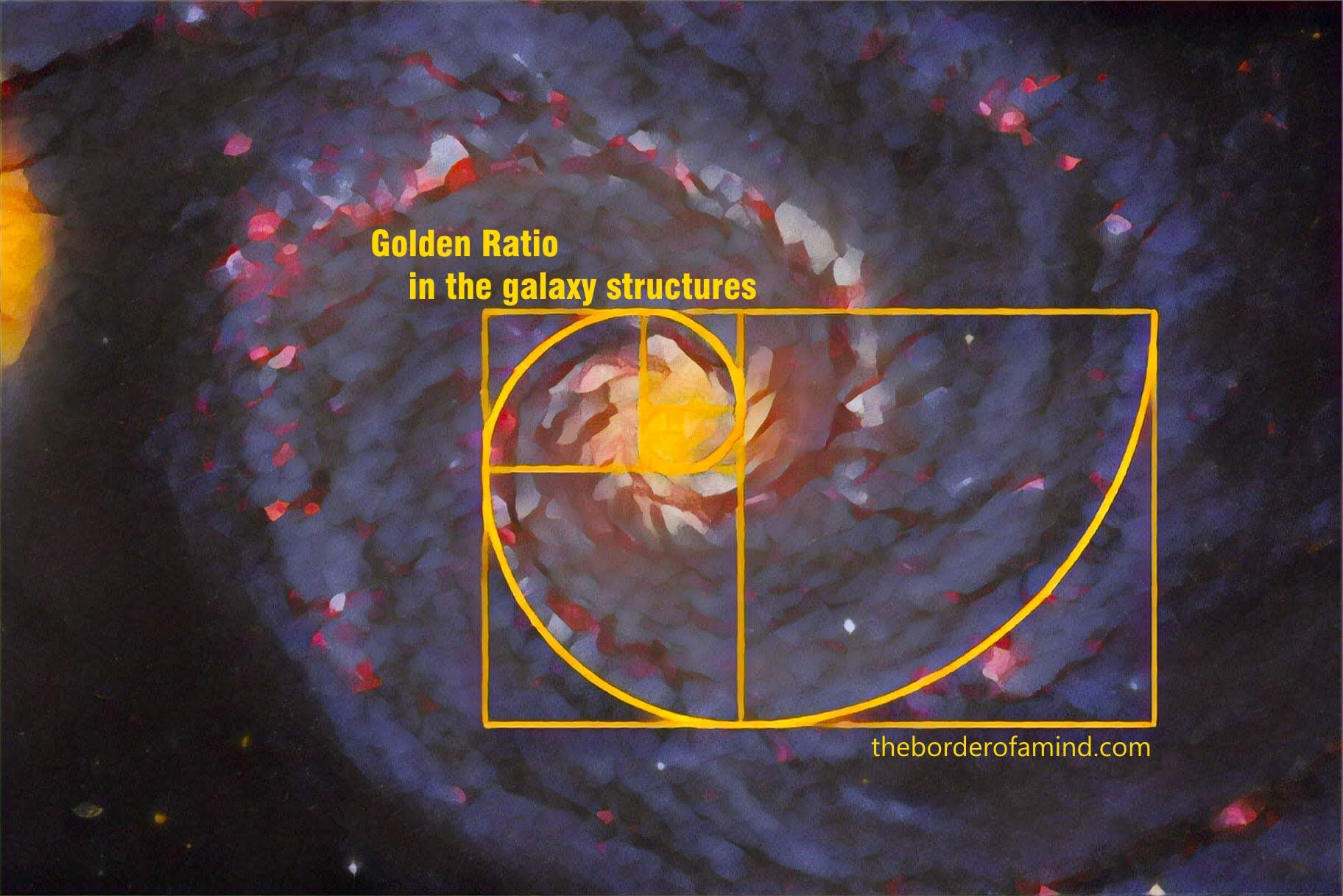
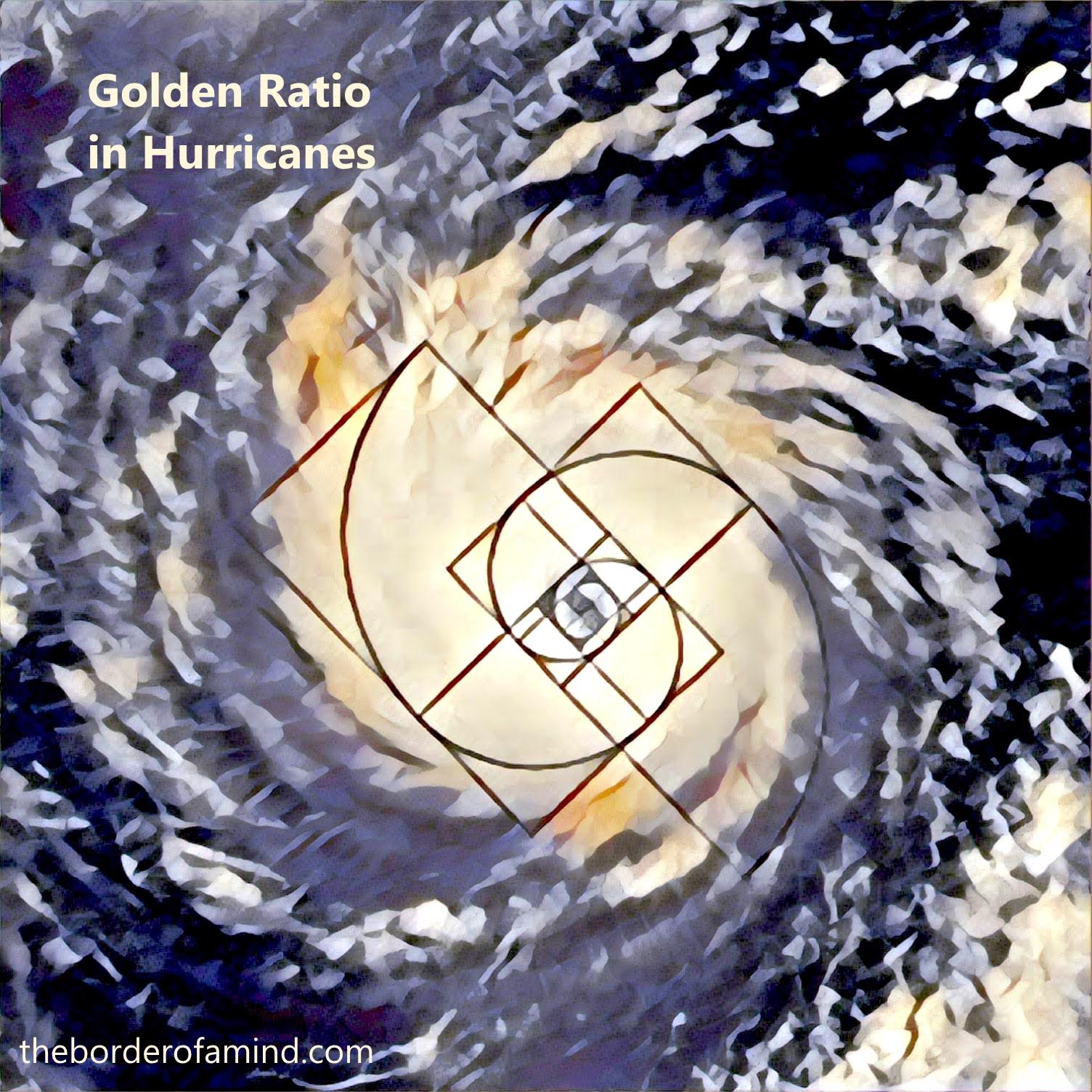
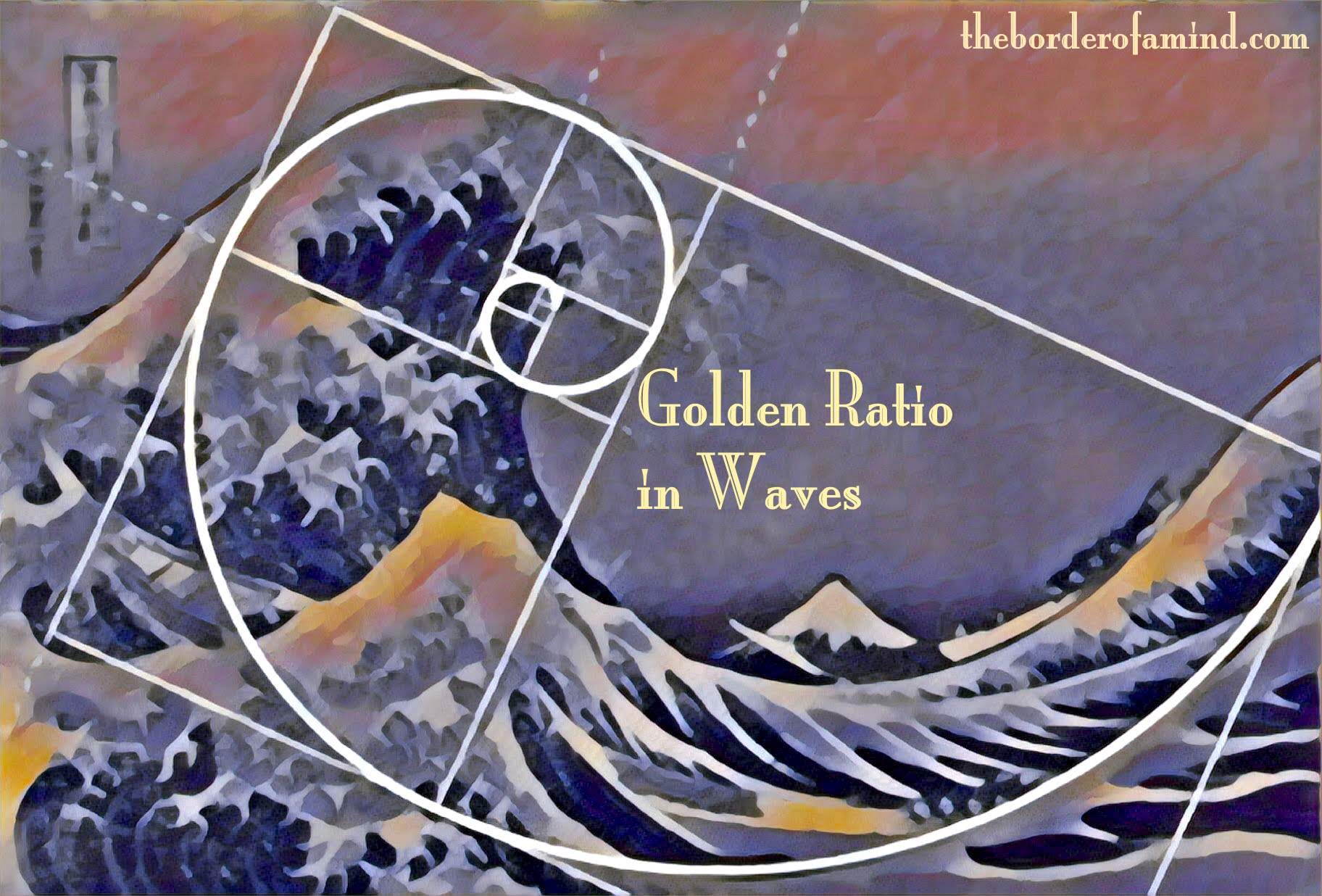
The golden ratio is even found in the shape of galaxies, hurricanes, and waves.
What I have shown here is only a small portion or subset of how this golden ratio pervades in almost every other stuff we are surrounded with. Leonardi Davinci has used this ratio in some of his greatest paintings. Architects use this ratio in designing structural solutions with better aesthetics. In architecture, they bring balance and height to structures and allow the usage of specific geometries and varying shapes and eventually help build aesthetic structures. They are also extensively used in arts and music as well. The ratio is made use of in the design of several musical instruments and in timing musical compositions (Climax reaching at 61.8% of the song sequence to make it more appealing, for instance). Beethoven’s fifth symphony uses this ratio. The ratio is also used in other fields like facial plastic surgery and cosmetic dentistry. This is really thought-provoking. If we ponder deeply on these realities, we come to the realization that everything around us is formed and ordered in a measure which we even don’t notice. We require the eye of wisdom and insight to contemplate these realities. Don’t let these astonishing marvels around you hide from your thoughts and cogitations when we get engulfed ourselves in the blurred rush of routine life. Uncovering this hidden mathematical miracle around us has a profound impact. Think about it, friends! Let’s widen our horizons and augment our perspectives. Personally, I believe this ratio is sort of like a divine signature. God bless friends!
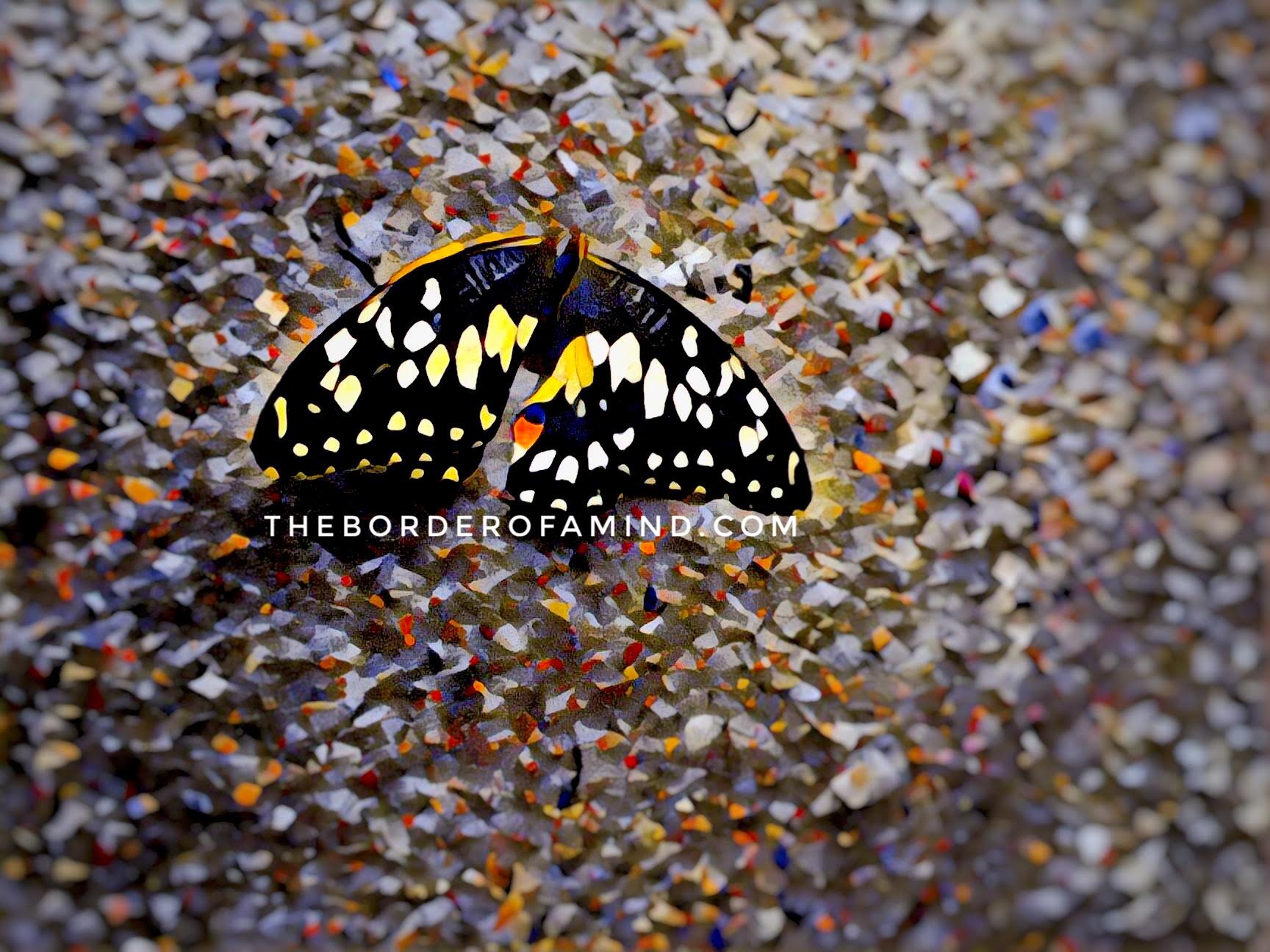
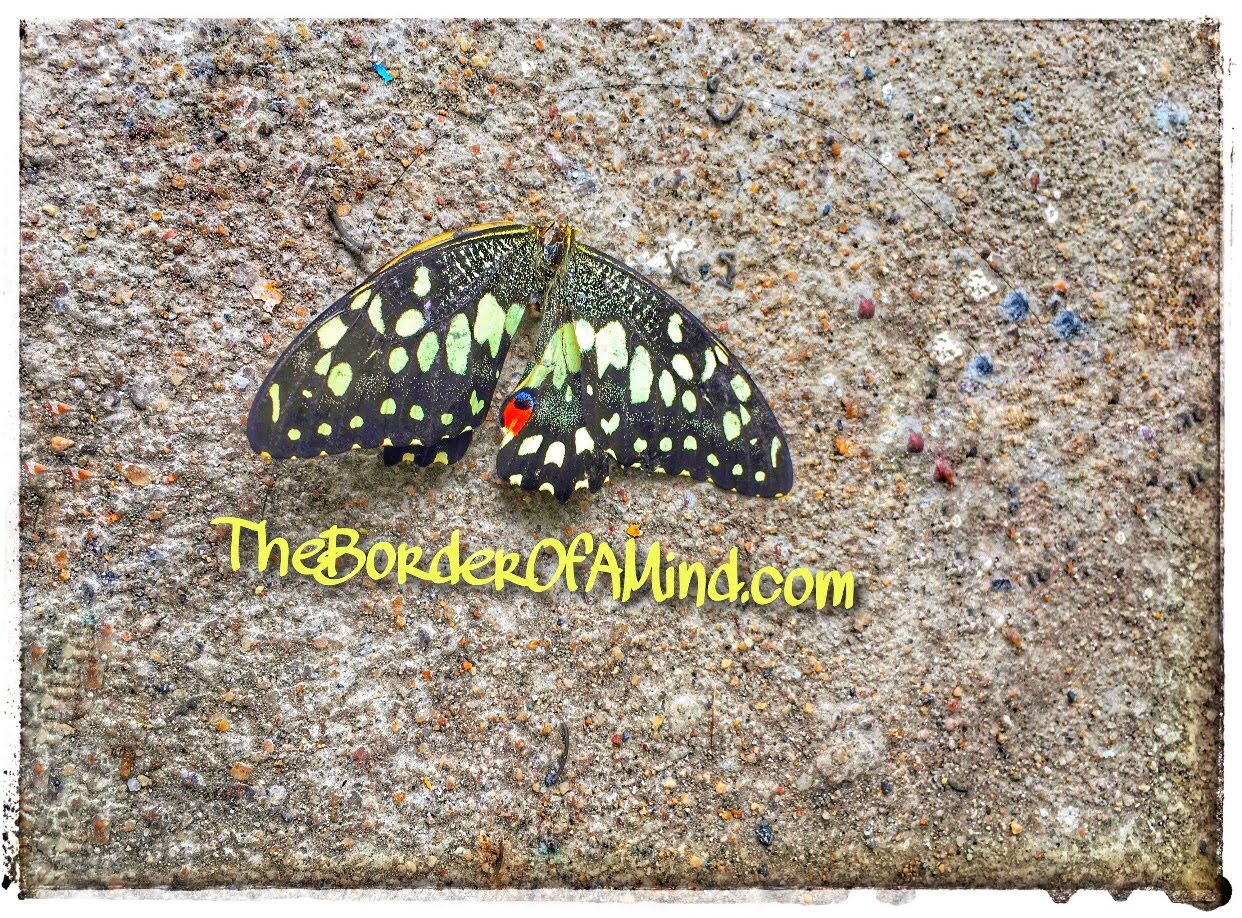
Here is another slice into the ponder series of The Border of a Mind. To rehash the theme, these chapters are an effort to take our minds through subtle sub-layer things that we fail to ponder or think about in our daily routines yet which magically turn around as miracles in on itself. If you have come here before, you’d recollect about the journey of birds or the perception of our brains which we skimmed around. During my last visit to India, I saw this beautiful butterfly on a wall of a skyscraper (scroll down for the photograph). As we know, it’s very difficult to spot a butterfly these days, especially if you are living in a heavily urbanized setting.
Anyone would admire the beauty and elegance of butterflies with their color wing patterns and flights. The title of this post is attributed to the ornamental beauty in them owing to which we can’t take our eyes off them!
The incremental stages of formation of a butterfly is a masterpiece of process art. Silkworms are among the animals which lay the highest number of eggs. We are talking of about 450 to 500 eggs. Since there are way too many eggs, there are chances that these may be get scattered or even strewed by the wind. To prevent this, silkworms attach these eggs by each other by a special material it secretes (string). Caterpillars on the lookout for a nice place to have their eggs laid discover one of these “branches” of eggs, if you will and would stick their eggs with the same string. Cocoon building with the string starts at this stage. Caterpillar would turn around thousands of times and would secrete around 1500 metres of strings!. At the end of this stage, the caterpillar metamorphosizes into an elegant, beautiful butterfly turning out to be another embellishing ornament around us.
If you didn’t know, for the butterfly to fly, its body heat has to be at a certain temperature. Butterflies use amazing techniques to accomplish this. For example, one such type is the colias butterfly and it won’t be able to fly if its body temperature drops below 28-degree celsius. They then open their wings at a certain angle so that their upper sides are exposed to the sun. If it reaches 40-degree celsius, for instance, it rotates by another 90 degrees in order to receive sun’s rays horizontally. Using this methodology, they absorb little heat and accordingly regulate their body temperature. I bet you didn’t know about this thermal engineering expertise in butterflies. We must have noticed beautiful spots on the butterfly wings. Yeah, they are aesthetically breathtaking and adds a gradient, but did you know that they serve another purpose? These spots help serve the butterfly to maintain higher body temperatures and these spots are located close to the points that are to be best kept warm. These spot portions generally warm up quickly compared to other parts. The location of these spots is in such a way that the distance that needs to be covered for heat transmission is shortened. As you know, a pair of lenses can be spaces and angled properly to concentrate light at a certain spot and make the area hot. Some butterflies species such as Pieris, for instance, use the same technique. I believe, thinking deeper and delving deep into such intricacies would help us better appreciate the miraculous nature of these things. How do such magic happen around us when we are too busy to even put our thought into it. Ponder! : )







 Now, that’s far from over. Let’s go a little deeper. The same ratio is true for the below: