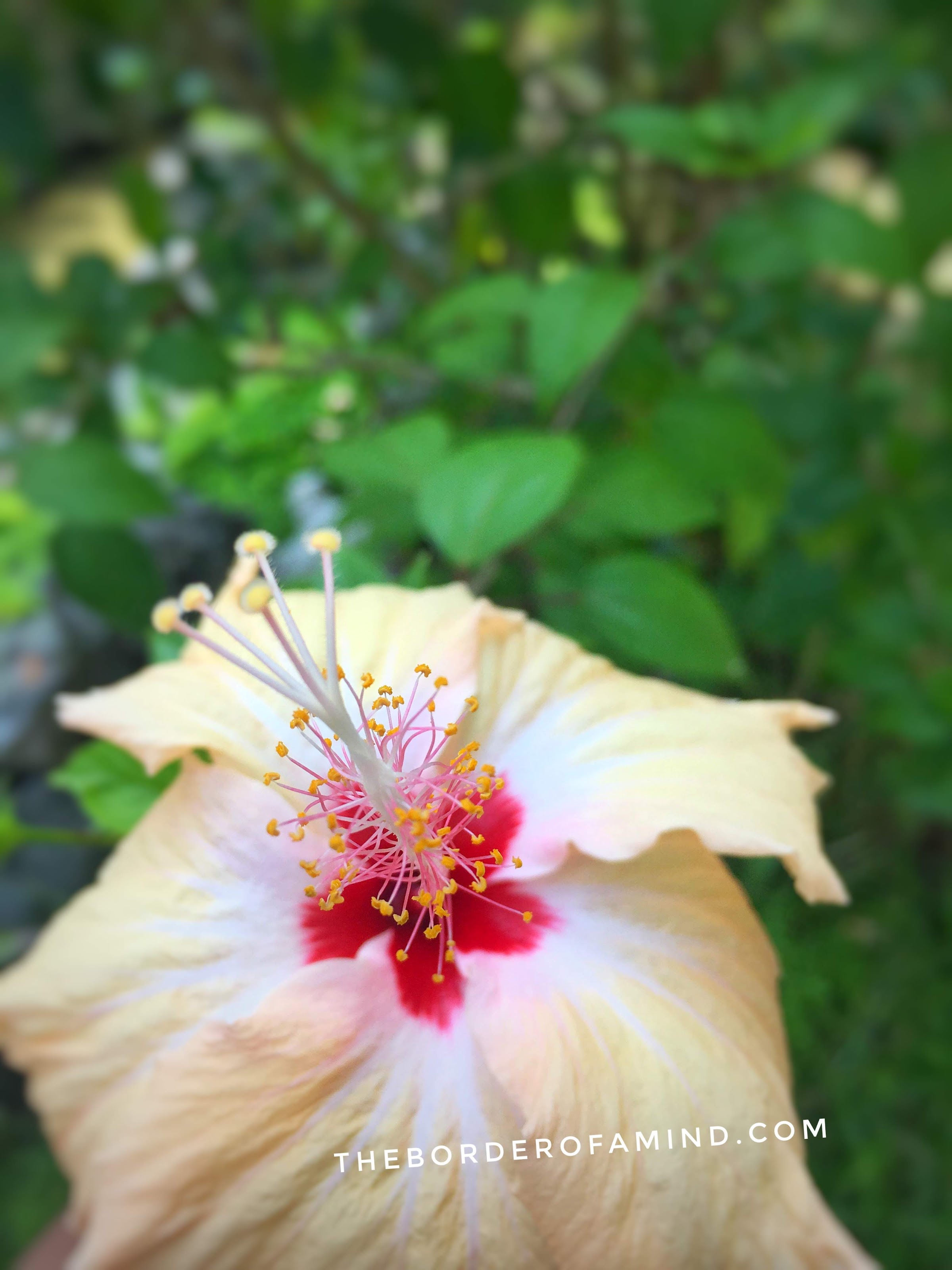
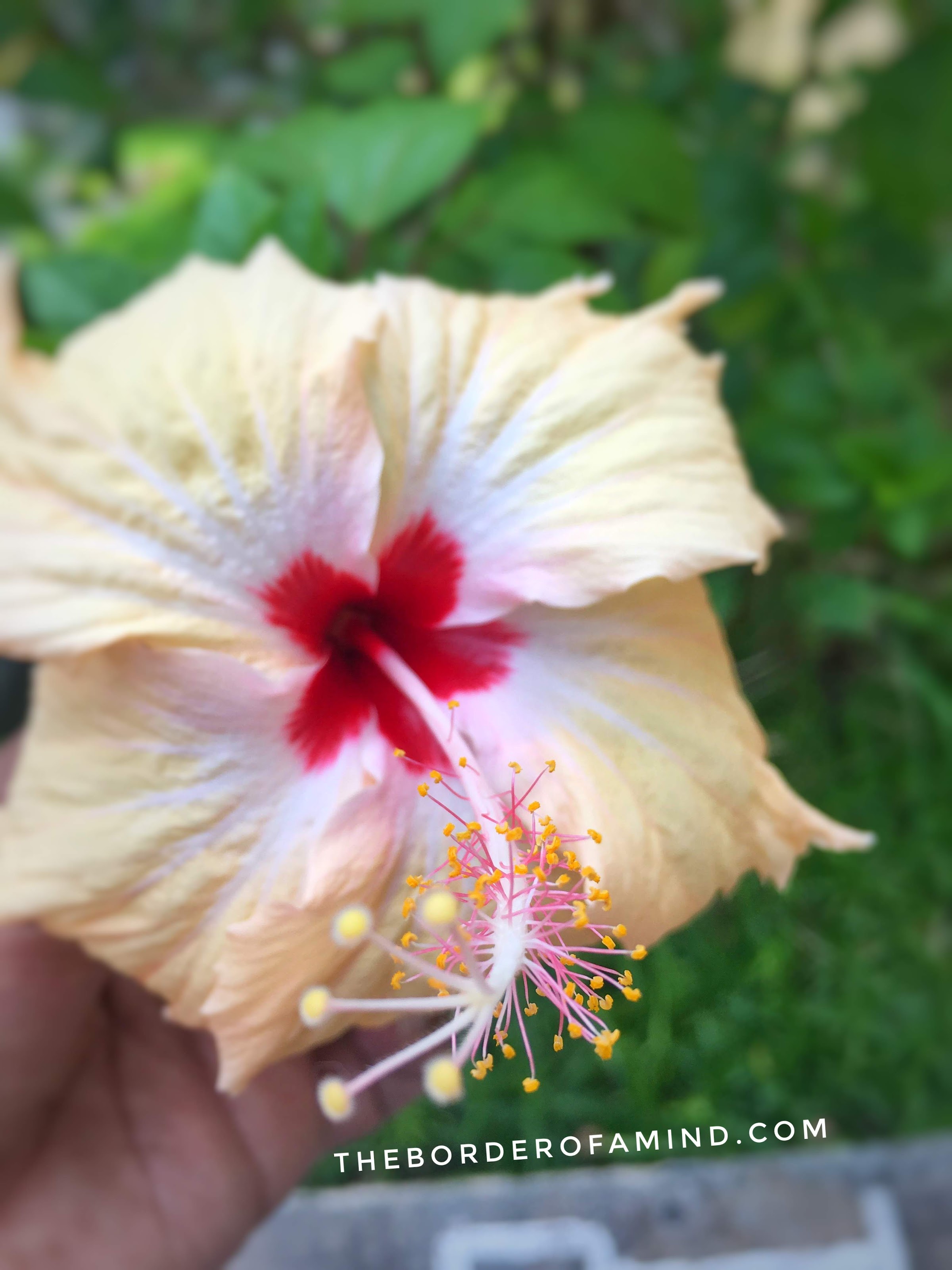
the hand that did not pluck the flower

I placed my hand beneath the flowers, almost without thinking.

Not to pluck them.
Not to carry them home.
Only to come close enough to notice their weight.

There they were, blooming beside an ordinary road, asking nothing from anyone. Cars passed. Dust settled on the leaves. The afternoon moved on. Yet the flowers continued doing what flowers have always done: opening themselves fully to a world that may or may not stop to look.

For a few seconds, my hand rested beneath them.

And I wondered how much of life is contained in that small gesture.

When we are young, we often mistake love for possession. When something is beautiful, we want to take it with us. A flower, a moment, a person, a version of our child, a season of our life. We want to preserve it before time can change it.

But time changes everything, even the things we hold tightly.

Perhaps growing older is partly the slow discovery that love is not always about keeping. Sometimes it is about standing close without disturbing. Supporting without enclosing. Allowing something to remain where it belongs, even when a part of us wants to claim it.

In The Little Prince, Antoine de Saint-Exupéry writes:

“It is the time you have wasted for your rose that makes your rose so important.”

I have always been struck by the word wasted.

The world calls time wasted when it produces nothing measurable. Sitting beside someone who is unwell. Listening to a child repeat the same story. Watering a plant that may never flower. Waiting for a parent to finish a sentence they once spoke quickly. Staying a little longer at the table after everyone has eaten.

Nothing has been achieved. No task has been completed. No evidence remains.

And yet, these may be the hours from which a life is made.

The rose becomes important not because it is the finest rose in the world, but because someone stayed. Someone noticed when it needed water. Someone learned the shape of its moods. Someone gave it a portion of their brief and unrepeatable time.

Attention is one of the purest forms of love because it cannot be stored for later.

You either look now, or the moment passes.

The flowers in this photograph will fall. Some may already be gone. Another cluster will appear, and that too will disappear. The tree does not mourn each blossom as a permanent loss. It releases what has finished and continues living.

We are not always so willing.

We keep old messages. We revisit photographs. We remember the exact sound of a voice in a room that no longer exists. We carry former versions of people inside us, sometimes long after they themselves have changed.

A child grows, and the small hand that once reached for ours begins letting go.

A parent ages, and the person who once seemed immovable becomes fragile.

A friendship changes shape.

A home is left behind.

A face in the mirror becomes the face of someone we once thought was far away.

There is tenderness in trying to hold on. But there is also tenderness in learning when to open the hand.

Rainer Maria Rilke wrote in Letters to a Young Poet:

“For one human being to love another: that is perhaps the most difficult of all our tasks.”

Perhaps it is difficult because real love does not ask only, How can I keep you?

It must also ask:

How can I stand beside you without turning you into something I own?
How can I care for you without deciding what you must become?
How can I honour the person you are now, rather than constantly searching for the person you used to be?

The hand beneath the flowers could easily have closed around them.

Instead, it remained open.

There are people in our lives who may need that kind of hand. Not a hand that grips, corrects or controls. A hand that stays near. A hand that makes room. A hand beneath them when the weight of living becomes difficult.

And perhaps that is also what we sometimes need for ourselves.

To stop pulling at our own life, demanding that it bloom faster.

To stop measuring ourselves against seasons that belong to other people.

To accept that there are periods when we flower, periods when we wait, and periods when almost everything within us appears bare.

The tree does not apologise for any of them.

It simply remains rooted.

I did not take the flowers with me that afternoon. I left them where they were, beneath the sun, belonging to no one.

But I carried the moment.

Maybe that is enough.

Maybe the task is not to gather every beautiful thing before it disappears. Maybe it is to become present enough that, while it is here, it does not pass through the world entirely unseen.

A hand can close around beauty.

Or it can remain open beneath it.

I am beginning to think that the second is closer to love.

By the way, did you know that I’m actively writing in malayalam also these days. Find them here. I’ve written a small book as well if you’re into that. If you like listening to stuff, do scroll through the selection of podcasts. If you’ve time, have a look at the visuals I’ve made. Grateful for your moment here. Keep coming back here : )

the hibiscus whisper.

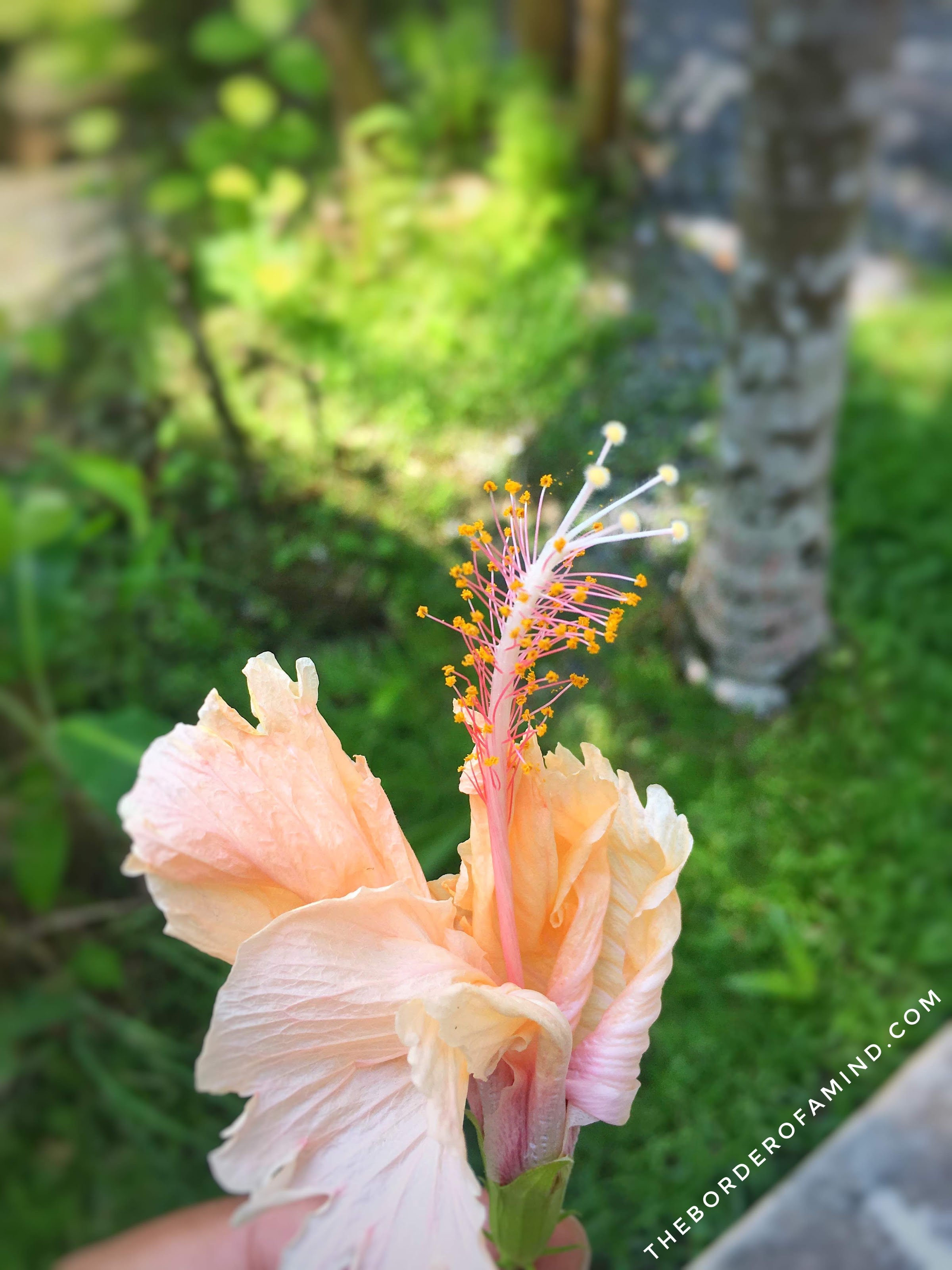
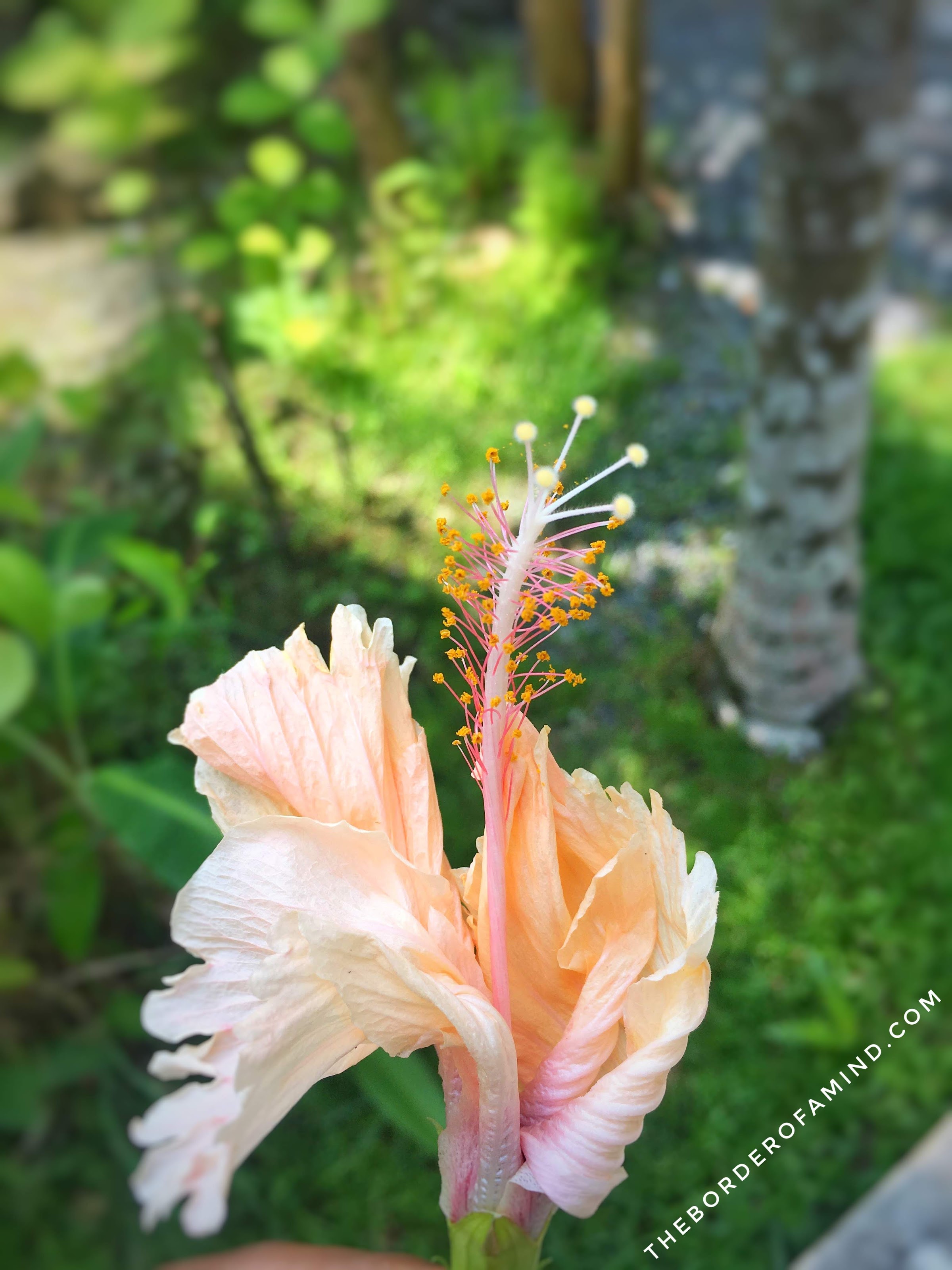
In the dappled sunlight of my office’s garden, a hibiscus flower captures the essence of life’s fleeting moments. Each morning, it unfurls its petals in a vibrant display of ephemeral beauty, a poignant reminder of the transient nature of existence.

Have you ever stopped to admire a hibiscus? Its broad petals boast a palette of blushing pink, while the center—a bold splash of crimson—holds a stamen that stretches outward, dusted with the gold of pollen. This majestic display is a magical artwork, yet, it’s destined to last for just a brief spell. The hibiscus blooms mightily for a day, maybe two, and then, with a grace that speaks volumes, they close their petals, and their time is over.

This natural cycle of the hibiscus is a mirror to our own lives. Like the flower’s brief day in the sun, we too have our moment—fleeting and precious. But in the hustle of everyday life, amidst the digital whirlpool of notifications and distractions, do we remember to embrace the limitedness of our existence?

Think of the last time you truly felt that you lived in the present. When was it? No matter at home or office. Think broadly over let’s say a span of last six months of your life. Can you recall the sensation of being utterly immersed in the now, without a thought for the past or the future? That’s what the hibiscus does every day. It does not lament the setting of the sun; it simply blooms with all its might, here, in the present.

Our resistance to life’s impermanence often manifests as suffering. We wish to hold on to things, to people, to moments, willing them to remain constant. But everything changes. The child grows and leaves the nest. The mirror reflects a version of ourselves that has evolved with time. Work brings challenges that test our sense of capability. When plans go awry, we feel the strain of unpredictability.

Yet, what if we drew inspiration from the hibiscus and its acceptance of the cycle of life? What if we saw the beauty in the passage of time, in the evolution of our lives? Could we not then appreciate the present with a more profound sense of joy and gratitude?

Embrace the lessons of the hibiscus. Let it teach you to cherish the moments you have. When you feel the weight of change, remember the flower’s effortless embrace of life’s rhythm. Consider the possibility that the very impermanence we fear is what lends beauty to our existence.

As you walk by a hibiscus, or any flower that catches your eye, allow yourself a moment to pause. Observe its beauty, knowing that it is here for just a short while. Let this knowledge not sadden you, but awaken you to the richness of the present. Like the hibiscus, may we too learn to make our days count, to fill them with life, to bloom where we are planted.

In the end, the hibiscus doesn’t just teach us about impermanence—it reveals the art of living. By accepting the transient, we can find true peace. By living in the moment, we can discover genuine happiness. Let the hibiscus’s tale be a gentle whisper to your soul: live fully, love deeply, and embrace the fleeting wonder of now.

glances with intention

..“The really magical things are the ones that happen right in front of you. A lot of the time you keep looking for beauty, but it is already there. And if you look with a bit more intention, you see it.”

― Vik Muniz

In fact, unraveling this same magic is what keeps our Ponder Series up and running. It’s my humble effort to explore beauty and purpose through awareness and intention. Photography and liberal arts are marvelous brushes to paint these themes.

Vibrant bougainvillea flowers at a wall outside Mamzar Beach Park

enrapturing bloom

Every single bit of art you see here, there’s a reflection in my mind, a theme that I contemplate when I work on it with my heart. If you didn’t know, I’m always enraptured about flower petals and the beautiful art they effuse. Remember ornate blossoms and ethereal quality? These marvelous pieces of art that we see all around us yearn for reflection from the beholder. If we open a vault or and old box from a courtyard and discover a painting of a tree or a beautiful flower, we wonder about the painter and hail his mastery in the art. Not in the tiniest speck of possibility can we convince ourselves that the beautiful painting that we saw in the vault came about when somebody threw a paint can into the air and it eventually came about into this masterpiece painting through rain and wind flowing on the paint over years. There’s conscious design, symmetry, and intent in the painter working patiently on the painting and completing it. The work of art definitely leads to its painter. Appreciating the art in its wholeness leads to its artist, his mind, and his signature. In the same token, when we see these beautiful flowers around us, is there a blind curtain on our minds which hesitates us from thinking and wondering how these came about around you and takes your attention. They have a story to tell you. Shouldn’t we be seeking the artist? Awareness is the key to reflection. I’m recollecting what I wrote recently in ornate blossoms on the same theme.

“They are not randomness around us. Neither are they desultory existences around us. They have a purpose in making us ponder about them. They have a story to tell you. They’ve something to show you. They’re locks of thoughts waiting to be unlocked by you. They’re not looking for a monk. They’re looking for me and you.”

Quoted from the piece “Ornate Blossoms“,

ornate blossoms

Petals are something I’m sort of eccentrically inquisitive about. In some of our earlier writings, we’ve wondered about their ethereal quality and have read on how beautifully they edify a lesson of transience. Here’re some photographs that I look from University of Sharjah gardens last week during an evening stroll. These are jewels we fail to appreciate when we are in the hustle and bustle. I’m not sure about you, but I’m totally to the hilt, blown away by the spectacular art and magnificence in their intricate subtleties. Look at the brilliant layering and the patterns that are a treat for those with eyes to relish them. Before we relegate them to the quotidian normal realm, we can relate on a very small allegory that came to my mind. If we see a painting of a tree or a flower prepared by someone, we definitely know that it is done with intent and meticulous planning. If we are told that somebody threw a bottle of watercolors and brushes randomly into the air and that when it came down, it turned into a perfect painting, that’s totally preposterous and defies sense. Or if someone came along and say that some paint boxes were overturned by wind and storm and they mixed with some rain and in a long period of time changed into a perfect painting, that is so illogical to conceive. Now, if we look at these petals, we see a plan and an order, a conscious design, organized patterns and a beautiful harmony of colors.  They bide their time for us to think about them. They are not randomness around us. Neither are they desultory existences around us. They have a purpose in making us ponder about them. They have a story to tell you. They’ve something to show you. They’re locks of thoughts waiting to be unlocked by you. They’re not looking for a monk. They’re looking for me and you.


This write up is a part of Ponder Series of The Border of a Mind Visual Studios that we have been building exhaustively over the past several months. When we think about the world around us and also when we look within, it might seem usual and ordinary. But ponder series, as you might have already guessed, is all about thinking deeply and delving into the details by going beyond the ordinary perceptions. It’s a very humble endeavor towards unlocking extraordinary in the ordinary by opening our eyes of wisdom and insight. Hope you enjoy reading them. God bless friends 🙂

Some of the chapters from the Ponder Series include :

> Visual Narrative – Ponder Series
> Reflecting on Shadows
> Stumble over Pebbles
> Ethereal Quality | Petals
> Golden Ratio
> Vision – Pondering on the intricacies
> Ruminating on Bird Nests
> Living Embellishments
> Pondering on Birds 
> Perceptions


ethereal quality | Petals

Ralph Waldo Emerson once wrote that the earth laughs in flowers.

“The breath of wind that moved them was still chilly on this day in May; the flowers gently resisted, curling up with a kind of trembling grace and turning their pale stamens towards the ground. The sun shone through them, revealing a pattern of interlacing, delicate blue veins, visible through the opaque petals; this added something alive to the flower’s fragility, to its ethereal quality, something almost human, in the way that human can mean frailty and endurance both at the same time. The wind could ruffle these ravishing creations but it couldn’t destroy them, or even crush them; they swayed there, dreamily; they seemed ready to fall but held fast to their slim strong branches-…”
― Irène Némirovsky

Notice the beautiful reddish pigment and the loft petals spread from it. Notice the aesthetically aligned petal stems decored with sub stems with yellow mini studs on them. Gazing at these details and pondering about them Photographs below are taken from a remote garden in Havelock Islands.

“Nobody sees a flower – really – it is so small it takes time – we haven’t time – and to see takes time, like to have a friend takes time.”
― Georgia O’Keeffe


“Just as a flower as itself displays an embroidery full of art and with the tongue of its being recites the Creator’s names, so the garden of the globe resembles a flower and performs an extremely orderly, universal duty of glorification”
― Said Nursi, “The Twenty-Ninth Word”, Treatise of Light.

divine timing.

“God opens millions of flowers without forcing the buds, reminding us not to force our way but to wait for things to happen perfectly in time.” says a beautiful quote. The bandwagon of precariousness drives us through events of uncertainty and dubiety but always trust in the divine timing in which events uncover like a flower growing out of a bud. For young minds reading, always relay this when important decisions or events pass your life so that we come sanguine and hopeful to pass through them with grace. God bless.