the flicker of leaves

My vehement fascination with petals and the art in their arrangements transcends to tree trunks and stems as well and this is what we have pulled off  : )

This is a mobile photograph taken from Al Ain Oasis. Down the memory lane, my 2019 year started on top of a mountain in the UAE. Instead of chasing fireworks, we pursued mountain trails in 2019. In place of the rabble and gaggle of a fireworks crowd, we tried to embrace the assuasive and soothing equanimity in the mountains.

“You are most beautiful in your purest form. You are a manifestation of God himself. Open your eyes and let the light flow right through to your core. All it takes is for you to notice a flicker of leaves, a momentary glance from a loved one, or for a wave to hit your toes and freeze you in that timeless place where you know with every cell in your body that God, indeed is real.”

Soroosh Shahrivar, The Rise of Shams

stumble over pebbles.

These are some pebbles that I randomly glanced at Corbin’s Cove beach in Port Blair during a visit with Netta in 2018. It’s a beautiful palm-fringed beach with pleasant blue sea water and lush green coconut palms. They’re enriched with colorful corals and artful rockfaces at the peripheries. I have some vague recollections of an old post that I read on medium portal which spoke about the art of seeing beauty in the everyday. Pebbles purvey such thoughts on appreciating such beauties around us. The detailing and subtleties of these pebbles graciously nudge of themes in a philosophical context. As Emilie Cady puts it, ” Men stumble over pebbles, never over mountains“.

“A rock, a large piece of rock weathers off a cliff and dives deep into a pool of gushing water. Back washed, It journeys roughly and knocks of other rocks, smashing through the waves as it loses itself in scattered pieces except for its core. That core travels far and wide, it coarsely gets ground by gravel pieces smaller than itself and bullied by boulders all of which it bears up as it withstands the pressure of a distant journey off the shore. At some point, it gets dry and it encounters mud, it gets smeared dirty but the mud doesn’t stick, the rain washes of the mud and it rolls off into the sand. It dances in the sand and dives into the bottom of the waves.

Rising like a phoenix through the ashes, it emerges polished, looking more beautiful than it did when it got edged of the cliff. It rises a pebble, smooth and sleek. Coveted by rocks starting their dive.

To be a pebble you have to run the turbulent tidal race.

― Victor Manan Nyambala


transience.

We have spoken about fragility in the same thematic context before.  I happened to read about the concept of  Mono no aware frequently referred to in Japanese culture.

“Mono no aware, literally “the pathos of things”, and also translated as “an empathy toward things”, or “a sensitivity to ephemera”, is a Japanese term for the awareness of impermanence, or transience of things, and both a transient gentle sadness (or wistfulness) at their passing as well as a longer, deeper gentle sadness about this state being the reality of life. “Mono-no aware: the ephemeral nature of beauty – the quietly elated, bittersweet feeling of having been witness to the dazzling circus of life – knowing that none of it can last. It’s basically about being both saddened and appreciative of transience – and also about the relationship between life and death.”

Often this concept is referred with an allegory of Japanese Cherry Blossom season in Japan which is known for its perhaps more “visible” transience. The below petals are from my office garden. The same plant in different stems conveys the unavoidable transience of life. While one of the petals is on a bloom, the other one slowly withers away.

Taylor Bond, in her wonderful article, puts it very elegantly:

“What comes most easily to mind is the beauty of the cherry blossom; the flower blooms intensely, yet only for a short period of time each year. As the flowers die and the petals fall, cherry blossoms line the streets like a layer of soft, pink snow, and are most beautiful when captured between the precipice of life and death. That is precisely the unique appeal of the cherry blossoms; their aesthetic focuses on the unavoidable transience of the material world that exists. According to this view, the fragility and inherent brevity of an instance of awe, such as the blooming of the cherry blossoms, only aids in heightening the event’s stunning, albeit melancholic nature. Because it only lasts for such a short period, it is undoubtedly appreciated more. Understanding and accepting that innate uncertainty of life helps us evade the overwhelming feeling of morbidity associated with impermanence, instead highlighting our ability to enjoy life by appreciating its fleeting moments. The unavoidable nature of finite existence is contrasted with the never-ending stream of change, as life continues to occur despite the continuous passing of objects and experience. The realization of impermanence is therefore bittersweet, tinged with mourning, and yet also capable of recognizing the beauty of change in itself.’

Similar thematic allegories are also narrated in scriptures.

And cite for them the parable of the present life: it is like water that We send down from the sky; the plants of the earth absorb it; but then it becomes debris, scattered by the wind. God has absolute power over everything.” (Q’ 18:45)

Kintsugi.

I had written on this page about Kintsugi. It’s a very interesting Japanese concept. It’s widely used in art and pottery but what’s even more enthralling is its philosophic extension that’s often found to cognate with healing and history. In this concept, broken and repaired things are often regarded as much more beautiful. It’s often read in the context of Wabi-Sabi, which is basically “to explore the beauty in broken things or old things.” I have read a little book explaining this concept and I felt it was wide implications.

” Kintsugi (金継ぎ, “golden joinery”), also known as Kintsukuroi (金繕い, “golden repair”), is the Japanese art of repairing broken pottery by mending the areas of breakage with lacquer dusted or mixed with powdered gold, silver, or platinum, a method similar to the maki-e technique. As a philosophy, it treats breakage and repair as part of the history of an object, rather than something to disguise. “

Barbara Bloom puts it this way: “When the Japanese mend broken objects they aggrandize the damage by filling the cracks with gold because they believe that when something’s suffered damage and has a history it becomes more beautiful“.

Omid Safi writes in his piece “Illuminating the Beauty in Our Broken Places“,

” We value success, wholeness. Unlike this Japanese art form, we don’t yet have a way of looking for what was once broken and has been healed and illuminated. How lovely would it be to find that a cracked and illuminated cup can be even more beautiful than a whole cup. How wise to realize that the broken hearts, illuminated and made whole, can be even lovelier.”

anamnesis.

/ˌanəmˈniːsɪs/. The title of this post is from the late 16th-century Greek word anamnēsis related to ‘remembrance’.

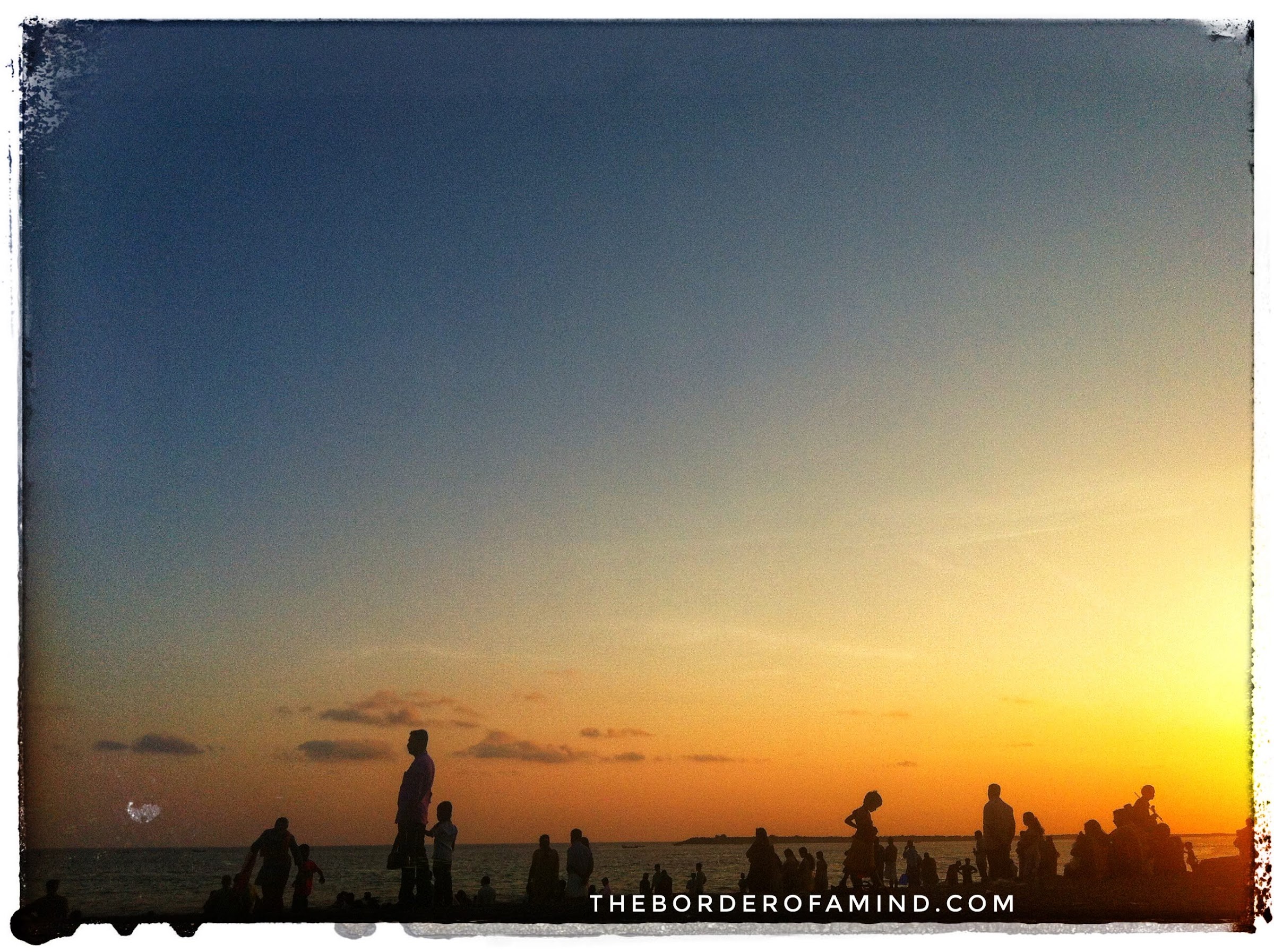
Clouds and sunset light playing a symphony of art in a winter evening at Sharjah, UAE. November 2019.

“A lot can happen in a year. People die. You outgrow old friends and get tired of mundane jobs. New careers come. New friends find your soul. But no matter what, you grow, you lose your mind a bit and most importantly you get a little wiser. Your circle gets smaller because you get stricter with your energy and time, If you are really lucky, you’ll find love inside yourself, inside of friends and family, and just maybe the universe will bless you with a lover that laughs at your really lame jokes.” .S. Mcnutt

Netta shared this recently and it resonates well. Regardless of where we belong and what we do, it’s worth to have a reminiscence of what changed in one year. Need not be always the specific things mentioned in the above quote. It can be anything and could be even related to how you respond to situations, your thought process, the way you plan things, the priorities you weight in on, people you engage and rely on, the general attitude towards events, etc. For me, personally, I believe it has been by and large about stepping back and striving to be more thoughtful in my responses, not to be too impulsive in general terms, making time for building this site by putting in more content and sharing writings, trying to be more positive, being diplomatic and to have a cohesive spirit of togetherness in responses, setting compassionate boundaries, and an earnest attempt to be more professional and objective in my professional assignments. This may be, also one of the years where some personalities whom I admire for their creative pursuit and passion had the biggest influence in me in terms of the time I spent and also the actions they actuate in all that I do. It was also the year when Genie’s cove was set up with Netta by my side, slowly building our little space and being truly grateful for the we-time. Let’s see what next year turns out to be, God willing.

incremental fruition

I happened to read this share from Netta recently. We can easily relate instances wherein *boredom* sets in and sabotages a goal we had. This can often permeate for short term or even long term plans.

“The greatest threat to success is not failure but boredom. We get bored with habits because they stop delighting us. The outcome becomes expected. And as our habits become ordinary, we start derailing our progress to seek novelty. Perhaps this is why we get caught up in a never-ending cycle, jumping from one workout to the next, one diet to the next, one business idea to the next. As soon as we experience the slightest dip in motivation, we begin seeking a new strategy—even if the old one was still working. As Machiavelli noted, “Men desire novelty to such an extent that those who are doing well wish for a change as much as those who are doing badly.”
– James Clear, “Atomic habits”


Setting a goal or a vision often gets accompanied by an action roadmap that includes small incremental achievable actions that count on to gradually achieve the vision or goal we had in our minds. My experiences and intuitions have induced me not to be stagnant at any stage and always be proactive and positive with incremental steps towards a goal set. Of course, we go through slips that are human by nature. It’s often in these small cumulative steps that we often stumble and fail in walking towards a dream or purpose. While writing this, I recollect an interesting conversation that I had listened to sometime in 2016, between Walt Mossberg and Jeff Bezos wherein Jeff mentioned his keenness to be  “stubborn on the vision, but flexible on the details“. Maintaining enthusiasm towards the end of a long term project or objective is paramount. What is more interesting is that it is in these small gradational steps or stages wherein the passion for working towards a dream is to be invigorated. Seeds of boredom often enfeeble these small steps that we embark on and gradually jeopardize the goal. That’s probably the reason why the single most important thing in working towards a vision is to systematically and consistently maintain the enthusiasm throughout. Within the bounds of our inherently humane weaknesses, when someone gets through, that’s how greatness sprouts. Dreams are often lost in the details. In fact, details and path embarked are cardinal in major fulfillments. May passion and fervor fuel your hopes and aspirations. God bless friends! : )


“Golden Ratio” | Ponder Series

Before I start, let’s see this beautiful video “Nature by Numbers” by Cristóbal Vila. I first saw this almost 9 years back and it helped discover a lot of amazing knowledge treasures which I didn’t know before. This number is used by architects and designers extensively, but what we are discussing here is something else. It’s about realizing and pondering on how the entire universe is crafted specifically in a specific metric. Have a look at the video and I shall elaborate further with detailed illustrations. I was pretty pumped up when I first came to know about this and would like to take this write up as an opportunity to share this information with you. Probably this would be the first write up for which I spent the longest time preparing content and illustrations for the only reason that I’m super excited to share this all of you. Now, let’s read.

This piece would be an addition to the Ponder Series that we have been writing extensively over the past several months. When we think about the world around us and also when we look within, it might seem usual and ordinary. But ponder series, as you might know, is all about thinking deeply and delving into the details by going beyond the ordinary perceptions. “Golden Ratio” is such a concept that’ll blow our minds off. I first read about this interesting ratio pervading the universe when I was in college. I shall elucidate it here, preferably with some visual illustrations. If you have not heard about this before, I’m sure this will definitely throw you into some wonder. Read it very carefully. It’s exciting information!

Many of us would be familiar with the Fibonacci series of numbers which were discovered by the Italian mathematician Leonardo Fibonacci in 1202 B.C.
It’s a series as below:
0, 1, 1, 2, 3, 5, 8, 13, 21, 34, 55, 89, 144, 233, 377, 610, 987, 1597, 2584, …
In this series, if you add two numbers in the series, you’ll get the next number in the series. For example, 0+1=1, the third number in the series. And 1+1=2, the fourth number in the series, 1+2=3, the fifth number in the series and so on.

We might have seen this series in our maths classes and wondered what is special about them. They have an amazing property. If we divide any number in this sequence by the number before it, we would get numbers very close to each other. After the 13th number in this series, the ratio is constant and we get 1.618. This is called “Golden Ratio

233 / 144 = 1.618
377 / 233 = 1.618
610 / 377 = 1.618
987 / 610 = 1.618
1597 / 987 = 1.618
2584 / 1597 = 1.618

Now, this golden ratio number of 1.618 is pervading everywhere. If you didn’t know this before, get prepared to be blown away.

Human Body
Did we ever think that our body measurements were just random? Boy! we are wrong! The proportions and geometrical ratios are carefully crafted in this specific ratio. For a better visual perspective, I’m sharing a few illustrations below so that you can take a look! These values are universally true for every human body. Isn’t that a jaw-dropping realization if you didn’t know this before?


Now, that’s far from over. Let’s go a little deeper. The same ratio is true for the below:
Length of face/width of the face,
Distance between the lips and where the eyebrows meet / length of the nose,
Length of face/distance between the tip of the jaw and where the eyebrows meet,
Length of mouth/width of the nose,
Width of nose/distance between nostrils,
Distance between pupils/distance between eyebrows.
Even the placement of teeth, as well as the ratio of individual teeth sizes, are on this same ratio.

In a research study carried out in 1987, it was discovered that this magic ratio is also in the structure of the lungs as well. The bronchi network in the lung is asymmetric. The windpipe gets divided into the left and the right bronchi networks. The one on the right is short and the one on the left is long. The geometrical proportion of the shorter one to the longer one of this bronchi is 1.618. Isn’t that amazing? Recent studies have shown that the internal structures of the ears are also proportioned in the same ratio. The more we explore and delve in, the more breathtaking it turns out to be.

This number has garnered significant interest in great minds like Pythagaurus, Leonardo Da Vinci and the famous astronomer Kepler. Leonardo Da Vinci has used it in the painting Monalisa.

Golden Ratio in DNA Helix
DNA has two grooves in its spiral. Major to minor groove proportion measures as the golden ratio 1.618.

Golden Spiral
In geometry, a golden spiral is a logarithmic spiral whose growth factor is φ, the golden ratio. That is, a golden spiral gets wider (or further from its origin) by a factor of φ  for every quarter turn it makes. See the below link for a reference.
GoldenSpiralLogarithmic_color_in.gif
Image By JahobrCC0, Link

The golden spiral can be found in pinecones, sunflowers, pineapples, and a lot of other plants. Another amazing detail is that the petals of plants commonly grow in Fibonacci numbers.


In sunflower, we can notice two families of spiral patterns: one winding clockwise and the other counterclockwise. The quantity of spirals in each family are always two consecutive Fibonacci numbers. This effect is the result of closely packing points separated by 137.5 degrees in tight spirals. This implies that the a golden-ratio based phyllotaxis allows not only for optimal sun exposure but also for maximal packing in horizontal space. (Reference)


For field daisies, the count of petals is usually either thirteen, twenty-one, or thirty-four petals, all consecutive Fibonacci numbers. Bet you didn’t know about this before! 🙂

And it’s not over yet. We have more!

The golden ratio is even found in the shape of galaxies, hurricanes, and waves.


What I have shown here is only a small portion or subset of how this golden ratio pervades in almost every other stuff we are surrounded with. Leonardi Davinci has used this ratio in some of his greatest paintings. Architects use this ratio in designing structural solutions with better aesthetics. In architecture, they bring balance and height to structures and allow the usage of specific geometries and varying shapes and eventually help build aesthetic structures.  They are also extensively used in arts and music as well. The ratio is made use of in the design of several musical instruments and in timing musical compositions (Climax reaching at 61.8% of the song sequence to make it more appealing, for instance). Beethoven’s fifth symphony uses this ratio. The ratio is also used in other fields like facial plastic surgery and cosmetic dentistry. This is really thought-provoking. If we ponder deeply on these realities, we come to the realization that everything around us is formed and ordered in a measure which we even don’t notice. We require the eye of wisdom and insight to contemplate these realities. Don’t let these astonishing marvels around you hide from your thoughts and cogitations when we get engulfed ourselves in the blurred rush of routine life.  Uncovering this hidden mathematical miracle around us has a profound impact. Think about it, friends! Let’s widen our horizons and augment our perspectives. Personally, I believe this ratio is sort of like a divine signature. God bless friends!

kindness.

I happened to see this interesting message in a forum and thought of sharing it with readers. My firm conviction is that a little restraint, patience and calmness in dealing with a situation would definitely drastically change the course of it in ways unthinkable. It applies to all spheres of our lives, professional and personal. Regardless of any avenue we are in, we would be continuously fed with opportunities to mend and grow our patience. As Rodney Williams famously said, “Patience is the gift of being able to see past the emotion“. Being relentless in having a calm composure is not easy, but that’s something we shall try our best for, considering the empathy and kindness they directly ensue. God bless.

The man doesn’t know that there is a snake underneath.
The woman doesn’t know that there is a stone crushing the man.
The woman thinks: “I am going to fall! And I can’t climb because the snake is going to bite me! Why can’t the man use a little more strength and pull me up!”
The man thinks: “I am in so much pain! Yet I’m still pulling you as much as I can! Why don’t you try and climb a little harder!?”
The Moral is :
you can’t see the pressure the other person is under, and the other person can’t see the pain you’re in. This is life, whether it’s with work, family, feelings or friends, we should try to understand each other. Learn to think differently, perhaps more clearly and communicate better. A little thought and patience goes a long way.
Be kind to people. Everyone we meet is fighting their own battle.

I encourage to read through The Parable of Mexican Fisherman.

change | influence | build


In my recent article “Instilling Compassionate Prudence“, I had touched upon the theme of giving the extra effort and aspiring to emboss our signature and professional acumen in any kind of work we are engaged in, be it in any realm. This post is kind of an extension of that theme and in a way, augments those frameworks discussed. Quoting from a very old interview with Steve Jobs (1955 – 2011),

When you grow up you tend to get told the world is the way it is and your life is just to live your life inside the world. Try not to bash into the walls too much. Try to have a nice family, have fun, save a little money. That’s a very limited life.

Life can be much broader once you discover one simple fact: Everything around you that you call life was made up by people that were no smarter than you and you can change it, you can influence it, you can build your own things that other people can use.

Once you learn that, you’ll never be the same again

These changing, influencing and building aspects are truly profound. Be it a job or a project or any sort of endeavor, we are basically streamlined to do any of these on a broader viewpoint in the grand scheme of things.

Steve further notes:

” And the minute that you understand that you know if you push in, something will pop out the other side that you can change, you can mold it. That’s maybe the most important thing is to shake off this erroneous notion that life is there and you’re just going to live in it versus embrace it, change it, improve it, make your mark upon it. Once you learn that, you’ll never be the same again.”

The Parable of Mexican Fisherman

The parable of Mexican fisherman is a very famous read on the internet and the way it bespeaks perspective and purpose is indeed ardently profound. I came across this couple of years back on an online magazine and it’s a piece of text that time and time again helps to anchor aspirations and contextualize ambitions. I hope it’s worth your time. I’m adding some illustrations from my archives so as to attempt to give you an eye-ball read. My footnotes and thoughts on this interesting parable is towards the bottom of this post.

_____________________________________________________

An American businessman was standing at the pier of a small coastal Mexican village when a small boat with just one fisherman docked. Inside the small boat were several large yellowfin tuna. The American complimented the Mexican on the quality of his fish.

How long did it take you to catch them?” The American asked.

Only a little while.” The Mexican replied.

Why don’t you stay out longer and catch more fish?” The American then asked.

I have enough to support my family’s immediate needs.” The Mexican said.

But,” The American then asked, “What do you do with the rest of your time?”

The Mexican fisherman said, “I sleep late, fish a little, play with my children, take a siesta with my wife, Maria, stroll into the village each evening where I sip wine and play guitar with my amigos. I have a full and busy life, senor.”

The American scoffed, “I am a Harvard MBA and could help you. You should spend more time fishing and with the proceeds, you buy a bigger boat, and with the proceeds from the bigger boat you could buy several boats, eventually, you would have a fleet of fishing boats!”

Instead of selling your catch to a middleman you would sell directly to the consumers, eventually opening your own can factory. You would control the product, processing, and distribution. You would need to leave this small coastal fishing village and move to Mexico City, then LA and eventually NYC where you will run your expanding enterprise.”

The Mexican fisherman asked, “But senor, how long will this all take?”

To which the American replied, “About 15-20 years.”

But what then, senor?”

The American laughed and said, “That’s the best part. When the time is right you would announce an IPO (Initial Public Offering) and sell your company stock to the public and become very rich, you would make millions!”

Millions, senor? Then what?”

The American said slowly, “Then you would retire. Move to a small coastal fishing village where you would sleep late, fish a little, play with your kids, take a siesta with your wife, stroll to the village in the evenings where you could sip wine and play your guitar with your amigos…

_____________________________________________________

If we ponder on the takeaways of this parable, it’s really nailed on the head. It propounds the theme of being in the moment and exploring instances and avenues of contentment and fulfillment rather than being dismayed and debilitated by an uncertain future. It also offers recollections on taming expectations and scaling it reasonably on a baseline and very importantly, stresses the laser focus on purpose and what really matters. It also moots the idea of discovering and appreciating the small things in life and being focussed and grounded in a sense of calm and not being carried away and washed out by the hustle and bustle “bandwagon”. God bless!