
“ Joy is like pure clear water; wherever it flows, wondrous blossoms grow. Sorrow is like a black flood; wherever it flows it wilts the blossoms. The universe is a complete unique entity. Everything and everyone is bound together with some invisible strings. Do not break anyone’s heart; do not look down on weaker than you. One’s sorrow at the other side of the world can make the entire world suffer; one’s happiness can make the entire world smile. Wherever you go, east, west, north or south, think of it as a journey into yourself! The one who travels into itself travels the world.” ― Shams Tabrizi
Tag: Wisdom
Beauty

~W. Somerset Maugham, The Moon, and Sixpence, 1919
(Chapter XIX, spoken by the character Dirk Stroeve)


Living embellishments!
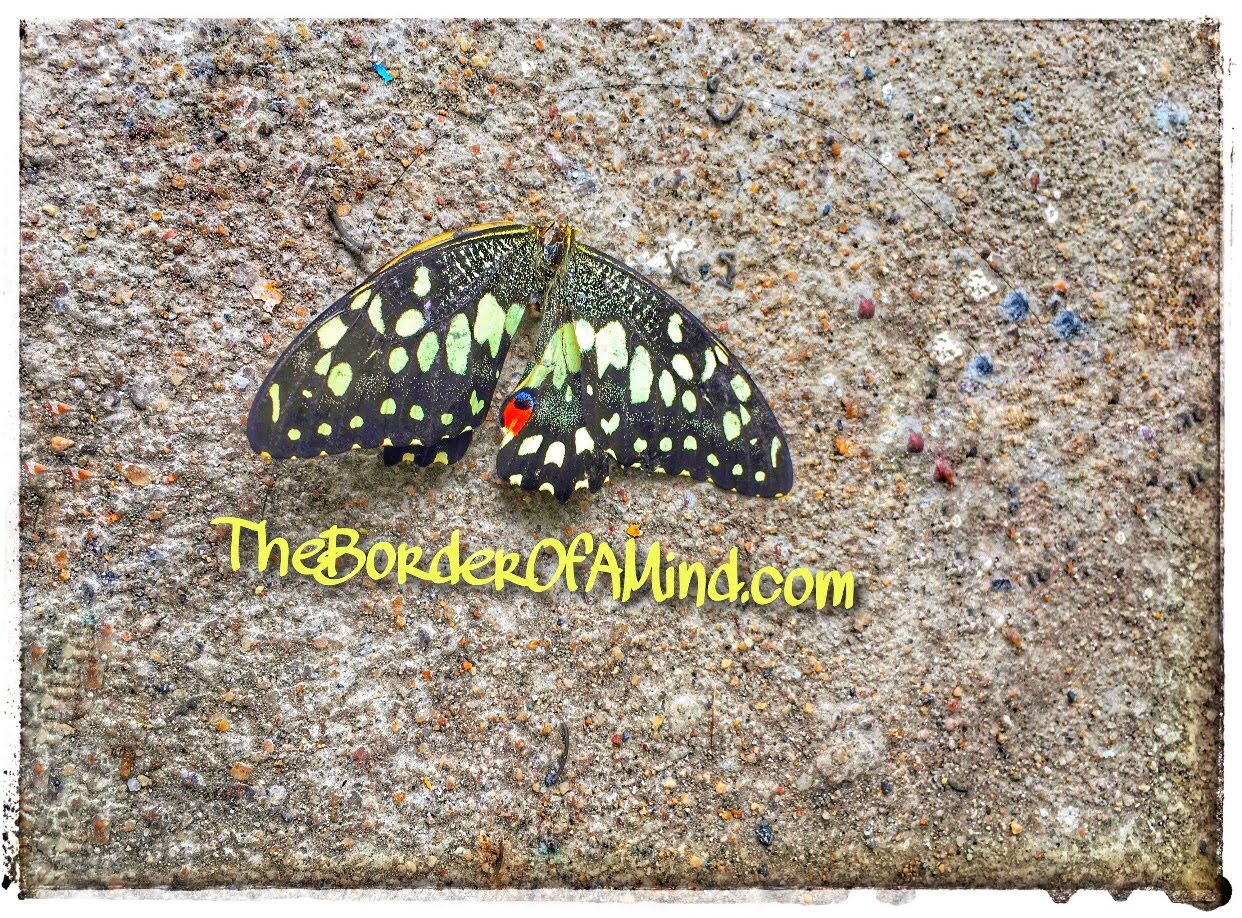
Here is another slice into the ponder series of The Border of a Mind. To rehash the theme, these chapters are an effort to take our minds through subtle sub-layer things that we fail to ponder or think about in our daily routines yet which magically turn around as miracles in on itself. If you have come here before, you’d recollect about the journey of birds or the perception of our brains which we skimmed around. During my last visit to India, I saw this beautiful butterfly on a wall of a skyscraper (scroll down for the photograph). As we know, it’s very difficult to spot a butterfly these days, especially if you are living in a heavily urbanized setting.
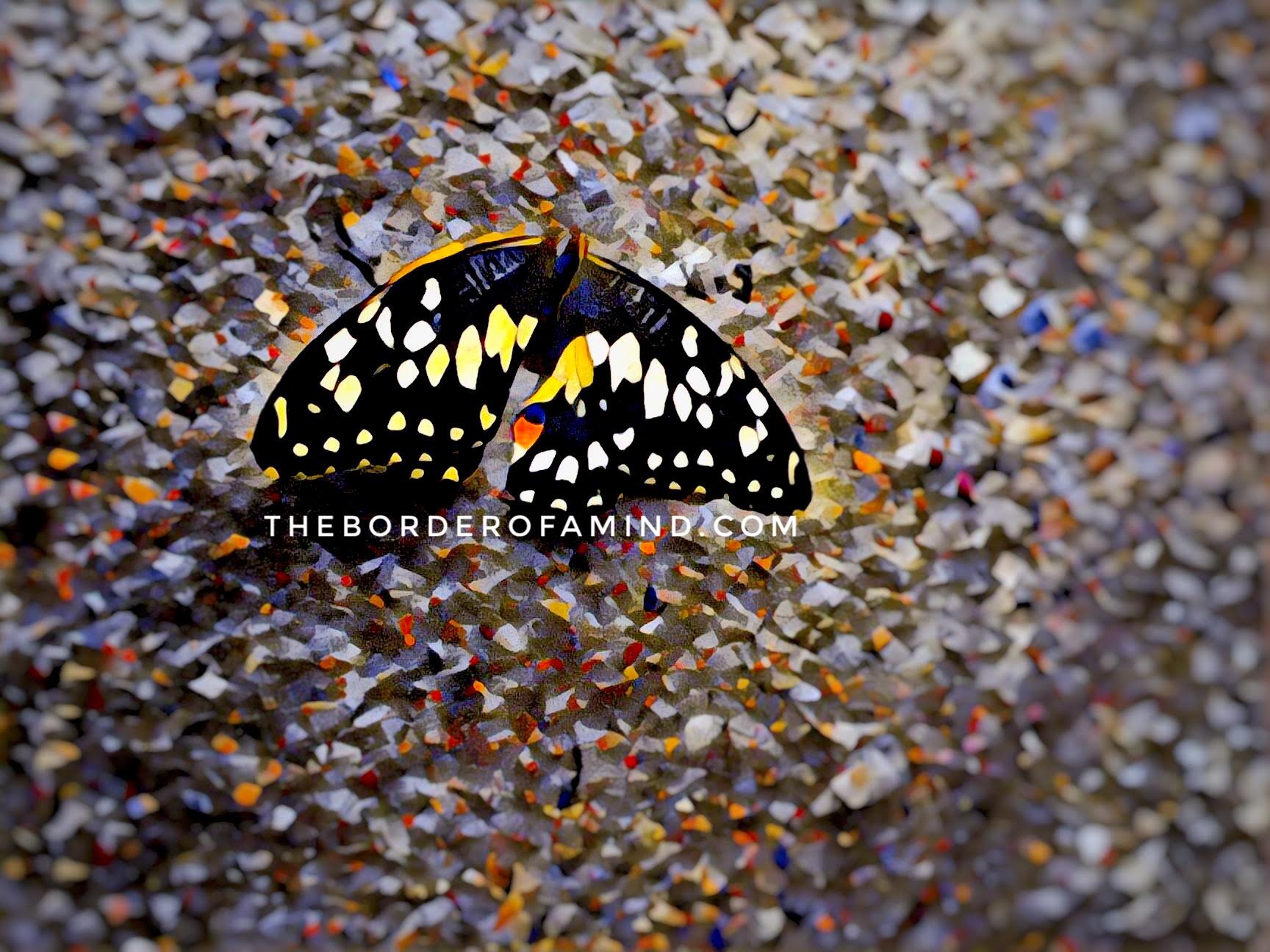
Anyone would admire the beauty and elegance of butterflies with their color wing patterns and flights. The title of this post is attributed to the ornamental beauty in them owing to which we can’t take our eyes off them!
The incremental stages of formation of a butterfly is a masterpiece of process art. Silkworms are among the animals which lay the highest number of eggs. We are talking of about 450 to 500 eggs. Since there are way too many eggs, there are chances that these may be get scattered or even strewed by the wind. To prevent this, silkworms attach these eggs by each other by a special material it secretes (string). Caterpillars on the lookout for a nice place to have their eggs laid discover one of these “branches” of eggs, if you will and would stick their eggs with the same string. Cocoon building with the string starts at this stage. Caterpillar would turn around thousands of times and would secrete around 1500 metres of strings!. At the end of this stage, the caterpillar metamorphosizes into an elegant, beautiful butterfly turning out to be another embellishing ornament around us.
If you didn’t know, for the butterfly to fly, its body heat has to be at a certain temperature. Butterflies use amazing techniques to accomplish this. For example, one such type is the colias butterfly and it won’t be able to fly if its body temperature drops below 28-degree celsius. They then open their wings at a certain angle so that their upper sides are exposed to the sun. If it reaches 40-degree celsius, for instance, it rotates by another 90 degrees in order to receive sun’s rays horizontally. Using this methodology, they absorb little heat and accordingly regulate their body temperature. I bet you didn’t know about this thermal engineering expertise in butterflies. We must have noticed beautiful spots on the butterfly wings. Yeah, they are aesthetically breathtaking and adds a gradient, but did you know that they serve another purpose? These spots help serve the butterfly to maintain higher body temperatures and these spots are located close to the points that are to be best kept warm. These spot portions generally warm up quickly compared to other parts. The location of these spots is in such a way that the distance that needs to be covered for heat transmission is shortened. As you know, a pair of lenses can be spaces and angled properly to concentrate light at a certain spot and make the area hot. Some butterflies species such as Pieris, for instance, use the same technique. I believe, thinking deeper and delving deep into such intricacies would help us better appreciate the miraculous nature of these things. How do such magic happen around us when we are too busy to even put our thought into it. Ponder! : )
Fruition
“Think the tree that bears nutrition:
though the fruits are picked,
the plant maintains fruition.
So give all the love you have.
Do not hold any in reserve.
What is given is not lost; it shall return.”
― Kamand Kojouri

Containing Multitudes
This post is inspired by a quote I heard in some interview on Youtube. I’m not able to clearly recollect the video or else I could link it here. It’s a very interesting thing to ruminate over. It’s about multitudes in ourselves.
Do I contradict myself?
Very well then I contradict myself;
(I am large, I contain multitudes.)
“Song of Myself – Leaves of Grass” (1892-92) | The Walt Whitman
If we think about it, that’s a truly profound talk. We are different versions of ourselves in different arenas of our lives. There’s a version of yourself that talks to a better half and there’s a version of yourself interacting with a colleague and it’s the same you who can chat with a 5-year-old and it’s again the same you who can play with a pet dog. In fact all of the people whom we meet in our lives, be it anywhere has a different version of “you”. A person may be outgoing and talkative at home whereas he may be reserved and and introvert at school or work. Likewise, we have different point of views which may not necessarily mesh or intertwine together. Every human is a universe unto themselves. The same goes true with a book or a piece of art. It’s basically about being embracive about the innate nature of being self-contradictory instead of being embarrassed by it.
Quoting from a very interesting article on the same,
And yet, in the privacy of our interior lives, the reality of the self seems inescapable — sometimes maddeningly so. For each of us, the entire enormity of life unfolds within the tiny locus of consciousness we experience as our very own self. So where is the line between the inevitability of the self as a focal point of experience and its mutation into an imprisoning ego-shell which, in the words of the great Zen teacher D.T. Suzuki, “is the hardest thing to outgrow”?
By large, containing multitudes and having these contradictions within ourselves would be perhaps the most moving part of the human experience and existence. Have a beautiful day.
Richer
” If you’ve a family that loves you, a few good friends, food on your table and a roof over your head, you’re richer than you think”
– Unknown author

Original photograph by Mervin Harif.
Money!
Found this interesting piece while reading. Sharing = )
” Money rules our lives. You can rail against it. You can claim to be above it or indifferent to it. You can do all the moral and intellectual gymnastics that you will. But when all is said and done, money is at the very center of our existence. Yet money is not of central importance. It has nothing whatsoever to do with the lasting values that make life worth living. This is one of our great dilemmas. How are we to reconcile ourselves to something that is not important but is at the very center of our lives?
People who measure their money against their desires will never be happy, because there is always another desire waiting to lure them. People who measure their money against their needs can gain control over their life by gaining control over their needs.There are certain needs that have to be met. If the burden of poverty comes over you, do not look for money. Look for work. The money will follow, and you can begin to move money out of the center of your life and return it to its rightful place as a tool that helps you live a meaningful life.Financial well-being is nothing more than a balancing act on the back of circumstance. You can be thrown off at any time.
If you know how to be poor with dignity and grace, nothing short of massive financial disaster can disturb your peace of mind. Knowing how to be poor means developing an unerring instinct for the difference between what is essential and what is desirable. It means knowing how to take control of your life–how to repair and maintain the things around you, how to purchase wisely and well, how not to purchase at all when you do not have the means to do so, how to take joy in simple pleasures of life. It means not getting caught up in what is lacking, but finding meaning in what you have. It means knowing how to live with style and creativity without basing your life on money. “
[Source: Simple Truths by Kent Nerburn]