
An art piece inspired by a ferry ride through Buyukuda Island in Istanbul. It’s also called Princess Islands
Tag: art

mirror | fine art.
“Beauty is eternity gazing at itself in a mirror.
But you are eternity and you are the mirror.”
― The Prophet

done in love.
“It is good to love many things, for therein lies the true strength, and whosoever loves much performs much, and can accomplish much, and what is done in love is well done.”
―

enigmatic | fine art
“The frame through which I viewed the world changed too, over time. Greater than scene, I came to see, is situation. Greater than situation is implication. Greater than all of these is a single, entire human being, who will never be confined in any frame.”
― Eudora Welty, On Writing

ethereal quality | Petals
Ralph Waldo Emerson once wrote that the earth laughs in flowers.
“The breath of wind that moved them was still chilly on this day in May; the flowers gently resisted, curling up with a kind of trembling grace and turning their pale stamens towards the ground. The sun shone through them, revealing a pattern of interlacing, delicate blue veins, visible through the opaque petals; this added something alive to the flower’s fragility, to its ethereal quality, something almost human, in the way that human can mean frailty and endurance both at the same time. The wind could ruffle these ravishing creations but it couldn’t destroy them, or even crush them; they swayed there, dreamily; they seemed ready to fall but held fast to their slim strong branches-…”
― Irène Némirovsky
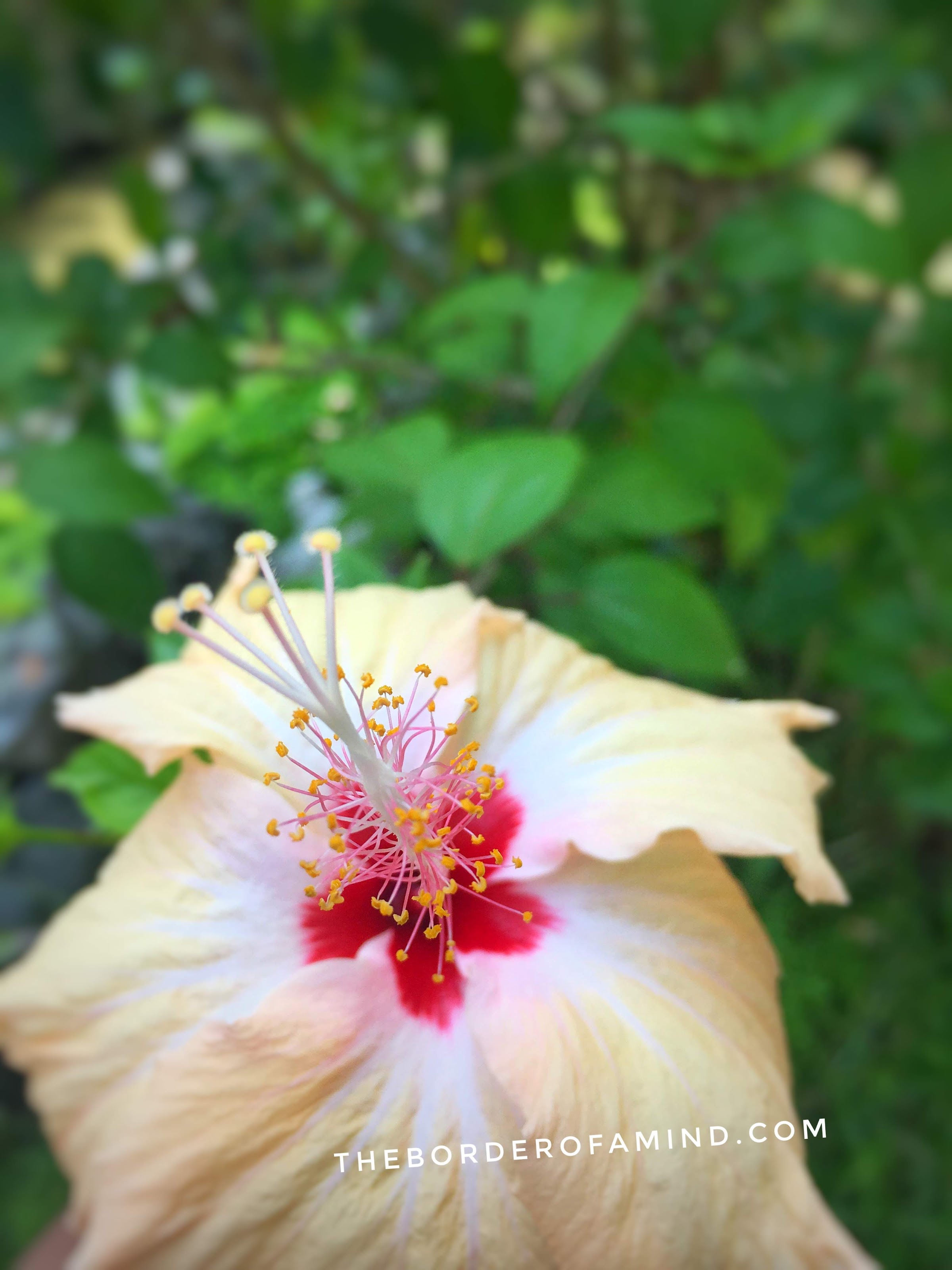
Notice the beautiful reddish pigment and the loft petals spread from it. Notice the aesthetically aligned petal stems decored with sub stems with yellow mini studs on them. Gazing at these details and pondering about them Photographs below are taken from a remote garden in Havelock Islands.
“Nobody sees a flower – really – it is so small it takes time – we haven’t time – and to see takes time, like to have a friend takes time.”
―
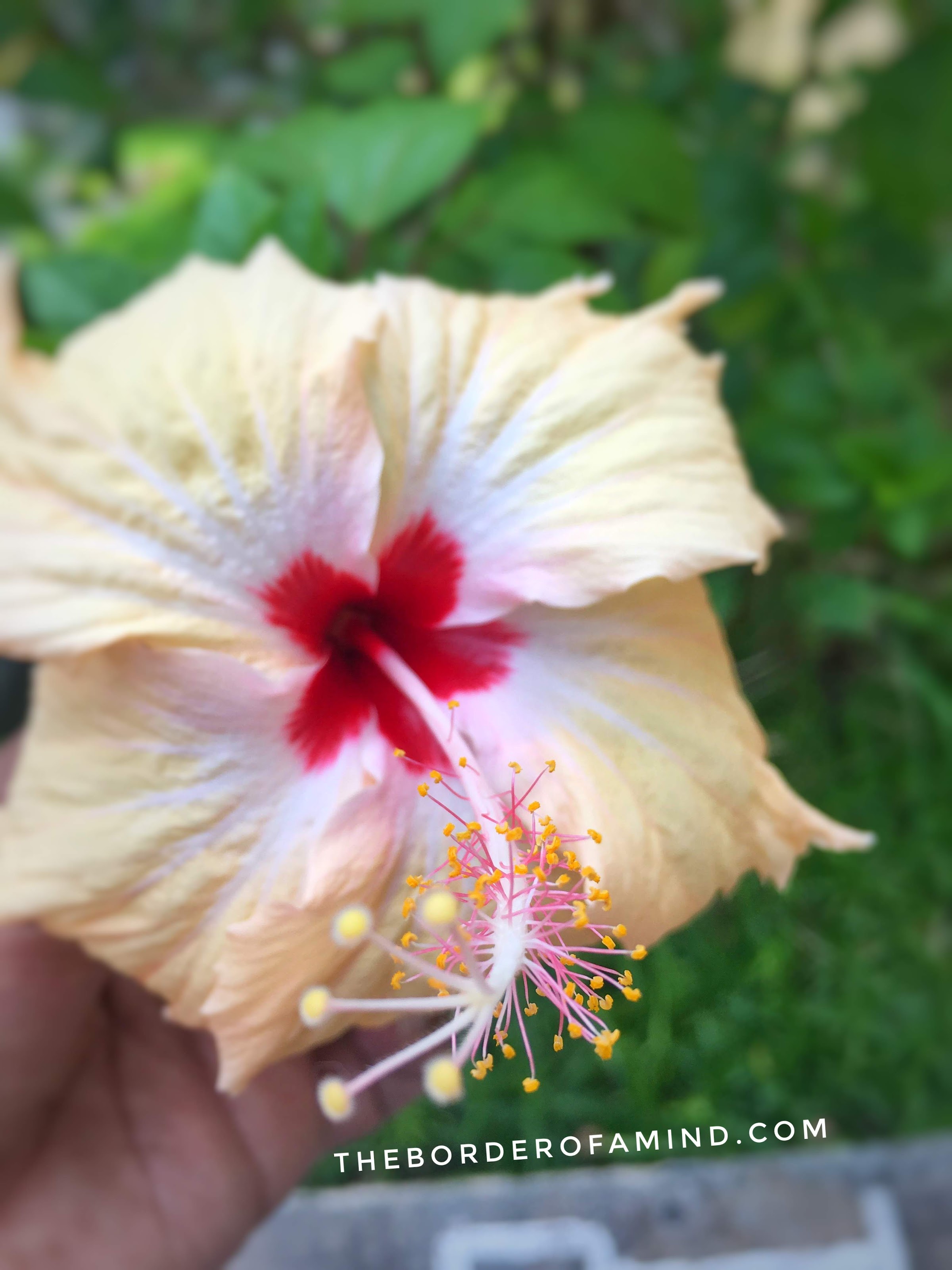
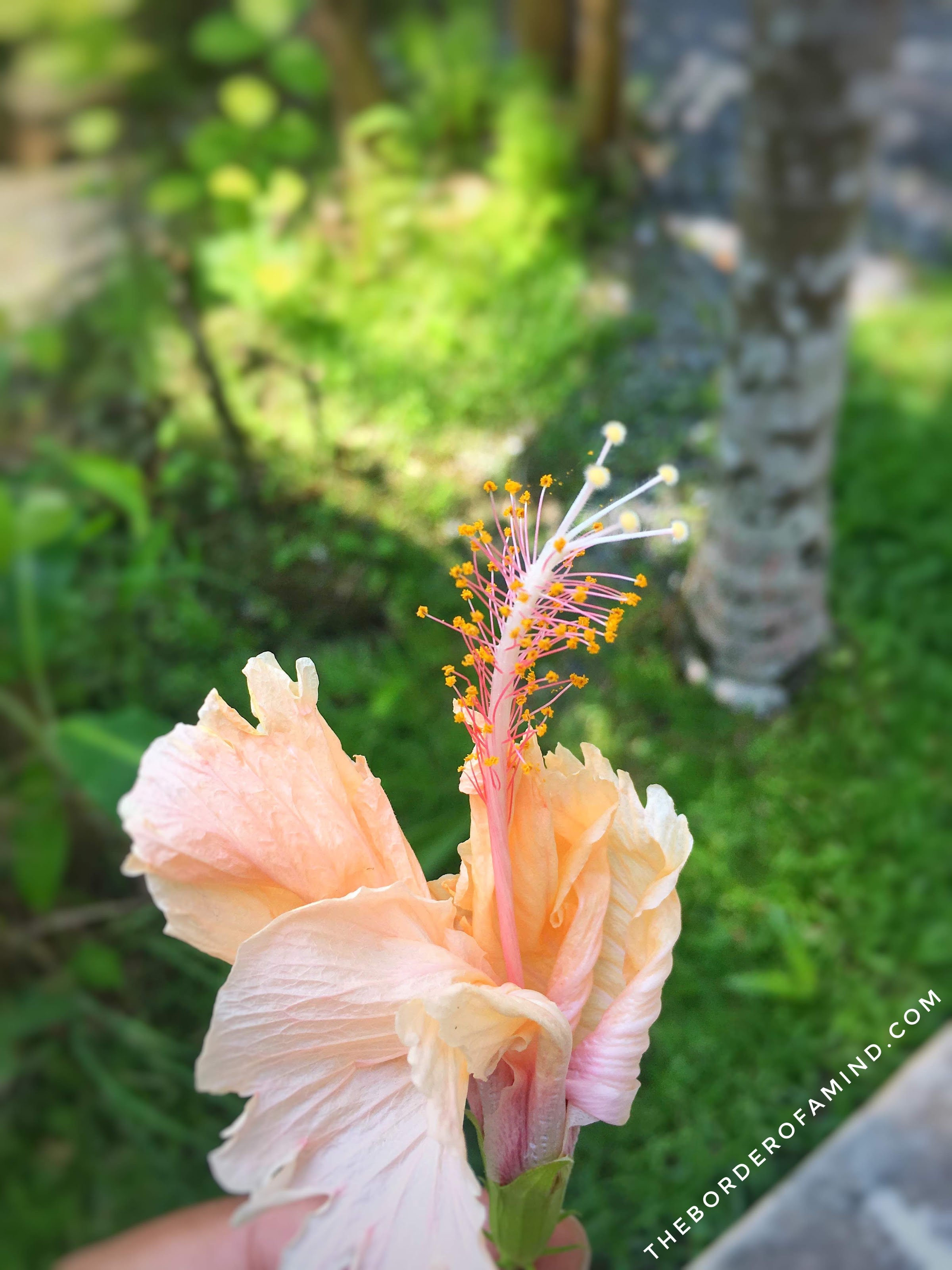
“Just as a flower as itself displays an embroidery full of art and with the tongue of its being recites the Creator’s names, so the garden of the globe resembles a flower and performs an extremely orderly, universal duty of glorification”
― Said Nursi, “The Twenty-Ninth Word”, Treatise of Light.
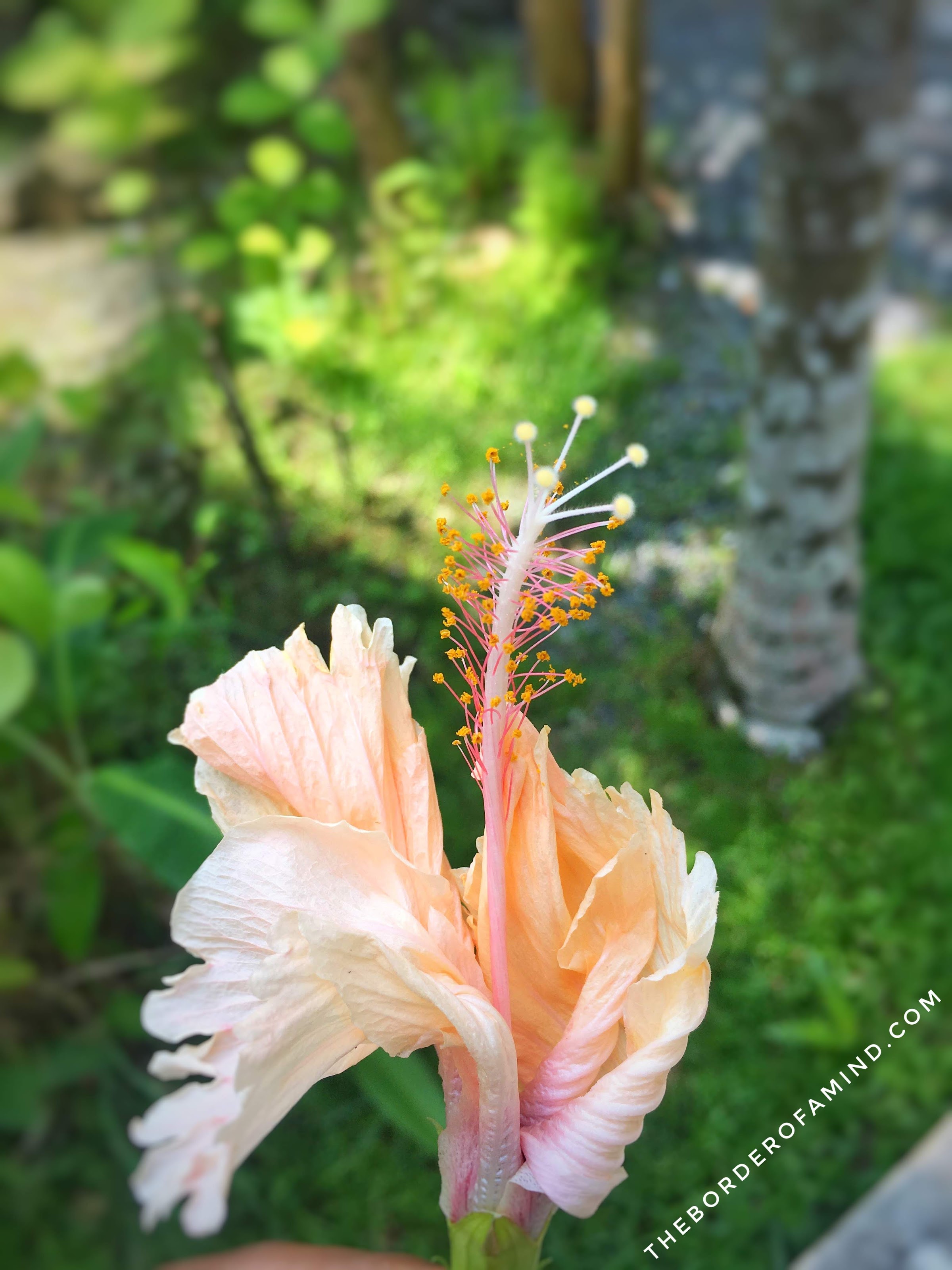
tranquil | fine art
“The more tranquil a man becomes, the greater is his success, his influence, his power for good. Calmness of mind is one of the beautiful jewels of wisdom.” (As once said by James Allen)
[Original illustration by The Border Of a Mind Studios]

Parallel worlds | fine art
I’m really fond of layering multiple exposures in digital artworks. In my opinion, It’s a convenient way of blending stories and multiple scenes in a cohesive rendering. I’m titling this work “Parallel Worlds” in relation to the buzz of thoughts and schemes which come in everyone’s minds and the illustration connotes the perplexing moment in time to decide to go with a particular resolve, thereby channeling a unique pathway in our destinies.
“These stories were very old, as old as people, and they had survived because they were very powerful indeed. They were the tales that echoed in the head long after the books that contained them were cast aside. They were both an escape from reality and an alternative reality themselves. They were so old, and so strange, that they had found a kind of existence independent of the pages they occupied. The world of the old tales existed parallel to ours, but sometimes the walls separating the two became so thin and brittle that the two worlds started to blend into each other. That was when the trouble started. That was when the bad things came. That was when the Crooked Man began to appear to David.”
— John Connolly (The Book of Lost Things)
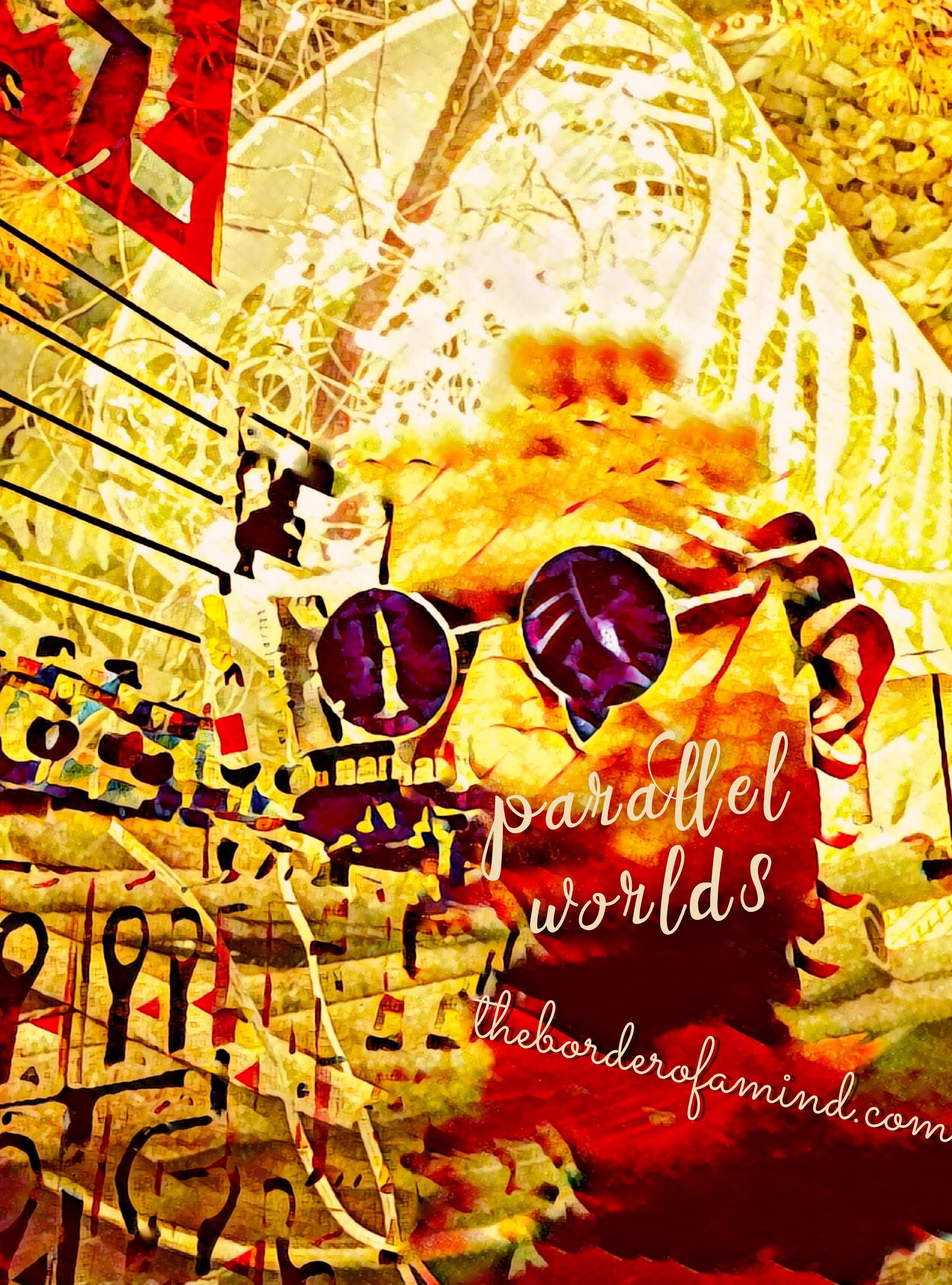
“Man’s striving for order, of which art is but one manifestation, derives from a similar universal tendency throughout the organic world; it is also paralleled by, and perhaps derived from, the striving towards the state of the simplest structure in physical systems.”
— Rudolf Arnheim
Explore original fine art from The Border of a Mind.
book of beautiful moments.
” You look in the mirror and
sometimes may see a
mess of a human being.
But you don’t see the lives
you’ve touched, or the
people you’ve saved.
You don’t see all the love
you’ve given freely,
or the extraordinary
memories you’ve made.
You are a book of beautiful
moments and feelings.
You are not weak because you cry.
You are not a simple being.
You make plants come back to life,
and you turn cold rain showers
into warm downpours.
You are a piece of art that
makes people feel things.
You don’t bring people to
their knees, you give them
a solid footing

And that is beautiful.”
[ source ] Khalil Gibran
“swayed in” | fine art.
a spontaneous piece that popped out of my head at this moment. Calling this “swayed in“
“Spontaneous Painting is painting intuitively without having an image or model to paint from, where the result comes from a spontaneous play with the paint, the colors, and texture. Most importantly, each brush or finger stroke comes from a direct response to an inner directive, not from an aesthetic standard.” [ source ]
The border of a mind studios is passionately excited in adopting it fervently on digital art frames. Exuberant vibe fuels the day amigos. Peace! God bless.

Kintsugi.
I had written on this page about Kintsugi. It’s a very interesting Japanese concept. It’s widely used in art and pottery but what’s even more enthralling is its philosophic extension that’s often found to cognate with healing and history. In this concept, broken and repaired things are often regarded as much more beautiful. It’s often read in the context of Wabi-Sabi, which is basically “to explore the beauty in broken things or old things.” I have read a little book explaining this concept and I felt it was wide implications.
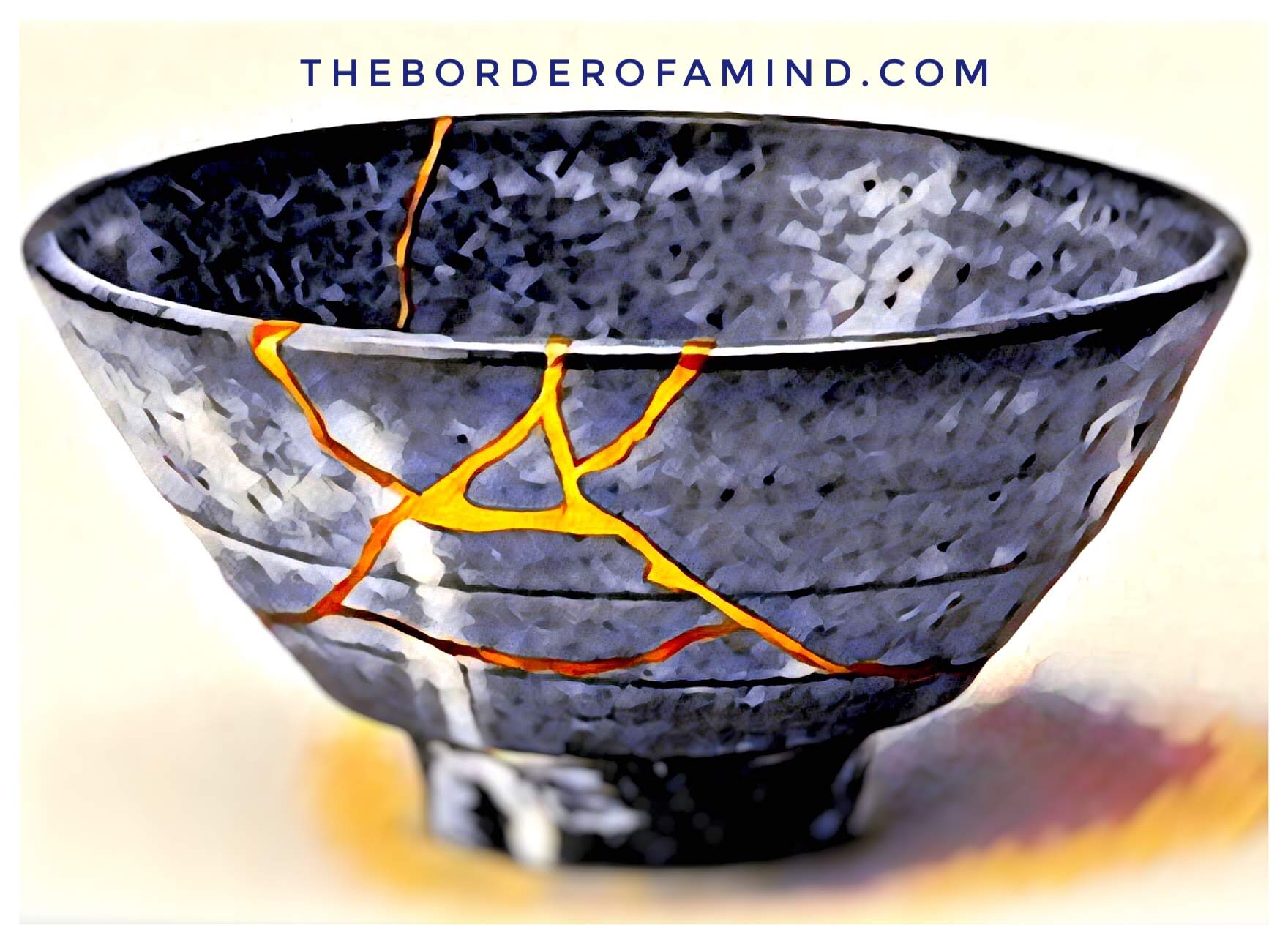
” Kintsugi (金継ぎ, “golden joinery”), also known as Kintsukuroi (金繕い, “golden repair”), is the Japanese art of repairing broken pottery by mending the areas of breakage with lacquer dusted or mixed with powdered gold, silver, or platinum, a method similar to the maki-e technique. As a philosophy, it treats breakage and repair as part of the history of an object, rather than something to disguise. “
Barbara Bloom puts it this way: “When the Japanese mend broken objects they aggrandize the damage by filling the cracks with gold because they believe that when something’s suffered damage and has a history it becomes more beautiful“.
Omid Safi writes in his piece “Illuminating the Beauty in Our Broken Places“,
” We value success, wholeness. Unlike this Japanese art form, we don’t yet have a way of looking for what was once broken and has been healed and illuminated. How lovely would it be to find that a cracked and illuminated cup can be even more beautiful than a whole cup. How wise to realize that the broken hearts, illuminated and made whole, can be even lovelier.”