Tag: Illustrations
paint with light | fine art
Explore other themes in fine art
Choosing the Circus
Mind Vessel
Dreaming Beyond
Mirror
Done in Love
Enigmatic
Tranquil
Parallel worlds
Book of beautiful moments
Swayed In
choosing the circus | fine art
“Don’t blame a clown for acting like a clown.
Ask yourself why you keep going to the circus.”
Going through a very interesting phase of reevaluation of expectations & realignment of actions. This piece of digital art is to artistically commemorate it : )
dreaming beyond | fine art
An art piece inspired by a ferry ride through Buyukuda Island in Istanbul. It’s also called Princess Islands
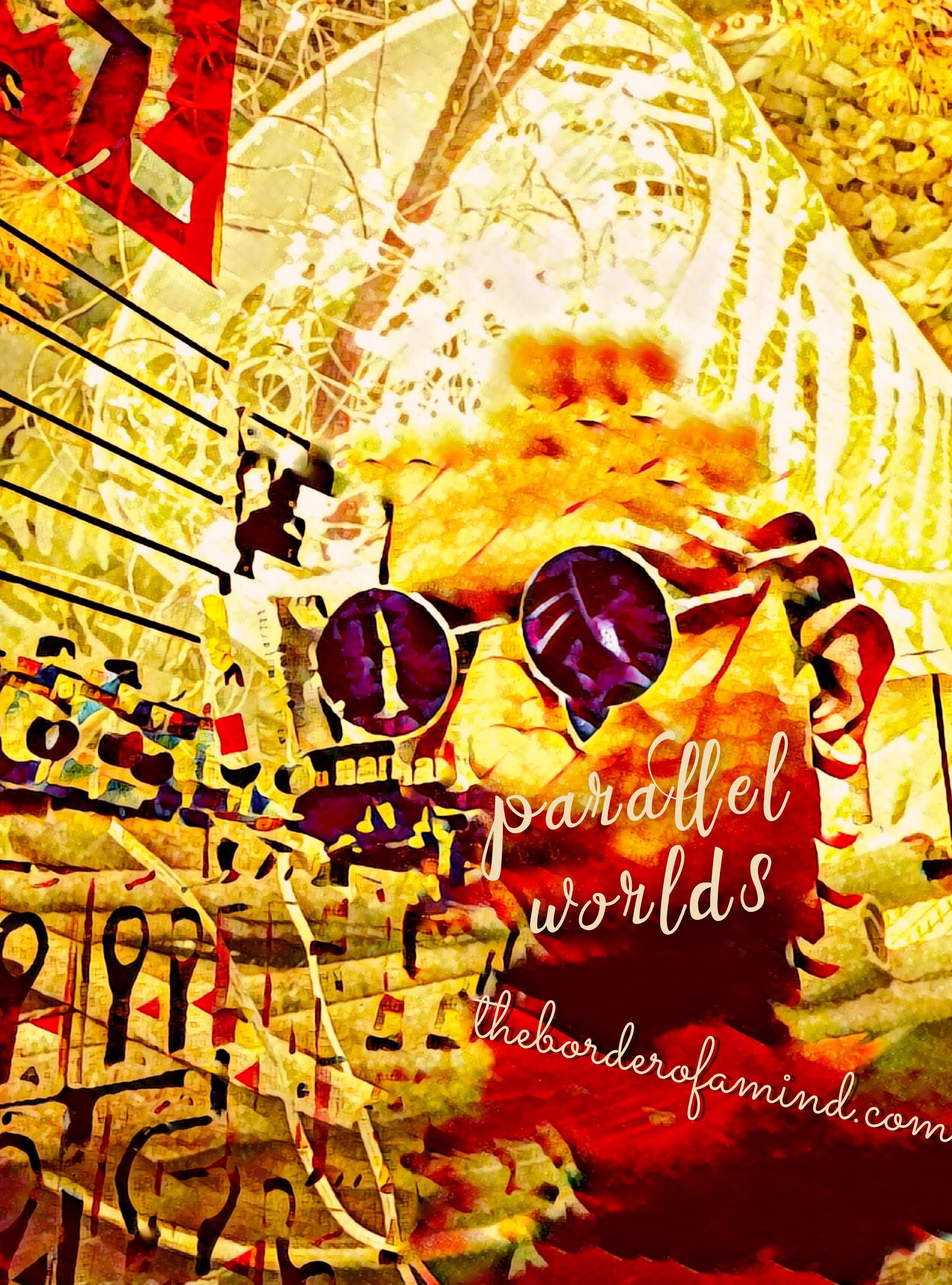
Parallel worlds | fine art
I’m really fond of layering multiple exposures in digital artworks. In my opinion, It’s a convenient way of blending stories and multiple scenes in a cohesive rendering. I’m titling this work “Parallel Worlds” in relation to the buzz of thoughts and schemes which come in everyone’s minds and the illustration connotes the perplexing moment in time to decide to go with a particular resolve, thereby channeling a unique pathway in our destinies.
“These stories were very old, as old as people, and they had survived because they were very powerful indeed. They were the tales that echoed in the head long after the books that contained them were cast aside. They were both an escape from reality and an alternative reality themselves. They were so old, and so strange, that they had found a kind of existence independent of the pages they occupied. The world of the old tales existed parallel to ours, but sometimes the walls separating the two became so thin and brittle that the two worlds started to blend into each other. That was when the trouble started. That was when the bad things came. That was when the Crooked Man began to appear to David.”
— John Connolly (The Book of Lost Things)
“Man’s striving for order, of which art is but one manifestation, derives from a similar universal tendency throughout the organic world; it is also paralleled by, and perhaps derived from, the striving towards the state of the simplest structure in physical systems.”
— Rudolf Arnheim
Explore original fine art from The Border of a Mind.
“swayed in” | fine art.
a spontaneous piece that popped out of my head at this moment. Calling this “swayed in“
“Spontaneous Painting is painting intuitively without having an image or model to paint from, where the result comes from a spontaneous play with the paint, the colors, and texture. Most importantly, each brush or finger stroke comes from a direct response to an inner directive, not from an aesthetic standard.” [ source ]
The border of a mind studios is passionately excited in adopting it fervently on digital art frames. Exuberant vibe fuels the day amigos. Peace! God bless.
“Golden Ratio” | Ponder Series
Before I start, let’s see this beautiful video “Nature by Numbers” by Cristóbal Vila. I first saw this almost 9 years back and it helped discover a lot of amazing knowledge treasures which I didn’t know before. This number is used by architects and designers extensively, but what we are discussing here is something else. It’s about realizing and pondering on how the entire universe is crafted specifically in a specific metric. Have a look at the video and I shall elaborate further with detailed illustrations. I was pretty pumped up when I first came to know about this and would like to take this write up as an opportunity to share this information with you. Probably this would be the first write up for which I spent the longest time preparing content and illustrations for the only reason that I’m super excited to share this all of you. Now, let’s read.
This piece would be an addition to the Ponder Series that we have been writing extensively over the past several months. When we think about the world around us and also when we look within, it might seem usual and ordinary. But ponder series, as you might know, is all about thinking deeply and delving into the details by going beyond the ordinary perceptions. “Golden Ratio” is such a concept that’ll blow our minds off. I first read about this interesting ratio pervading the universe when I was in college. I shall elucidate it here, preferably with some visual illustrations. If you have not heard about this before, I’m sure this will definitely throw you into some wonder. Read it very carefully. It’s exciting information!
Many of us would be familiar with the Fibonacci series of numbers which were discovered by the Italian mathematician Leonardo Fibonacci in 1202 B.C.
It’s a series as below:
0, 1, 1, 2, 3, 5, 8, 13, 21, 34, 55, 89, 144, 233, 377, 610, 987, 1597, 2584, …
In this series, if you add two numbers in the series, you’ll get the next number in the series. For example, 0+1=1, the third number in the series. And 1+1=2, the fourth number in the series, 1+2=3, the fifth number in the series and so on.
We might have seen this series in our maths classes and wondered what is special about them. They have an amazing property. If we divide any number in this sequence by the number before it, we would get numbers very close to each other. After the 13th number in this series, the ratio is constant and we get 1.618. This is called “Golden Ratio”
233 / 144 = 1.618
377 / 233 = 1.618
610 / 377 = 1.618
987 / 610 = 1.618
1597 / 987 = 1.618
2584 / 1597 = 1.618
Now, this golden ratio number of 1.618 is pervading everywhere. If you didn’t know this before, get prepared to be blown away.
Human Body
Did we ever think that our body measurements were just random? Boy! we are wrong! The proportions and geometrical ratios are carefully crafted in this specific ratio. For a better visual perspective, I’m sharing a few illustrations below so that you can take a look! These values are universally true for every human body. Isn’t that a jaw-dropping realization if you didn’t know this before?
Now, that’s far from over. Let’s go a little deeper. The same ratio is true for the below:
– Length of face/width of the face,
– Distance between the lips and where the eyebrows meet / length of the nose,
– Length of face/distance between the tip of the jaw and where the eyebrows meet,
– Length of mouth/width of the nose,
– Width of nose/distance between nostrils,
– Distance between pupils/distance between eyebrows.
Even the placement of teeth, as well as the ratio of individual teeth sizes, are on this same ratio.
In a research study carried out in 1987, it was discovered that this magic ratio is also in the structure of the lungs as well. The bronchi network in the lung is asymmetric. The windpipe gets divided into the left and the right bronchi networks. The one on the right is short and the one on the left is long. The geometrical proportion of the shorter one to the longer one of this bronchi is 1.618. Isn’t that amazing? Recent studies have shown that the internal structures of the ears are also proportioned in the same ratio. The more we explore and delve in, the more breathtaking it turns out to be.
This number has garnered significant interest in great minds like Pythagaurus, Leonardo Da Vinci and the famous astronomer Kepler. Leonardo Da Vinci has used it in the painting Monalisa.
Golden Ratio in DNA Helix
DNA has two grooves in its spiral. Major to minor groove proportion measures as the golden ratio 1.618.
Golden Spiral
In geometry, a golden spiral is a logarithmic spiral whose growth factor is φ, the golden ratio. That is, a golden spiral gets wider (or further from its origin) by a factor of φ for every quarter turn it makes. See the below link for a reference.

Image By Jahobr – CC0, Link
The golden spiral can be found in pinecones, sunflowers, pineapples, and a lot of other plants. Another amazing detail is that the petals of plants commonly grow in Fibonacci numbers.
In sunflower, we can notice two families of spiral patterns: one winding clockwise and the other counterclockwise. The quantity of spirals in each family are always two consecutive Fibonacci numbers. This effect is the result of closely packing points separated by 137.5 degrees in tight spirals. This implies that the a golden-ratio based phyllotaxis allows not only for optimal sun exposure but also for maximal packing in horizontal space. (Reference)
For field daisies, the count of petals is usually either thirteen, twenty-one, or thirty-four petals, all consecutive Fibonacci numbers. Bet you didn’t know about this before! 🙂
And it’s not over yet. We have more!
The golden ratio is even found in the shape of galaxies, hurricanes, and waves.
What I have shown here is only a small portion or subset of how this golden ratio pervades in almost every other stuff we are surrounded with. Leonardi Davinci has used this ratio in some of his greatest paintings. Architects use this ratio in designing structural solutions with better aesthetics. In architecture, they bring balance and height to structures and allow the usage of specific geometries and varying shapes and eventually help build aesthetic structures. They are also extensively used in arts and music as well. The ratio is made use of in the design of several musical instruments and in timing musical compositions (Climax reaching at 61.8% of the song sequence to make it more appealing, for instance). Beethoven’s fifth symphony uses this ratio. The ratio is also used in other fields like facial plastic surgery and cosmetic dentistry. This is really thought-provoking. If we ponder deeply on these realities, we come to the realization that everything around us is formed and ordered in a measure which we even don’t notice. We require the eye of wisdom and insight to contemplate these realities. Don’t let these astonishing marvels around you hide from your thoughts and cogitations when we get engulfed ourselves in the blurred rush of routine life. Uncovering this hidden mathematical miracle around us has a profound impact. Think about it, friends! Let’s widen our horizons and augment our perspectives. Personally, I believe this ratio is sort of like a divine signature. God bless friends!
Vision | Pondering on the intricacies
Today’s disposition is to write something into our ponder series. For new readers who aren’t aware of these series, below is the thematic intention of this initiative that I mentioned in my first post on this topic.
” Often in the rush of our routines, we fail to appreciate certain hidden subtleties and nuances of living in this universe, which we can only admire if we consciously make an effort to think deeply with profundity. We have to pause for a moment and ponder, and hence the name of the series. “
Let’s ponder on vision today. We are aware of the technical description of vision and how it’s accomplished in our bodily systems. The intention here is to delve in little deeper and explore the miraculous aspects of this process which we deem as pretty novel and relegate as trivial.
..Illustrated by The Border of a Mind Studios…
The illustration above shows a person gazing at a candle. Light bundles from this candle fall on the retina upside down. The image of the candle gets converted into electrical impulses and is transmitted to the centre of vision situated at the back of the brain. As you would know, the brain is pitch dark inside and it’s totally insulated from light. It’s technically impossible for light to reach this centre of vision. But we see the candle image transmitted there. In other words, the world of lights and depth is formed in this tiny spot which does not receive any sort of light from outside. The candle outside is hot. This applies to all senses. If we think about it, when we see the light of the candle and even when we feel its heat, the inside of our brain is completely dark, pitch dark and there’s not temperature change there. Isn’t that truly miraculous? Spare some thought into it. Ever wondered on how this happens? Those are the first steps that open up our thought process on several important things that we tend to wade off in our routines. Those who have been reading me for a long time might recollect the post “perceptions” which also conceptually shares the same context.
In his famous book ‘Eye and Brain: The Psychology of Seeing‘ , Richard Gregory writes:
“We are so familiar with seeing, that it takes a leap of imagination to realize that there are problems to be solved. But consider it. We are given tiny distorted upside-down images in the eyes, and we see separate solid objects in surrounding space. From the patterns of stimulation on the retina we perceive the world of objects and this is nothing short of a miracle.” (Eye and Brain, 1966)
Happiness in the ordinary.
We are living in a time where all the talk is about happiness. Governments put up initiatives to enhance the happiness of citizens, employers trying to introduce policies to enhance the happiness of its employees. Everyone as a person is also trying to explore avenues and alleys to discover happiness and fulfillment. Netta lately shared with me a wonderful post from the Instagram profile of Freddy Birdy and we read it together lying down on the couch. It was so enchanting and beautifully written so that I decided to have it shared here as I didn’t find it anywhere else online and also serving it my usual art sauce of illustrations crafted by The Border of a Mind Studios. Hope this is worth your time and thanks to the original author for this wonderful piece.
The pursuit of happiness.
All our lives we spend wondering WHAT it is that will make us happy.
Wondering if we ARE actually happy.
Wondering if we WILL ever be happy.
Wondering if we will find everything we ever dreamed of.
But happiness.
We know in our minds what we THINK will make us happy.
The perfect job.
More money in the bank.
The ultimate partner.
Children who get straight ‘A’s.
A dream home overlooking the city.
A beach house parked next to the sea.
Love.
Platinum credit cards.
Always turning left once you enter an aircraft.
Never looking at the right-hand side of a menu.
Fame.
Followers.
Likes.
Attention.
Success.
A Lamborghini (Countach).
Unlimited Exotic travel.
Great Metabolism.
A fat paycheque.
A slimmer you.
Space on a magazine cover.
Permanent residence in someone’s heart.
Something.
We travel to new cities.
We attend all the parties.
We climb up another rung of the ladder.
We do things we KNOW will make us happy.
And we wonder why despite living our dreams,
happiness still isn’t our reality.
When will we realize that happiness
is in the ordinary, the mundane and the lacklustre?
Happiness is how you make somebody FEEL.
It is in ordinary everyday things.
not in life goals.
Happiness is the opposite of a plan.
Happiness is NOW, this minute, this microsecond.
Happiness is never taking anything or anyone for granted.
It is the scent of freshly brewed coffee on the WAY to work.
It is not a new car, a new iPhone,
a new watch or a new PERSON.
Happiness is the absence of grief.
Happiness is writing a thank you note to a friend.
Happiness is listening.
It is taking your dog for a walk.
And making dinner for your child.
And singing in the shower.
Happiness is one more pat of butter sliding down a hot, naked toast.
Happiness is a porch light on and waiting.
Happiness is the promise of a doorbell.
It is in the secret of eyes meeting for the very first time.
It is in fingers touching accidentally in paper popcorn holders at the movies.
Happiness is not in counting currency notes.
But your blessings.
Happiness is not what others think of you.
Happiness is what YOU think of yourself.
Happiness is the smell of a new book.
Or the smell your lover’s clothing hanging on a bathroom hook
Happiness is not your child’s report card.
Happiness is your child’s happiness.
Happiness is not a 21-course menu degustation.
Happiness is a 5 Star bar discovered in a lunch box.
And greasy omelette pays with friends at 2 am
Happiness is laughing at the same joke
again and again and still again in your head.
Happiness is staring at a familiar WhatsApp message and smiling to yourself.
Happiness is a large plate of Maggi.
Served with FOUR forks.
Happiness is your first mango of the season.
Or the last installment of a loan.
Happiness is not a ten thousand rupee perfume on a duty-free counter.
Happiness is the scent of your lover’s NECK.
Or familiar arms holding you close in newer ways.
Happiness is watching a loved one snore softly in deep sleep.
Happiness is also forgetting. Forgiving. And letting go.
Happiness is training your mind to unthink
Lastly, happiness is not about counting
stars, staring together at a new moon, riding unicorns,
chasing rainbows or dancing barefoot in the twilight.
Your happiness always lies within you.