
Removed wood and added a stone for decor. Couldn’t effectively control the algae growth on the wooden block inside. Have to figure that out. Until then, let’s give more room for the tetras to swim around to its content. Know the friends swimming around.
Author: Ajmal
veiled luxuries
It’s not a 23-course buffet menu that is merriment. It’s often in those simple luxuries concealed under the veil of unadorned ordinaries. For me, it can be in some ghee roasted bananas and crisp cashew with warm coffee at home with Netta on a very content afternoon. Happiness and contentment at THIS very moment. Inconspicuous ordinaries have luxuries treasured in them. Grateful. Forage for these luxuries, count the blessings.

Mouthwatering ? Explore culinary experiences.
enrapturing bloom

Every single bit of art you see here, there’s a reflection in my mind, a theme that I contemplate when I work on it with my heart. If you didn’t know, I’m always enraptured about flower petals and the beautiful art they effuse. Remember ornate blossoms and ethereal quality? These marvelous pieces of art that we see all around us yearn for reflection from the beholder. If we open a vault or and old box from a courtyard and discover a painting of a tree or a beautiful flower, we wonder about the painter and hail his mastery in the art. Not in the tiniest speck of possibility can we convince ourselves that the beautiful painting that we saw in the vault came about when somebody threw a paint can into the air and it eventually came about into this masterpiece painting through rain and wind flowing on the paint over years. There’s conscious design, symmetry, and intent in the painter working patiently on the painting and completing it. The work of art definitely leads to its painter. Appreciating the art in its wholeness leads to its artist, his mind, and his signature. In the same token, when we see these beautiful flowers around us, is there a blind curtain on our minds which hesitates us from thinking and wondering how these came about around you and takes your attention. They have a story to tell you. Shouldn’t we be seeking the artist? Awareness is the key to reflection. I’m recollecting what I wrote recently in ornate blossoms on the same theme.
“They are not randomness around us. Neither are they desultory existences around us. They have a purpose in making us ponder about them. They have a story to tell you. They’ve something to show you. They’re locks of thoughts waiting to be unlocked by you. They’re not looking for a monk. They’re looking for me and you.”
Quoted from the piece “Ornate Blossoms“,
is it a dream?
When you dream, everything looks real until you exit that dream.
When you’re in the dream, you never know that you’re within a dream.
What makes you so sure that you’re not on a dream right now?
You might wake up from the dream you are in now.
Time for reflection

indelible footprints

“If therefore you shall be remembered for what you did with what you had more than what you had, use what you have to do something distinctive now and leave a notable footprint before you go”
Ernest Agyemang Yeboah, Ghanaian writer and a teacher,
one thing, really really well
Today’s theme is something on the premise of doing one thing really really well. I’m not sure if this is popping on my head as I’m getting older, but I’ve always felt that it’s inspiring to see people do specific specialties on a different level. It may not be necessarily in their regular jobs. It can be a hobby or a craft in which they’re ardently passionately into. As I get older, I am having a realization that too much multitasking actually kills us from the inside. Hopping between several things at the same time takes away the soul from any activity. I was lately reading a Zen book on minimalist philosophies and one of the aspects that the author touched upon was on being present in what we do. While eating, for example, it’s a different experience when we enjoy every morsel and munch it relishing every bit of it. We won’t get this feeling when we scroll our phones while eating, for instance.
Tim Denning writes on his piece The Power of Doing Only One Thing on bringing about focus and improvement with this practice.
Doing one thing gives you extreme focus. This focus can be channeled towards tasks that lead to mastery instead of trying to dabble in lots of unrelated passions. Focus is how you reach states of flow and achieve results that look impossible.
Doing one thing causes you to focus and practice more. Through this process, you can see your failures, areas of improvement, and areas that you’re good at. This form of reflection gives you real-time feedback that can further compound your results.
Similar resonating thoughts were read from Carl Newport in his book Deep Work
“Professional activities performed in a state of distraction-free concentration that push your cognitive capabilities to their limit. These efforts create new value, improve your skill, and are hard to replicate. Deep work is necessary to wring every last drop of value out of your current intellectual capacity. We now know from decades of research in both psychology and neuroscience that the state of mental strain that accompanies deep work is also necessary to improve your abilities.”
– Cal Newport , Deep Work
… “Shallow Work: Noncognitively demanding, logistical-style tasks, often performed while distracted. These efforts tends to not create much new value in the world and are easy to replicate. In an age of network tools, in other words, knowledge workers increasingly replace deep work with the shallow alternative — constantly sending and receiving e-mail messages like human network routers, with frequent breaks for quick hits of distraction.”
To complement this, I’d highly encourage you to skim through a recent write up where we talked about Maker’s time.
implanted beauty

A man should hear a little music, read a little poetry, and see a fine picture every day of his life, in order that worldly cares may not obliterate the sense of the beautiful which God has implanted in the human soul.
Johann Wolfgang von Goethe
The “world” is inside you :)
The title of the post might make you puzzled. But I would like to take you through a small journey of thoughts and discover the secret embodied in the title! It’ll be good if you can be distraction-free for two minutes as you read this, as this is a very important reality that can blow your mind! I value your time. Let’s think together : )
Today, we are adding a slice into our Ponder Series. I read something along these lines about a decade ago through several books that profoundly changed my perspectives on how we perceive the world. If you haven’t read about this theme before, this could possibly be a key that could unlock many secrets of thoughts and perceptions about people and things around you and everything happening to you. Right now, you’d be reading these words on your phone/tablet or PC. If it’s the phone, for example, you’d be now scrolling with your fingers on the phone screen or touching your mouse/touchpad if you’re reading on a computer. Reality for most people is what they can see with their eyes & touch with their hands. You touch your phone now while reading this and believe that it’s real. This is the normal conception of reality that has conquered generations and their views. But there’s a deeper side to it if we ponder deeply. Everything we confront and experience – everything – the chair that you sit on, the bed you sleep on, the window of your room, the buildings near you, roads, cars, people you see, spaces, cafes, your loved ones, the experiences we go through in life, in short everything is perceived through our five senses. We know this well, but have you wondered how this magic really happens! Let’s ponder on how the information of the exterior world reaches you through your senses.
You and me have five sensory faculties – sight, hearing, smell, taste and touch. If we think about it from a scientific point of view, all these senses work in the same way. For each sensory faculties, stimuli from objects in the external world and taken through these senses and nerves carry them to the sensory centers in the brain. These stimuli that induce these signals include lights (for vision), sounds (for hearing), smells, tastes, textures (for touch). These stimuli reach the brain only as electric signals.
Let’s take our vision as an example. Light rays (photons) emanating from different objects around you reach the retina at the back of your eye system and passing through several stages, they get converted into electrical signals. These signals then reach the brain’s vision centre through the nerves. This colorful and bright three-dimensional imagery that you see is formed at this vision centre, which is only a few cubic centimeters. So, when you hold your phone in your hand, you’re perceiving the “image” of the phone at the back of your brain in a minuscule space. This system of electrical impulses broadly applies to our other senses as well.
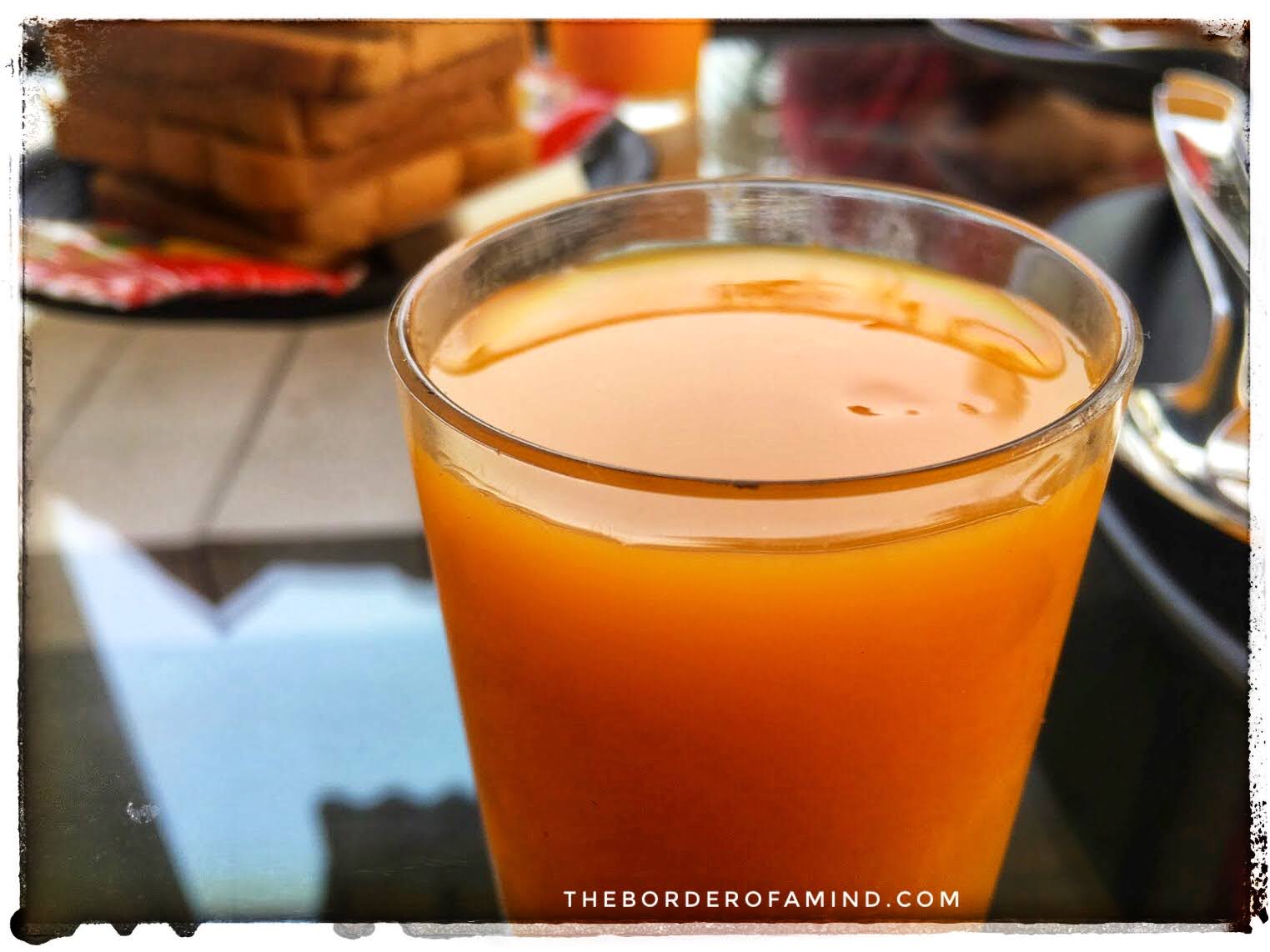
When you taste a glass of fresh orange juice, cells on your tongue surface transfer the stimuli into electrical signals that we perceive as taste. The aroma of the fresh orange juice near you is transformed into electrical signals by the cells in the epithelium of the nose. When you touch the glass cup, there are special sensors that are lodged beneath the skin surfaces that transform touch impulses and sensations of hardness/softness to electric signals. Similarly, your ear also have a similar mechanism that converts sounds into electricals signals. That’s how you hear the sound of the glass when you place it on the table. You perceive that you are drinking an orange juice when all these senses cohesively and harmoniously work together with these electrical signals for different senses.
Now is the important concept that needs to be thought about. Whether the orange juice exists or not cannot be known by us. The “orange juice” that you know is a blend or collection of its taste sensed by the tongue, its odour sensed by your nose, the color, and shape captured by your eyes, and only its attributes perceived through these senses is what is accessible to you. You don’t have access to the “original” version outside. It shows the limitation of ours to reach the physical world. Everything around us we are in touch with and our experiences are a compiled effect of different perceptions such as sight, hearing, and touch. All we can do is process the data of electrical impulses in our brain’s sensory centers of our brains. So, instead of the “original” of the matter, we are confronting its “copies” inside our brain. At THIS point, we tend to believe that the copies that we experience are the real matter outside, which is not the case as we just examined 🙂
Orange juice that you drank is only a simulation. Which orange juice is real? The one that is formed by your senses or the real one on the table? It’s no doubt that we are experiencing an aggregate of our perceptions throughout our lives. From every object you touch to anything you experience are perceptions. So whatever you touch, hear, smell and define as “matter”, or what you think as “the world we live in” is nothing else but an interpretation of electrical signals in our brain. The “original” cannot be reached, but only its copy is experienced in your brain! So that means if your olfactory nerve from the nose receptors are disconnected, you cannot feel the sense of smell.
Similar concept shall be extended to the sense of space and distance as well. When you read these words on this page, the distance between you and this page is emptiness perceived in your brain. When you think of stars or moon, you think they appear distant in the sky, but what you’re actually seeing is within you, in your vision center. So, as you sit and read this blog post now, you are technically not inside the room you think you are in, but the room is inside you! The body deceives you in thinking that we’re inside it. Like the orange juice we just discussed, your physical body is also a set of images or perceptions formed in your brain!
You may be able to comprehend this better when you think of how you dream. When you dream, you may experience that you’re riding a horse for example, but in reality, you’d realize that you were on the bed when you wake up from your slumber.
That brings us to the conclusion that our access to the external world is very limited. Now you would understand why saints say that the universe is within you! The way we look at our world changes when we understand and comprehend that our soul is experiencing and watching everything on a screen. Everything is inside you. Think about it. Ponder about this magic happening every single moment. Thank you for reading Ponder Series with me 🙂
Some of the chapters from the Ponder Series that you can read on :
> Perceiving Time
> Ornate Blossoms
> Visual Narrative – Ponder Series
> Reflecting on Shadows
> Stumble over Pebbles
> Ethereal Quality | Petals
> Golden Ratio
> Vision – Pondering on the intricacies
> Ruminating on Bird Nests
> Living Embellishments
> Pondering on Birds
> Perceptions
If you are reading this series for the first time, have a look at the intent post.
Novel Nemos
We have some new friends on the block. Our old Half moon betta is no more and I decided to opt-in for fishes that are less territorial in nature. So we have six new friends joining our two neon tetras. These are small fishes that love to swim around in open spaces. So we had to re-scape the tank to give a roomier feel. The six new friends include 2 Brilliant Rummy Nose fishes and four Penguin Tetras.

the hourglass
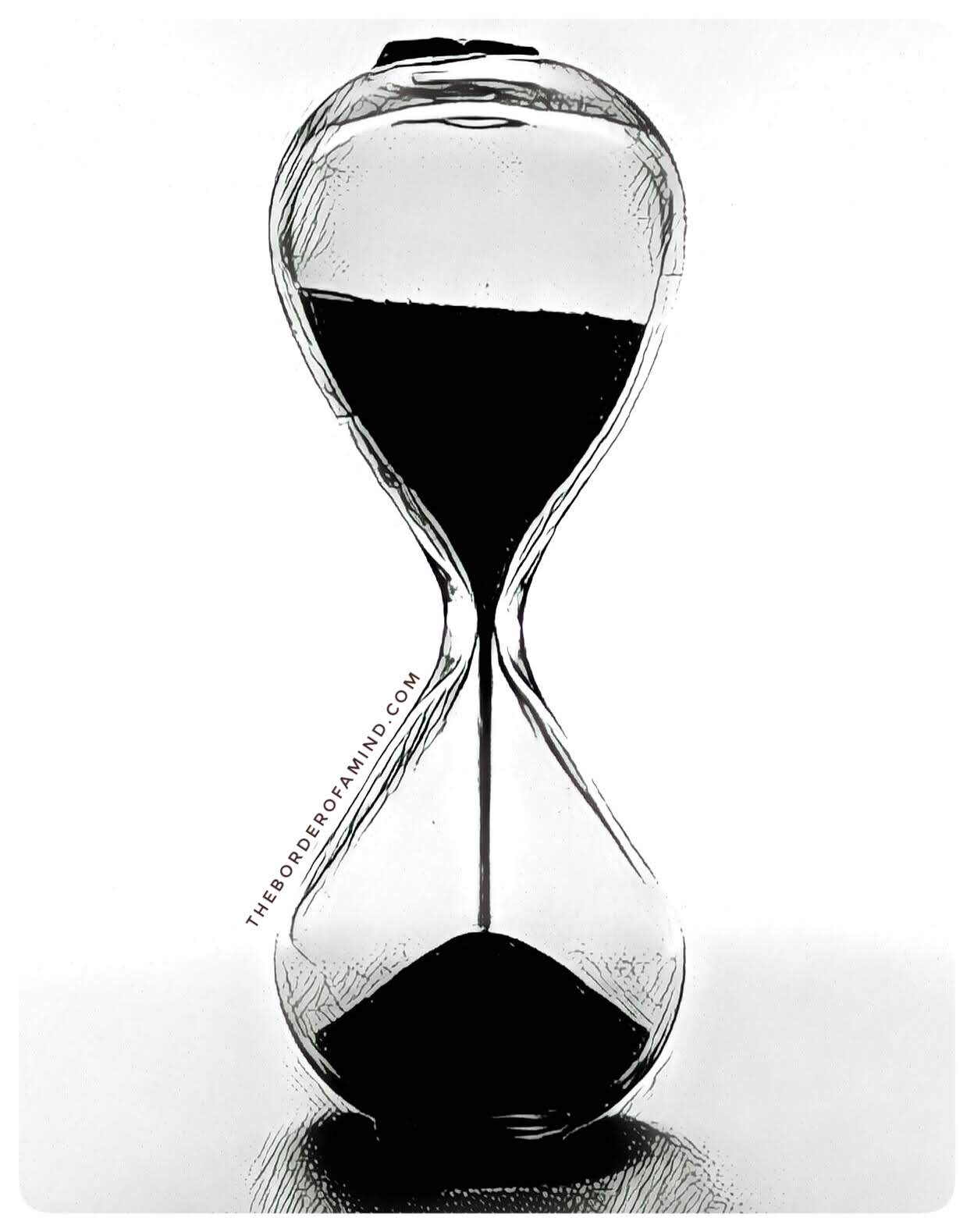
“The sand in the hourglass runs from one compartment to the other, marking the passage of moments with something constant and tangible. If you watch the flowing sand, you might see time itself riding the granules. Contrary to popular opinion, time is not an old white-haired man, but a laughing child. And time sings.”
― Vera Nazarian, The Perpetual Calendar of Inspiration
Do you love to be updated on the content here,
Subscribe if you’d love updates from us for every post!